
Bay Window Seat Painting in Vancouver
Posted on September 24, 2026 by The Vancouver Painters Team
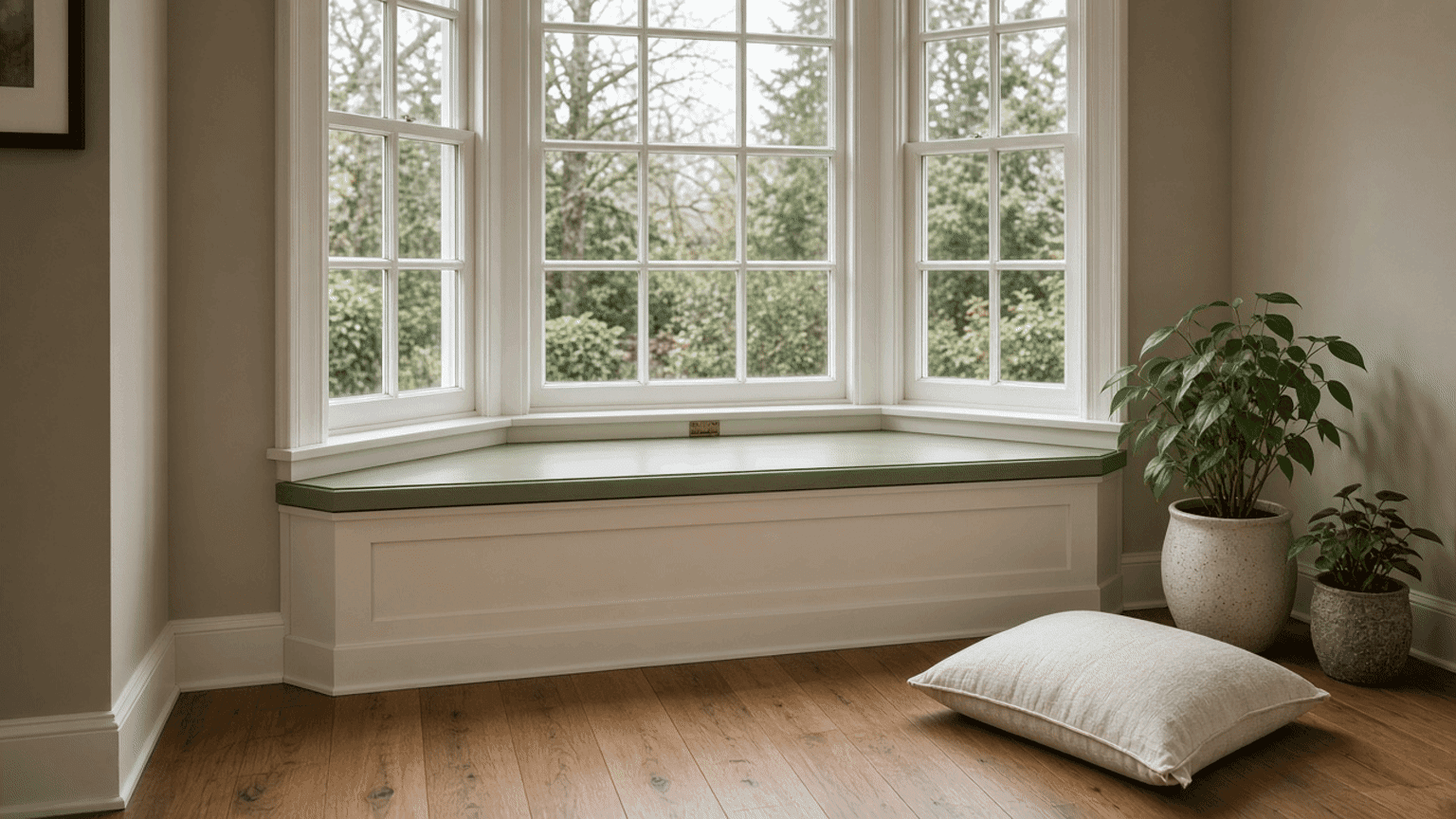
Quick answer: An interior bay window seat can usually be repainted when the seat box, lid, return wall faces, and stool are sound, dry, and free of active condensation damage, a swollen MDF edge, or a hinge that no longer lets the lid lift. Resolve plant-water rings, cushion dye transfer, soft drywall on a return wall, and a storage well that still smells damp before coating. Keep the exterior projection — rooflet, exterior seat panel, and weather sash — on the bay and bow window quote, keep field walls with the living room, mask the glass and the lid hardware, choose a washable low-VOC system that can take sitting and winter moisture at the stool, and allow enough drying and cure time before the cushion, books, and daily sitting return.
A window seat inside a projection works harder than leftover wall paint and differently from the exterior bay. People sit on the lid, winter glass sweats onto the stool, the return wall on each side is short and angled, and the storage under the lid still has to open. A useful estimate should name the seat box, the lid, each return wall, and the stool, then say what is excluded, how an occupied room will be staged, and when someone may sit again.
This guide covers the painted interior of a bay or bow window seat: the seat box, the lid, the return walls inside the projection, and the stool at the glass. The weather faces of the same unit follow bay and bow window painting. Flat casings on the outside of the wall follow exterior window-trim painting. The room’s field walls, ceiling, and furniture follow living-room painting or dining-room painting. Bookcases and a reading chair follow library and reading-nook painting. A glass room follows sunroom painting. A loose cushion, the glass, and a factory-finished vinyl sash stay out unless a separate line says otherwise.
Name each seat surface before pricing
Homeowners often assume “paint the window seat” means the whole living room, or the outside of the bay. A component list makes quotes easier to compare:
- Seat box: The cabinet under the projection — front face, end panels, and toe-kick — not the exterior seat panel on the weather side
- Lid: The sitting surface, hinged or fixed, including the nosing and any underside edge that shows when the lid lifts
- Return wall: Each short interior wall of the bay or bow, from the main wall out to the sash, usually angled or segmented
- Stool: The interior board at the bottom of the glass, above or beside the lid when they are separate boards — not the exterior sill
- Apron or riser: The vertical board between a higher stool and a lower lid, when the house is built that way
- Storage well: The inside of the seat box under a lift lid, including the floor of the well if it stays in scope
- Hinge and hardware: Hinge, lid stay, finger lift, and latch — usually masked, not coated, so the lid still opens
- Heat source: A register, convector, or radiator cover in the toe-kick or beside the seat box, masked so the grille still moves air
- Cushion: Loose upholstery, a boxed pad, and throw pillows — removed and excluded
- Excluded exterior projection: Rooflet, exterior cheek, exterior seat panel, weather sash, and flashing on the bay and bow guide
- Excluded room fields: Living room, dining room, bedroom, home office, nursery, or playroom walls and ceilings that are not the return wall or the seat box
Specify whether the scope includes every face of the seat box, both sides of a lift lid, each return wall, the stool, the storage well, and whether hardware is coated or masked. A full interior painting project may include the seat as a line item, but those details should still be listed separately from a living room refresh or from trim and door painting on the same wall.
Inspect for condensation, lid wear, and a box that still opens
Paint should not conceal unresolved moisture, a soft return wall, or a lid that has swollen shut. Check the seat in daylight with the cushion off, the lid open, and plants moved, before cleaning or sanding removes clues. Look at the stool where winter glass sweats, the nosing people sit against, and the shaded end of the seat box.
Look for:
- Soft, swollen, or crumbling drywall on a return wall, or a stool that cups after winter condensation
- Peeling, bubbling, or blistering paint along the stool, the top of a return wall, or the front edge of the lid
- Plant-water rings, cushion dye transfer, and scuffs where people sit or children climb
- A musty storage well, mildew on the underside of the lid, or blankets that stayed damp against bare MDF
- Failed caulk where the stool meets the return wall, or a gap at the glass that is not a drainage path
- A hinge, stay, or latch that binds, or a lid that no longer sits flush because an edge was coated too thick
- A heat register or convector painted partly shut, or heat scorch on the seat box above it
- Nail pops, hairline cracks, and joint movement on the return wall after seasonal humidity swings
- Bare wood or MDF edges inside the storage well that were never primed
- An older or unknown coating that may need hazardous-material assessment before disturbance, especially on previously painted wood lid or stool stock
- The exterior projection, flat window trim, or living-room field walls that are not this seat
A painter can document visible coating and surface conditions but should not certify window-unit integrity, structural projection plumb, or a hidden leak behind the seat box. Recurring condensation, a fogged sealed unit, rot inside the stool, and a return wall that stays soft after the glass is dry need assessment by the appropriate qualified trades before coating. Older coatings deserve caution before sanding or scraping. Recurring coating failure on the weather side is covered in our guide to bubbling and peeling paint in Vancouver. Soft board on a return wall follows drywall repair before painting.
Review occupied use, storage, and adjoining sightlines before choosing a system
Seat work fails schedules for reasons that differ from a living room field or an exterior bay. The lid is a horizontal sitting surface in a room the household still uses. Condensation collects on the stool. Books, plants, and a cushion have to leave before anyone can reach the return wall.
Clarify before production:
- Whether the occupied room can keep the seat offline during coating and early cure, or whether daily sitting has to move to another chair
- Whether the storage well will be emptied, and for how long blankets, toys, and board games stay out
- Whether living room, dining room, hallway, library, or sunroom colour should be coordinated or left as a separate phase
- Whether every face of the seat box, both sides of the lid, each return wall, the stool, and every hardware edge stay in scope or are masked only
- Whether the exterior bay or bow, flat window trim, and the room’s field walls are a separate job
- Whether the lid is painted wood, painted MDF, or a stained hardwood cap that should keep its clear finish
- Whether a factory-finished interior sash is meant to keep its finish so nobody coats the glass or an operator
- Whether winter condensation on the stool needs extra drying time, and whether a heat source under the seat box must stay clear
- Whether the hinge gap and the lid perimeter stay uncoated so the storage well still opens
- Whether the cushion returns only after the written cure, rather than the same afternoon
If coatings fail on the same stool, lid nosing, or return wall, plan better cleaning, moisture limits, and a harder-wearing lid system before relying on a new topcoat alone. Product choices for humid interior faces are covered in our moisture-resistant interior paint guide. Sheen choices are covered in the paint sheen guide. Odour in an occupied room is covered in the low-VOC paint guide. A living room guide remains the companion for field walls; this page stays on the seat.
Decide what belongs in the painting scope
Seat work often sits next to trim, room-field, or exterior bay tasks. Clarify boundaries early:
- Refresh sound painted surfaces: Clean, dull, prime where needed, and recoat the seat box, lid, return wall faces, and stool that are dry enough for the specified interior system.
- Repair and then paint: Fill a limited dent on the lid nosing, reset a loose stool, or patch a return wall after any leak or condensation source is resolved. Replace a swollen MDF lid only when that work is explicitly in scope.
- Include the seat carefully: Confirm whether every face of the seat box, the underside of a lift lid, the storage well, the stool, and each return wall are coated, or only the front of the box and the top of the lid.
- Exclude the exterior projection, the cushion, and the room fields unless quoted: The weather bay or bow, flat exterior window trim, a loose cushion, the glass, a factory-finished sash, and living room, dining room, bedroom, home office, hallway, nursery, playroom, library, or sunroom walls belong with their own scopes unless those items are separately quoted.
- Coordinate colour with the room: Plan the return wall and seat box against the adjoining wall so the projection does not read as a leftover box. Trim and doors on the same wall should be named if they share the colour.
- Keep glass, hinge, and heat-source work separate from the film: Mask the glass, leave each hinge able to move, and leave a register or convector able to pass air.
How to empty and protect the room is covered in preparing a home for interior painting. A swollen MDF lid, rot in the stool, and glass fogged between the panes are a repair or specialist issue, not a thicker paint problem. A living room refresh is the companion when the field walls are in scope; this page stays on the interior seat.
Preparation determines whether the finish will last
A seat collects cushion oils on the lid, condensation salts on the stool, and dust in the storage well. Painting over that film can cause poor adhesion or a streaky finish when cool daylight rakes the lid beside the glass.
A condition-specific preparation sequence may include:
- Confirm the occupied room has a written plan so nobody has to sit on the lid or open the storage well during coating and early cure
- Empty the storage well, remove the cushion and pillows, and pull plants and books back from each return wall
- Confirm the stool, lid, and return wall are dry enough for the specified system after any recent condensation, washing, or leak
- Clean the lid, stool, seat box, and return wall with a method suited to hand oils, plant residue, cushion dye, and light mildew in the well
- Mask the glass, each hinge, stay, and latch, any factory-finished sash, the heat register, and any room wall that is not in this scope
- Scrape or sand loose coating and feather sound edges without grinding dust into the storage well or onto the glass
- Dull glossy retained finishes on the lid without damaging the stool or an adjoining trim face
- Fill appropriate dents on the lid nosing and open finish joints after the substrate is ready
- Spot-prime stains, bare wood, cut MDF edges, the stool, and any adhesion-risk return wall
- Caulk appropriate finish joints at the stool and seat box after the substrate is ready, stopping short of the hinge gap, the lid perimeter that must lift, the glass, and any operating clearance
- Final dust removal before primer or finish coats — a horizontal lid and an open storage well need a second pass after sanding
Do not assume a stool can be painted the morning after a cold night if the glass is still sweating, or with a cushion left on the lid. Surfaces need to be dry according to the product requirements and site conditions.
Protect the glass, the hardware, and the occupied room
Seat painting is as much about keeping a usable room and a clean glass lite as it is about the coating. Protection and a hinge-safe plan should be written before production starts.
Plan for:
- Masking that keeps glass, hinge leaves, lid stays, and weatherstripping clear of paint
- A cushion, pillows, and storage contents staged where they will not be used as a seat during cure
- Floor and nearby upholstery covered, especially under a lid that is coated flat
- Plant, book, and lamp pull-back so a return wall can be cut in
- Heat registers and convectors left able to move air
- Child and pet controls while the lid is a wet horizontal surface
- Sash and glass clearances so nobody paints a unit shut
Whether the seat is painted in one closure or sequenced so one end of the room stays usable should be written into the estimate. Over-spray shows quickly on glass and on a nearby living room wall. If the seat is the household’s everyday reading spot, the estimate should say where people sit while coatings dry. Do not bridge the hinge gap or the lid perimeter with caulk or paint.
Choose colour, sheen, and products for sitting, condensation, and a working lid
The return wall can take a calmer wall system. The lid and stool usually cannot. Product and sheen choices should reflect wood versus MDF, how often people sit, and how soon winter condensation will wet the stool again.
Common planning points:
- A return wall that matches the living room keeps the projection from reading as a leftover box
- A washable enamel-style system suits the lid and stool, which take sitting, plant water, and cushion rub
- Sheen should balance cleanability and flaw visibility in raking window light — a high-gloss lid can flash every brush mark against the glass
- Eggshell or satin on the return wall, and a harder sheen on the lid, is a common split when the box and the walls are not the same wear surface
- Low-VOC products matter because people sit close to a fresh lid in an occupied room; see the low-VOC paint guide
- A stool that takes winter condensation needs a system that can handle intermittent moisture, not a flat wall paint that marks the first time the glass sweats
- Dark colours on a sun-facing lid can raise heat against the glass; ask before assuming a deep accent is comfortable to sit on
- MDF lid edges and the underside of a lift lid need primer on every cut face that stays in scope, or the edge swells the next time condensation runs
- A stained hardwood lid that is meant to stay clear should be listed as excluded or as a separate finish, not rolled with the seat box
- Hinge leaves, stays, and a factory-finished sash are often masked so the lid still lifts and the glass stays clear after cure
Do not assume leftover wall paint is automatically right for a lid people sit on. A shaded return wall, a stool that stays damp, and a fine hinge gap can change the system. Field walls follow living-room painting. The weather side follows bay and bow window painting.
Plan recoat time and a return to sitting
A horizontal lid in a cool Vancouver room can stay soft longer than a return wall, especially when the seat is boxed in under the glass and winter humidity is high. Recoat and cure windows should be written for the actual temperature and humidity on site, and for how long the cushion stays off.
Ask the contractor to document:
- How the lid, stool, and return wall will stay dry during and after coating without trapping moisture under plastic against a sweating glass edge
- Whether the rest of the occupied room can stay in daily use, and for how long the seat stays clear after the final coat
- Recoat timing for the lid top, the lid edge, the stool, the seat box, and any storage face
- When the household can put the cushion back and when the storage well can hold blankets again
- When a hinge can be worked without softening the finish
- Any odour expectations if the seat shares a living room, bedroom, or home office that stays in use overnight
Light use of another chair can come sooner than sitting on the lid. Plan more drying time rather than less if the stool is cool or the room is closed up, and keep the projection ventilated as specified before daily sitting returns. The lid is the usual slow face, because it is horizontal and people want it back the same day. The return wall often skins over first.
What affects bay window seat painting cost in Vancouver
Seat pricing usually turns on seat box and lid detail, return wall angles, stool condition, storage-well handling, MDF or wood repair, glass masking, hinge care, exterior-bay and living-room exclusions, washable and low-VOC products, occupied-room protection, and sit-safe cure timing more than a simple “paint the bench” line. Factors that commonly change an estimate include:
- Seat box, lid, return wall, and stool count, including a bow with extra narrow faces
- Wood versus MDF repair, stain blocking, condensation damage, or mildew treatment in the storage well before coating
- Whether the exterior bay or bow, flat window trim, a cushion, a factory-finished sash, or a living room, dining room, library, sunroom, bedroom, home office, hallway, nursery, or playroom is excluded, masked only, or quoted as a separate job
- Storage emptying, cushion removal, glass masking, floor protection, and temporary seating while the lid cures
- Front-face-only coating versus every return wall, the stool, the lid underside, and the storage well
- A harder-wearing lid enamel plus a low-VOC wall system on the return wall
- Number of colour changes and trim or room-wall matching
- Extended cure planning before the cushion and storage return
Use our interior painting cost guide for Vancouver for broader pricing context, then compare line items rather than headline totals. If the same home also needs living-room painting, trim and door painting, or bay and bow window painting, price those scopes clearly rather than folding them into a seat number.
Common bay window seat painting mistakes
- Painting over condensation film, cushion dye, plant rings, or a damp storage well
- Skipping the stool, the lid edge, and the back of a return wall
- Coating the exterior projection, the glass, or the cushion as if they were the seat box
- Sealing the hinge gap or painting a lid perimeter so the storage well will not open
- Painting a heat register or convector shut
- Treating the seat as the same job as living-room painting or bay and bow painting
- Folding a library, dining room, or sunroom into a seat quote without a trade boundary
- Using flat wall paint on a lid people sit on, or a glossy lid that flashes every brush mark against the glass
- Leaving raw MDF edges unprimed inside the storage well
- Putting the cushion or blankets back before the written cure window
- Ignoring living room and hallway sightlines from the doorway
- Matching quotes by price alone without matching lid, stool, and return wall counts
Questions to ask when comparing estimates
Ask each contractor:
- Which seat box faces, lid sides, return wall planes, stool boards, storage surfaces, and hardware edges are included?
- Which exterior bay or bow faces, flat window trim, cushion, factory-finished sash, and living-room walls are excluded?
- Are the glass, the hinge gap, and the heat source excluded, masked only, or quoted separately?
- What condensation, stains, MDF swell, or moisture issues were identified on the stool, lid, and return wall?
- Which defects need a glazier, carpenter, or moisture specialist first?
- How will dirt, loose paint, gloss, and cushion residue be addressed before coating?
- Is a bonding primer, an MDF edge sealer, or a washable low-VOC enamel part of the plan?
- How will the occupied room, the storage contents, and the glass be protected?
- Will the hinge, lid stay, and register be masked, and where will people sit while the lid dries?
- How long must the cushion stay off after the final coat?
- Which products, colours, sheens, and coat sequence are proposed for the lid versus the return wall?
- What recoat, cure, and return-to-sitting instructions apply?
- How will cleanup, touch-ups, final inspection, and workmanship warranty be documented?
Use our house painting quote comparison guide to check insurance, payment terms, change orders, cleanup, exclusions, and warranty language alongside these seat-specific questions.
Bay window seat painting FAQs
Can you paint a bay window seat while living in the home?
Yes, if occupied-room staging, storage emptying, and cure timing are clear. Many Vancouver projects coat the seat box, lid, return wall, and stool while the rest of the living room stays in use, as long as nobody sits on the fresh lid. The estimate should state how long the cushion stays off and when the storage well can hold belongings again.
What is the difference between the seat box, the lid, the return walls, and the stool?
The seat box is the cabinet under the window. The lid is the board people sit on, fixed or hinged over the storage well. Each return wall is a short interior wall of the projection, angled on a bay and segmented on a bow. The stool is the interior board at the glass, and it is not the same piece as the lid when a riser separates them. Ask the estimator to name which of those four are on the house before comparing totals.
Is seat painting different from exterior bay painting or a living-room repaint?
Yes. Bay and bow window painting emphasizes the weather projection: rooflet, exterior cheek, exterior seat panel, sash, and flashing. Living-room painting emphasizes field walls, the ceiling, and furniture staging, and it treats a window seat as an optional built-in. This page emphasizes the seat box, lid, return wall, and stool inside the projection, hinge and glass clearances, condensation on the stool, and a cure window before anyone sits. Keep those expectations written into the estimate rather than assuming one quote covers the seat, the living room, and the exterior bay.
Should the cushion and the storage well be painted?
The cushion should not be painted. It comes off, stays off through cure, and goes back only when the lid is ready for sitting. The storage well is a separate decision: some households want the inside of the seat box and the underside of the lid coated so blankets do not rub raw MDF, and others want only the faces they see. Ask the estimator to say which storage surfaces are included.
Do a wood lid and an MDF lid need different paint?
Often yes. A wood lid and stool at a sweating glass line need extra drying and a system that will not trap moisture. MDF needs primer on every cut edge, including the underside if that face is in scope, or the edge swells the next time condensation runs. A stained hardwood cap that is meant to stay clear is a different finish from a painted seat box. The estimate should state whether the lid, the stool, each return wall, and the hardware edges are included at all.
How long before someone can sit on the seat?
Follow the current product data and the contractor's written instructions. Using another chair can come sooner than sitting on the lid, opening a stiff hinge, or packing the storage well. On a cool stool under winter glass, plan more cure time rather than less, and keep the projection ventilated as specified before the cushion returns.
Get a bay window seat painting estimate in Vancouver
Photograph the seat in daylight with the cushion off, the lid open and closed, close views of the stool, each return wall, the hinge, and any condensation or MDF swell, plus the adjoining living room, dining room, or hallway. Note whether the exterior bay or bow, the storage well, or the room’s field walls are planned in the same phase.
Start a free, no-obligation interior painting estimate or call +1 (604) 260-1613 for 24/7 estimate requests. We help homeowners in Vancouver and across the Lower Mainland connect with a painting partner for a clearly defined bay window seat painting scope.