Drywall Repair Before Painting in Vancouver: Patching, Primer, and Skim Coating
Posted on July 7, 2026 by The Vancouver Painters Team
Quick answer: Drywall repair should be part of the painting plan whenever walls have nail holes, settlement cracks, dents, water stains, failed tape, rough patches, or texture differences. Small holes may only need patching, sanding, and spot primer. Larger damage can require tape repair, stain blocking, multiple compound coats, or skim coating before paint will look even.
Fresh paint makes a room feel cleaner, but it also draws attention to wall flaws. Vancouver homes, condos, townhouses, and rental suites often have patching from TV mounts, picture hooks, moving damage, moisture, and older renovations. If those repairs are rushed, the wall can look blotchy or uneven even when the paint colour is right.
Use this guide to decide what needs repair before interior painting, what to ask for in a quote, and when a painter should bring in more detailed drywall prep.
Why drywall prep affects the final paint finish
Paint follows the surface underneath it. If the drywall is dented, cracked, dusty, glossy in one spot, or patched with the wrong texture, the finish coat will usually reveal it.
Drywall prep matters because it affects:
- How smooth walls look in natural light
- Whether patched areas flash through the paint
- How well primer and finish coats bond
- Whether cracks reopen after the job is done
- How trim, ceilings, and corners look beside fresh wall colour
- Whether touch-ups blend later
This is especially noticeable in Vancouver rooms with large windows, pot lights, or low winter daylight. Light skimming across a wall can reveal dents and sanding marks that were hard to see before painting.
Common drywall issues before painting
Most interior painting quotes include minor patching, but "minor" should be defined. These are the problems worth pointing out before the estimate is written.
Nail holes and picture-hook marks
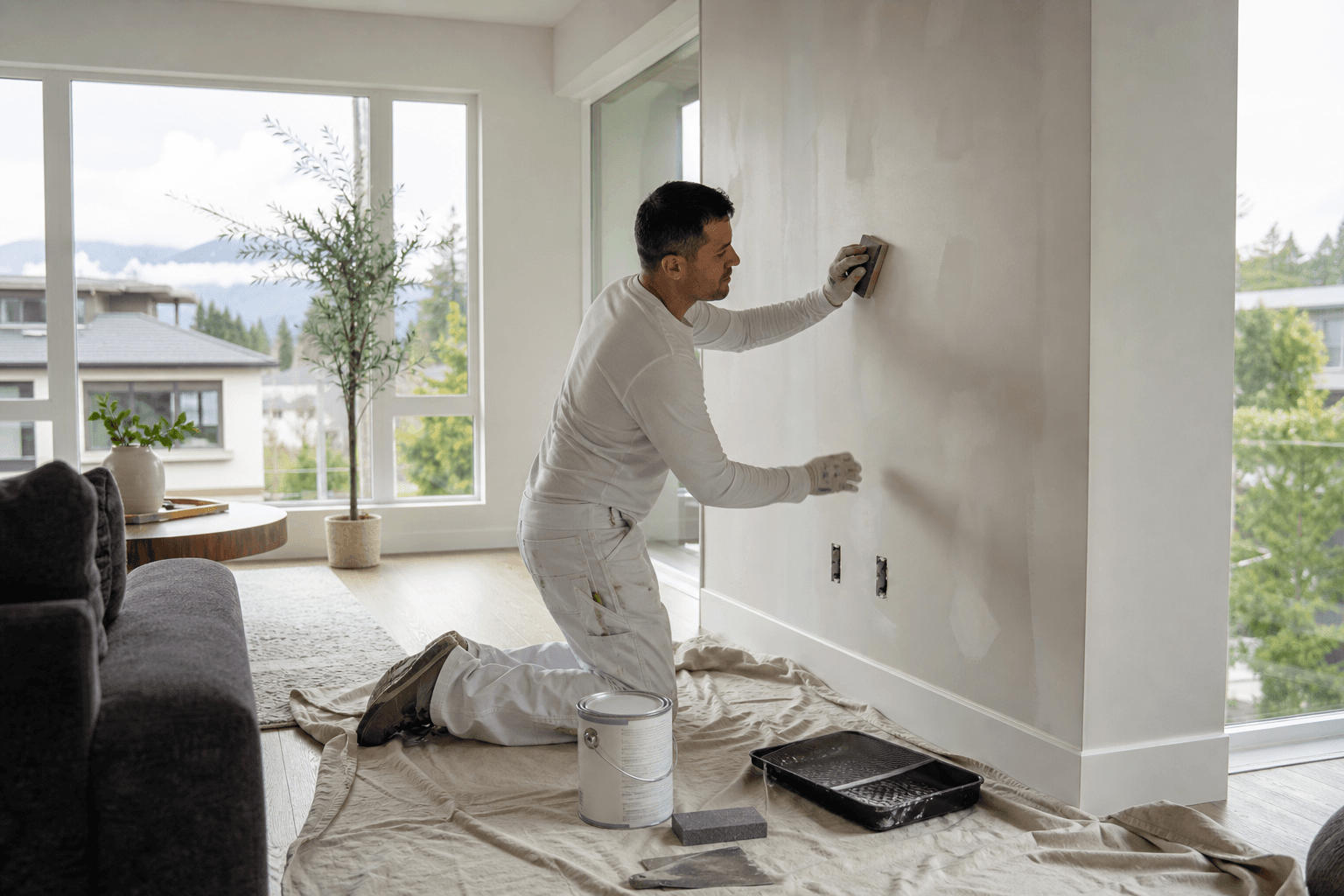
Small nail holes are usually simple. The painter fills the hole, lets the compound dry, sands it smooth, and spot primes before painting. A wall with dozens of holes may take longer because every patch needs drying and sanding time.
Dents, gouges, and moving damage
Chair backs, toys, vacuum cleaners, moving boxes, and furniture corners can leave deeper dents. These often need more than one coat of compound because the first coat shrinks as it dries.
TV-mount and anchor holes
Large anchor holes need more careful repair than pinholes. If the drywall paper is torn or the hole is oversized, the painter may need backing, mesh, or a stronger patching method before compound and primer.
Settlement cracks
Small hairline cracks can happen as homes shift. In older Vancouver houses or townhomes, cracks near doors, windows, stairwells, and ceiling lines are common. The quote should explain whether the crack will be filled only, taped, or repaired more thoroughly.
Failed tape or corner bead
Bubbling tape, lifted seams, or damaged outside corners need more involved drywall work. Painting over them usually makes the defect more obvious. The loose area may need to be cut out, re-taped, compounded, sanded, and primed.
Water stains and moisture damage
Water stains need diagnosis before paint. If the leak or humidity problem is still active, paint will not solve it. Once the source is fixed and the drywall is dry, the area may need stain-blocking primer before finish coats. For bathrooms, laundry rooms, and basement suites, see our guide to moisture-resistant interior paint in Vancouver.
When skim coating is worth considering
Skim coating means applying a thin layer of joint compound over a broader area to even out texture or hide surface damage. It is more labour-intensive than spot patching, but it can be the right choice when small repairs would leave the wall looking patchy.
Consider skim coating when:
- Old repairs have different textures across the wall
- Wallpaper removal left torn drywall paper
- Heavy roller texture or past patching is visible
- A wall receives strong side light from windows or pot lights
- You are switching to a darker colour or higher sheen
- A feature wall needs a cleaner finish
Skim coating is not always necessary for rental turnovers or budget refreshes. It should be discussed room by room so the quote matches the finish level you expect.
Primer prevents flashing and bonding problems
Primer is not only for new drywall. It also helps seal patched areas so they do not absorb finish paint differently from the surrounding wall.
Ask whether the quote includes primer for:
- Fresh joint compound or large patched areas
- Torn drywall paper
- Stains from water, smoke, markers, or tannins
- Dark-to-light colour changes
- Glossy or previously painted surfaces that need better adhesion
- Bathrooms, laundry rooms, or humid basement areas
Skipping primer can lead to "flashing," where patched spots look duller or shinier than the rest of the wall. A good painter will spot prime repairs and recommend full primer when the wall condition requires it.
How to prepare before the painter arrives
Homeowners can help the estimate and project run more smoothly by identifying damage before painting day. Walk through each room in daylight and mark or photograph problem areas.
Helpful prep includes:
- Remove pictures, shelves, hooks, and hardware you do not want reinstalled
- Point out TV-mount holes, water stains, cracks, and old patches
- Decide whether unused anchors should be removed and patched
- Move furniture away from damaged walls if possible
- Share any history of leaks or moisture issues
- Confirm whether closets, ceilings, trim, and doors are part of the scope
For a broader room-by-room checklist, use our interior painting prep guide for Vancouver homes.
What a drywall repair and painting quote should include
Drywall prep can make two painting estimates look very different. One quote may assume quick patching; another may include detailed repair, sanding, primer, and a higher finish level.
Before choosing a contractor, check whether the quote spells out:
- Which rooms and wall surfaces are included
- How many holes, cracks, or damaged areas are included
- Whether repairs are minor patching, tape repair, or skim coating
- Whether sanding dust will be contained and cleaned
- Which primer is used for patches, stains, or new compound
- Whether ceilings, corners, and trim gaps need related repair
- How many finish coats are included after repairs
- What level of smoothness is realistic for the budget
If you are comparing multiple estimates, our guide on how to compare house painting quotes in Vancouver can help you spot missing prep items before you choose.
Drywall repair in condos, rentals, and older homes
Different Vancouver property types tend to have different repair needs.
Condos
Condo walls often have anchor holes from shelving, TVs, mirrors, and art. Downtown Vancouver, Burnaby, Richmond, and North Vancouver buildings can also have access rules for elevators, parking, work hours, and dust control.
Rental suites
Rental suites usually need fast, durable refreshes between tenants. Focus on high-visibility walls, entryways, stairwells, bedrooms, and moisture-prone bathrooms. Document damage early so the scope is clear before the painter starts.
Older houses
Older homes may have settlement cracks, previous DIY repairs, textured surfaces, or plaster transitions. These can still be painted well, but the repair plan should be realistic about what patching alone can hide.
Get a smoother interior painting estimate
If your Vancouver or Lower Mainland home has drywall damage, old patches, cracks, dents, or water stains, include photos with your quote request so the repair scope is clear from the start.
Request a free painting quote or call +1 (604) 260-1613 for 24/7 estimate requests. Tell us which rooms need painting, whether you want walls only or walls plus ceilings and trim, and which drywall issues you want repaired before paint.