Moisture-Resistant Interior Paint for Vancouver Bathrooms, Kitchens, and Basements
Posted on June 17, 2026 by The Vancouver Painters Team
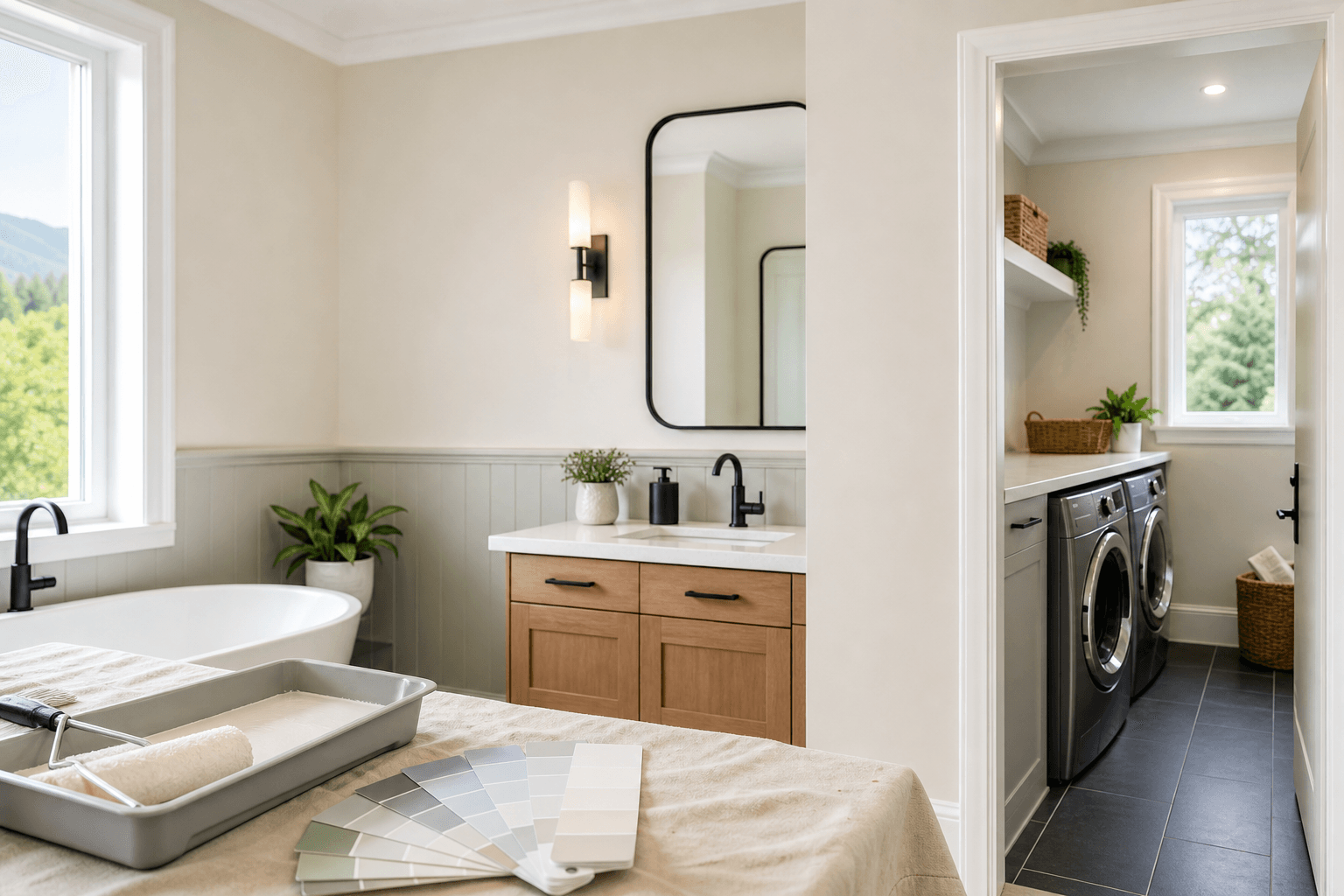
Quick answer: Moisture-resistant paint is a smart choice for Vancouver bathrooms, kitchens, laundry rooms, mudrooms, and basements, but it only works when the surface is dry, clean, primed where needed, and supported by ventilation. Choose washable acrylic products in the right sheen, fix leaks before painting, and avoid painting over mildew, damp drywall, or failing old coatings.
Vancouver homes deal with rain, shaded exterior walls, damp shoulder seasons, and long stretches of indoor humidity. Even when a room looks clean, moisture can collect around showers, cooking areas, laundry machines, basement corners, window frames, and poorly ventilated ceilings.
Paint cannot waterproof a room, but the right interior paint system can make moisture-prone spaces easier to clean and less likely to peel. The key is matching the product, prep, primer, and sheen to the room.
Where moisture-resistant paint helps most
Not every wall needs a specialty coating. Most living rooms, bedrooms, and hallways do well with a quality washable interior paint. Moisture-resistant products matter more in rooms where humidity rises often or where surfaces are cleaned frequently.
In Vancouver homes, consider moisture-resistant paint for:
- Bathrooms and powder rooms
- Kitchens and breakfast nooks
- Laundry rooms
- Mudrooms and entry areas
- Basement suites and rec rooms
- North-facing rooms with slower drying
- Condos with limited window ventilation
If you are planning a full interior repaint, our interior painting service page explains how room type, prep, and finish choices shape the scope.
Moisture-resistant does not mean waterproof
This is the most important point. Interior paint can resist humidity, cleaning, and occasional splashes, but it cannot fix building problems. If water is entering through a foundation wall, leaking from plumbing, condensing on cold surfaces, or trapped behind tile, paint will not solve the cause.
Before painting, look for warning signs:
- Soft or swollen drywall
- Bubbling paint that feels damp underneath
- Brown stains near ceilings, windows, or baseboards
- Mildew that returns quickly after cleaning
- Musty smells in closets, basements, or laundry rooms
- Peeling around showers, tubs, or exhaust fans
If moisture is active, fix the source first. Painting too soon can seal in dampness and cause the new finish to fail.
Prep matters more than the label
A moisture-resistant label will not help if the surface is dirty, glossy, chalky, or contaminated. Prep is especially important in bathrooms and kitchens because walls can hold soap residue, hair products, cooking oils, and cleaners.
A proper prep sequence may include:
- Washing walls and ceilings with the right cleaner
- Removing loose or peeling paint
- Sanding rough edges smooth
- Treating mildew staining before primer
- Repairing drywall damage and failed caulking
- Letting patched or damp areas fully dry
- Priming bare drywall, stains, or repaired spots
For occupied homes, use our interior painting prep checklist to organize furniture, pets, bathroom access, and drying time before the crew arrives.
Choose the right sheen for each room
Sheen affects both appearance and cleanability. Higher sheens are usually easier to wipe, but they can also highlight dents, patches, and roller marks. The best choice depends on how the room is used.
Common options:
- Matte or flat: Best for low-traffic ceilings and walls where surface flaws need to be hidden. Avoid in splash-prone areas unless the product is made for washable use.
- Eggshell: A good balance for many walls, including bedrooms, hallways, and some powder rooms.
- Satin: Often the safest choice for bathrooms, kitchens, laundry rooms, and kids' spaces because it handles cleaning better.
- Semi-gloss: Useful for trim, doors, cabinets, and areas that need frequent wiping, but it can look too shiny on large wall surfaces.
Ceilings in bathrooms deserve extra attention. A flat ceiling paint may look smooth at first, but steam can expose weak prep or poor ventilation. Ask whether the ceiling should use a bath-specific product instead.
Use primer where moisture has already left marks
Primer is not always needed for every repaint, but it is important when the surface has stains, bare drywall, patched areas, strong colour changes, or previous peeling.
Primer may be needed for:
- Water stains that could bleed through finish paint
- Bare drywall compound after repairs
- Old glossy paint that needs better adhesion
- Smoke, cooking residue, or tannin stains
- Patched ceiling areas near fans or showers
- Dark-to-light colour changes
The finish coat should not be asked to do every job. A good primer helps seal uneven surfaces and gives moisture-resistant paint a better base.
Ventilation is part of the paint system
Even the best bathroom paint needs air movement. Vancouver's damp climate means rooms can dry slowly, especially in condos, basements, and shaded homes.
Before repainting a humid room, check:
- Does the bathroom fan remove steam quickly?
- Is the fan used long enough after showers?
- Are windows opened safely when weather allows?
- Is there airflow behind furniture or shelving?
- Are basement dehumidifiers or fans needed seasonally?
- Are kitchen and laundry fans venting properly?
If a bathroom mirror stays fogged for a long time or ceiling paint keeps peeling near the fan, the room may need ventilation attention before another repaint.
Watch high-risk spots in Vancouver homes
Some moisture problems show up in predictable places. During an estimate, point out any areas where paint has failed before so the painter can inspect the cause rather than simply covering it.
High-risk spots include:
- Bathroom ceilings above showers
- Window trim in older homes
- Exterior-facing bedroom corners
- Basement baseboards and lower walls
- Laundry closets with stacked machines
- Kitchen walls near ranges and sinks
- Mudroom walls near wet jackets, shoes, and pet areas
If the same spot has peeled more than once, ask what will change this time: better prep, different primer, improved ventilation, a different sheen, or a repair before paint.
Condo and strata considerations
Condos often need extra planning because ventilation, elevator access, work hours, and odour control can affect the project. Many Vancouver strata buildings also require contractor insurance documents, approved work hours, and protection in common areas.
For moisture-prone condo rooms, ask about:
- Low-odour or low-VOC products
- Building-approved work hours
- Elevator and loading access
- Drying time before rooms are used again
- Fan use that does not disturb neighbours
- Whether the strata needs contractor documentation
Our Vancouver strata painting requirements guide covers the approval items that can affect scheduling. For budget context, see our Vancouver condo painting cost guide.
When to repaint the whole room
Spot repairs can work when damage is small and colour matching is easy. A full room repaint is usually better when humidity has caused uneven sheen, old roller marks, multiple patches, or colour differences.
Consider repainting the full room when:
- The ceiling has several repaired areas
- Wall colour has faded or yellowed
- Previous touch-ups are visible
- Trim needs sanding and caulking
- You are changing to a more washable sheen
- The room will be photographed for sale or rental listing
If resale is part of the plan, our pre-listing painting checklist for Vancouver home sellers can help you decide which rooms deserve attention before photos and showings.
Questions to ask before booking
Before approving an interior painting estimate for a moisture-prone room, ask:
- What product and sheen do you recommend for this room?
- Will stains, bare drywall, or old peeling areas be primed?
- Does the quote include mildew cleaning or only painting?
- Should caulking around trim, tubs, or backsplashes be replaced?
- How long should the room dry before showers, cooking, or laundry use?
- What ventilation should run during and after the project?
- What happens if hidden moisture damage is found during prep?
Clear answers make it easier to compare quotes and avoid repainting the same problem next season. Our guide on how to compare house painting quotes in Vancouver explains what to look for in the written scope.
Get moisture-prone rooms painted properly
If you have peeling bathroom paint, stained kitchen walls, a damp basement room, or a laundry area that needs a more washable finish, request a free interior painting quote. We serve Vancouver, Burnaby, Richmond, North Vancouver, Surrey, and the Lower Mainland with practical painting recommendations for local homes.