Painting Trim and Doors in Vancouver: Prep, Sheen, and Cost Factors
Posted on June 22, 2026 by The Vancouver Painters Team
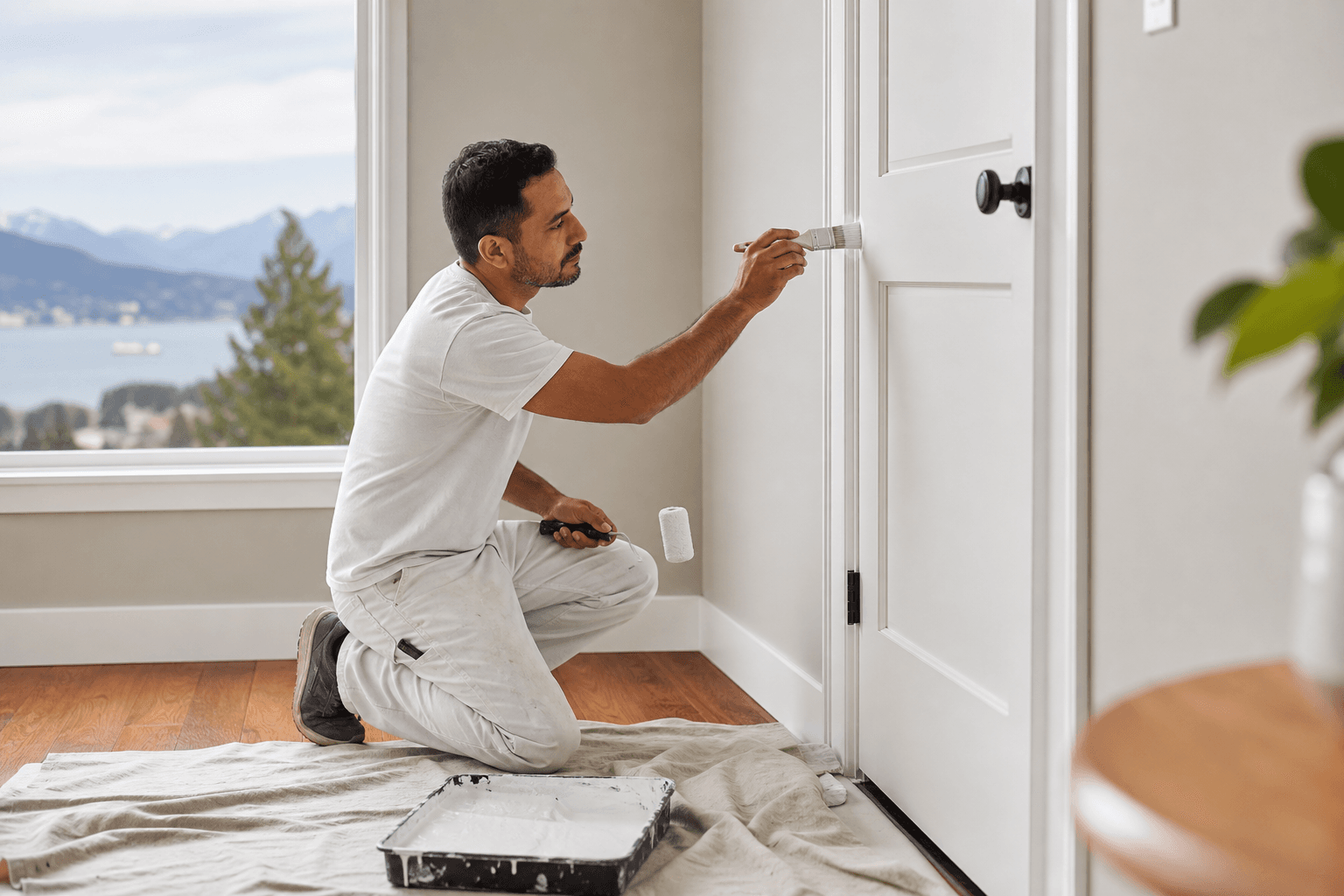
Quick answer: Interior trim and doors in Vancouver usually need more prep than walls. Expect cleaning, sanding, caulking, spot priming, careful masking, and a durable enamel or acrylic trim paint in satin, semi-gloss, or pearl. The best result depends on whether the trim is wood, MDF, previously painted, stained, damaged, or part of a condo or strata refresh.
Fresh wall colour gets most of the attention, but trim and doors often decide whether an interior paint job looks finished. Baseboards collect vacuum marks, door frames get hand oils, window trim sees condensation, and older casings can show layers of brush marks from past repaints.
For Vancouver homes, trim and door painting also has a practical side. Damp winters, busy entryways, basement suites, pets, and strata move-in rules can all affect product choice and scheduling. A good estimate should explain how these surfaces will be prepared, protected, painted, and allowed to cure.
Why trim and doors need a different plan
Walls are usually broad, flat surfaces. Trim and doors are smaller, more detailed, and touched more often. That changes the paint system.
Common high-wear areas include:
- Baseboards in hallways, stairs, kitchens, and mudrooms
- Door slabs around handles and edges
- Door frames in bedrooms, bathrooms, and closets
- Window trim where condensation can collect
- Crown moulding and picture rails in older Vancouver houses
- Stair risers, newel posts, and handrail-adjacent trim
These surfaces need a harder-wearing finish than many wall paints. They also show poor prep quickly. If old caulking has cracked, dust is trapped in grooves, or glossy paint is not sanded, the new finish can chip, flash, or look uneven.
For rails, posts, balusters, risers, and access planning, see our dedicated guide to stair and banister painting in Vancouver.
If you are repainting several rooms at once, plan trim and doors as part of the full interior painting scope rather than as an afterthought. The sequence affects masking, drying time, and how soon rooms can be used again.
Start with cleaning and sanding
Trim collects residue that is easy to miss. Even clean-looking baseboards can hold dust, floor cleaner, pet hair, hand oils, candle soot, or kitchen film. Paint sticks best when the surface is clean and dull.
A professional prep sequence may include:
- Vacuuming or dusting trim profiles, door tops, and baseboard ledges
- Washing high-touch areas around handles, frames, and stair trim
- Removing loose or failing paint
- Sanding glossy surfaces so the next coat can bond
- Feather-sanding chipped edges
- Filling nail holes, dents, and open mitres
- Spot priming bare wood, MDF, stains, or patched areas
Skipping sanding is one of the most common reasons trim paint fails. If a previous coating is shiny, slick, or oil-based, the new paint may need both sanding and a bonding primer.
Caulking makes the finish look cleaner
Small gaps between trim and walls can make even fresh paint look unfinished. Vancouver homes move with seasonal humidity, so caulking can crack where baseboards, casings, and crown moulding meet drywall.
Before painting, check:
- Baseboard-to-wall gaps
- Door casing mitres and inside corners
- Window trim joints
- Crown moulding seams
- Gaps around built-ins or older millwork
Painters usually remove failed caulking where it has separated, then apply paintable caulk before finish coats. Caulk should not be used to hide structural movement, water damage, or large gaps that need carpentry repair, but it is important for crisp interior lines.
For exterior sealant questions, see our guide to exterior caulking before painting in Vancouver. Interior caulking is different, but the same principle applies: the joint needs to be clean, dry, and suitable for the product.
Choose the right sheen
Trim and doors are usually painted in a higher sheen than walls because they need to handle cleaning and contact. The right choice depends on the home, the lighting, and how smooth the surfaces are.
Common trim and door sheen options:
- Satin: A softer look with good cleanability. Often a good fit for modern interiors and rooms where semi-gloss would feel too shiny.
- Pearl or low-lustre enamel: Durable with a refined finish, depending on the paint line.
- Semi-gloss: Traditional for trim and doors because it wipes well and highlights detail, but it can reveal dents, brush marks, and uneven surfaces.
High sheen is not automatically better. On older baseboards or doors with visible damage, a very shiny finish can emphasize imperfections. Ask the estimator whether repairs, sanding, or a different sheen will produce the best visual result.
Watch for oil-based paint on older trim
Many older Vancouver homes have trim that was previously painted with oil-based enamel. Painting over it with modern water-based products can work, but only with the right prep.
Signs the old coating may need special attention include:
- A hard, glossy surface that feels slick after cleaning
- Yellowing on older white trim
- Chipping that exposes a very hard previous layer
- Paint that sands into fine powder rather than soft residue
The painter may recommend a bonding primer before acrylic enamel. Without that step, the new coating can scratch or peel more easily.
If you are not sure what is on the trim, mention the age of the home and any previous repaint history during the estimate.
Doors take longer than many homeowners expect
A door has more paintable surface than it seems: two faces, four edges, raised panels or grooves, hinge-side details, and hardware cutouts. Interior doors also need to stay functional while paint cures.
Before work starts, decide:
- Will hardware be removed or masked?
- Are closet doors, bifolds, pocket doors, or French doors included?
- Should door tops and bottoms be painted?
- Can doors be left open safely while drying?
- Are pets, children, or tenants using the rooms during the project?
Paint may feel dry before it is fully cured. For the first few days, avoid slamming freshly painted doors, hanging damp towels over them, or cleaning them aggressively. This matters especially for bathrooms, laundry areas, and basement suites where humidity is higher.
For moisture-prone rooms, review our guide to moisture-resistant interior paint in Vancouver.
Condo and strata notes
Trim and door painting in condos can be straightforward, but logistics still matter. Vancouver and Burnaby strata buildings may require elevator bookings, approved work hours, floor protection, insurance documents, and low-odour products.
If only interior trim and doors are being painted, approval is usually simpler than an exterior or common-area project. Still, confirm whether your strata has rules for:
- Contractor access hours
- Loading zones and elevator protection
- Paint odour and ventilation
- Disposal of sanding dust or materials
- Painting suite entry doors, which may be common property
Do not repaint the exterior-facing side of a suite entry door without checking the bylaws or property manager. Colour and fire-rating requirements may apply.
Our strata painting requirements guide covers the approval items that can affect scheduling.
What affects the cost?
Trim and door pricing depends less on square footage and more on detail, condition, access, and finish expectations.
Main quote factors include:
- Number of doors, frames, closets, and windows
- Linear footage of baseboards, crown, and casing
- Current condition of caulking, dents, chips, and gaps
- Whether surfaces need bonding primer
- Number of colours and sheen changes
- Hardware removal, masking, and room protection
- Whether spraying, brushing, rolling, or a hybrid method is appropriate
- Occupancy, pets, parking, elevator access, and strata rules
If the quote only says "paint trim" without listing rooms, doors, coats, products, and prep, ask for clarification. Trim details are easy to underestimate, and a vague scope can lead to visible shortcuts.
Our guide on how to compare house painting quotes in Vancouver explains what should be spelled out before you choose a contractor.
When trim and doors are worth prioritizing
Painting trim and doors is especially useful when:
- Walls were painted recently but the room still looks tired
- You are preparing a home for sale or rental photos
- Baseboards are scuffed from furniture, pets, or moving
- Door frames are marked around handles
- Old off-white trim looks yellow beside fresh wall colours
- A condo refresh needs high visual impact without major renovation
For resale projects, trim and doors often help rooms photograph cleaner because they frame the walls, flooring, windows, and entryways. See our pre-listing painting checklist for Vancouver home sellers if the repaint is tied to listing photos or showings.
Get trim and doors painted properly
If your Vancouver home, condo, townhouse, or rental suite needs cleaner trim lines, fresh doors, or a full interior repaint, request a free interior painting quote or call +1 (604) 260-1613 for 24/7 estimate requests. Share photos of the baseboards, doors, frames, and any damaged areas so we can match you with the right painting partner for the scope.