
Exterior Paint Touch-Ups Before Winter in Vancouver: What to Check
Posted on July 13, 2026 by The Vancouver Painters Team
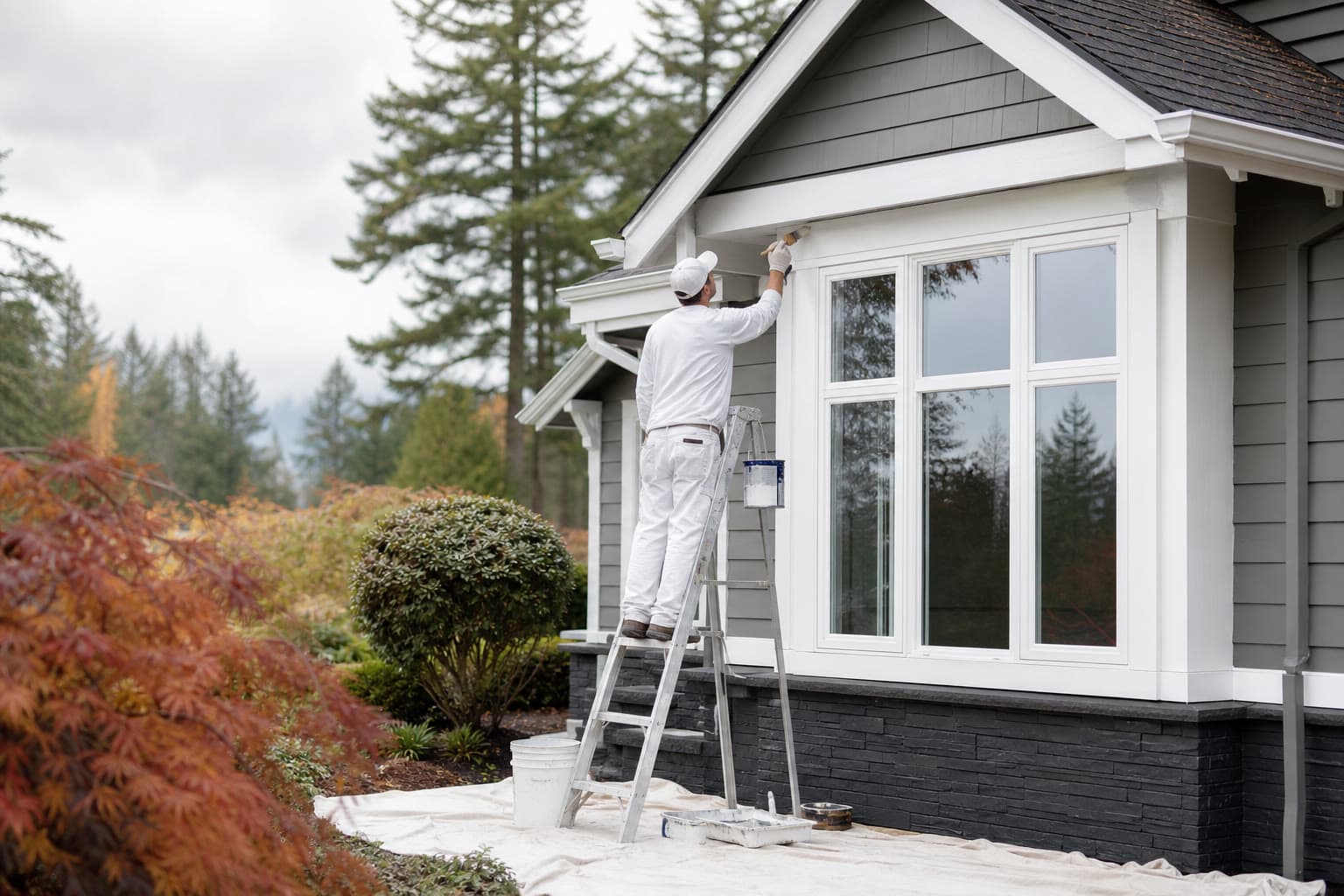
Quick answer: Before winter, Vancouver homeowners should check exterior trim, fascia, window frames, siding edges, deck railings, and caulking for exposed wood, peeling paint, open joints, and moisture stains. Small touch-ups can protect vulnerable areas through the wet season, but only if the surface is clean, dry, sound, primed where needed, and painted within the product's weather window.
Exterior touch-ups are not about making a failing paint job look new for a few months. In the Lower Mainland, they are about protecting the spots most likely to absorb water once rain, dew, shade, and cool temperatures return. A careful fall inspection can help you decide whether a few targeted repairs are enough or whether the home needs a larger exterior painting plan.
Why small paint failures matter before winter
Vancouver's winter weather is hard on exposed exterior surfaces. Rain can sit on ledges, soak into bare wood fibres, and find gaps around trim. Shaded walls may stay damp for days. If a small paint failure is ignored all winter, it can turn into peeling, swollen wood, mildew, or a more expensive repair before the next painting season.
The highest-risk areas are usually:
- Window sills and lower corners of trim
- Fascia boards and bargeboards
- Door frames and thresholds
- Horizontal ledges where water sits
- South- and west-facing trim with UV damage
- North-facing walls with mildew or slow drying
- Deck rails, stair stringers, and fence caps
- Siding edges close to gutters, roofs, or landscaping
If the coating is mostly sound, spot repairs may buy time until a full repaint makes sense. If peeling is widespread, read our guide to signs your home needs new paint before assuming touch-ups will be enough.
Start with a dry-weather walkaround
Choose a dry day and walk around the home slowly. Look from a distance first, then check close-up problem areas. Take photos of each side of the house so an estimator can compare exposure, access, and surface condition.
During the walkaround, look for:
- Bare wood or raw siding edges
- Paint that flakes when touched
- Hairline cracks along caulking
- Gaps where trim meets siding
- Brown staining below joints or fasteners
- Bubbling paint after rain
- Mildew around shaded trim or soffits
- Soft wood near window corners
Do not scrape aggressively just to investigate. If paint is loose, a painter can test adhesion during the estimate. If wood feels soft, crumbles, or stays damp, the area may need repair before primer or paint.
What can usually be touched up?
Small, isolated failures can often be handled as targeted exterior maintenance when weather allows. Good candidates include:
- A few exposed trim edges
- Minor peeling on fascia or window casing
- Small chips on doors or railings
- Localized caulking gaps around trim
- Nail holes or small cracks after prep
- Previously painted areas where the colour match is available
The process should still follow proper prep: clean the area, let it dry, scrape loose coating, sand edges, prime bare surfaces, replace failed caulking, and apply compatible finish coats. Skipping primer on bare wood is one of the fastest ways to see the same spot fail again.
For a deeper look at sealant decisions, see our guide to exterior caulking before painting in Vancouver.
When touch-ups are not enough
Touch-ups are limited. They are not a fix for a paint system that has reached the end of its life or for moisture problems behind the surface.
A larger exterior painting or repair plan may be smarter if you see:
- Peeling across multiple walls or elevations
- Chalky paint that rubs off everywhere
- Repeated bubbling after rain
- Rotten or swollen trim
- Failed caulking around many windows
- Stucco cracks with staining
- Siding damage near decks, gutters, or roofs
- Colour fading so severe that spot work will look patchy
If bubbling or peeling keeps coming back, compare the symptoms with our guide to paint bubbling and peeling in Vancouver. The cause may be moisture, adhesion failure, trapped contaminants, or previous prep shortcuts.
Timing matters in Vancouver weather
The main challenge is not the calendar date. It is whether each surface can dry and cure properly. Vancouver can still have useful exterior windows in early fall, but shaded trim, overnight dew, and rain in the forecast can make some repairs risky.
Before approving touch-up work, ask:
- Is the surface dry enough for primer and paint?
- What temperature range does the product require?
- How soon can rain hit the repaired area?
- Does caulking need cure time before paint?
- Can work be done by elevation if one side is wetter?
- What happens if the forecast changes?
If the home needs washing first, build in drying time. Our article on pressure washing before exterior painting in Vancouver explains why cleaning and painting are separate steps.
Prioritize water-entry points
When budget or weather limits the scope, focus on areas that protect the home rather than purely cosmetic spots. A small scrape on a hidden wall may matter less than exposed wood on a window sill.
High-priority winter protection usually includes:
- Bare wood on trim, fascia, or siding edges
- Failed caulking around windows and doors
- Open joints where water can sit or enter
- Peeling paint on horizontal ledges
- Stains below gutters or rooflines
- Deck rail caps and stair details that take direct rain
Some gaps should intentionally remain open for drainage or ventilation. A good painter should be able to explain which joints will be sealed and which should not be caulked.
How to make the touch-up look better
Exterior touch-ups can protect the home even when they are not perfectly invisible. Sun exposure, age, sheen changes, and weathering can make new paint stand out against older paint.
To improve the result:
- Use the original paint colour and product if available
- Feather sand the edges of peeling areas
- Paint to natural breaks when possible
- Confirm sheen as well as colour
- Avoid touching up dirty or chalky paint
- Consider repainting a full trim board instead of a tiny patch
If curb appeal matters for a listing or appraisal, a broader refresh may look cleaner than many small patches. Our pre-listing painting guide for Vancouver homes can help you decide where paint has the most visual impact.
Questions to ask before hiring a painter
A winter-readiness estimate should be specific. Ask each contractor:
- Which areas are urgent before the wet season?
- Which areas can wait for a full repaint?
- Will bare wood be spot primed?
- Will failed caulking be removed or only topped up?
- What paint product will be used for touch-ups?
- How will colour matching be handled?
- What weather conditions are required?
- Is this a temporary maintenance visit or part of a larger repaint plan?
If you are comparing several bids, use the same photos and scope with each contractor. Our guide to comparing house painting quotes in Vancouver explains how to check prep details, warranty limits, and exclusions.
Get an exterior touch-up recommendation
If your home in Vancouver, Burnaby, Richmond, North Vancouver, Surrey, or the Lower Mainland has peeling trim, exposed wood, failed caulking, or stains before winter, request a free exterior painting quote or call +1 (604) 260-1613 for 24/7 estimate requests.
Send photos of each side of the home, close-ups of problem areas, and notes about access, ladders, strata rules, or timing. We can help you decide whether targeted touch-ups, exterior prep repairs, or a full exterior painting service is the better next step.