Soffit and Fascia Painting in Vancouver: Prep & Moisture
Posted on July 19, 2026 by The Vancouver Painters Team
Quick answer: Sound, paintable soffits and fascia can often be refreshed without repainting every part of the house. The important step is finding out why the finish looks worn before coating it. Peeling, stains, soft material, open joints, blocked vent openings, and signs of gutter overflow may point to work that paint cannot solve. A reliable estimate should identify the materials, separate repairs from painting, describe safe access, and specify how the roofline will be cleaned, dried, prepared, primed where needed, and protected during Vancouver's changeable weather.
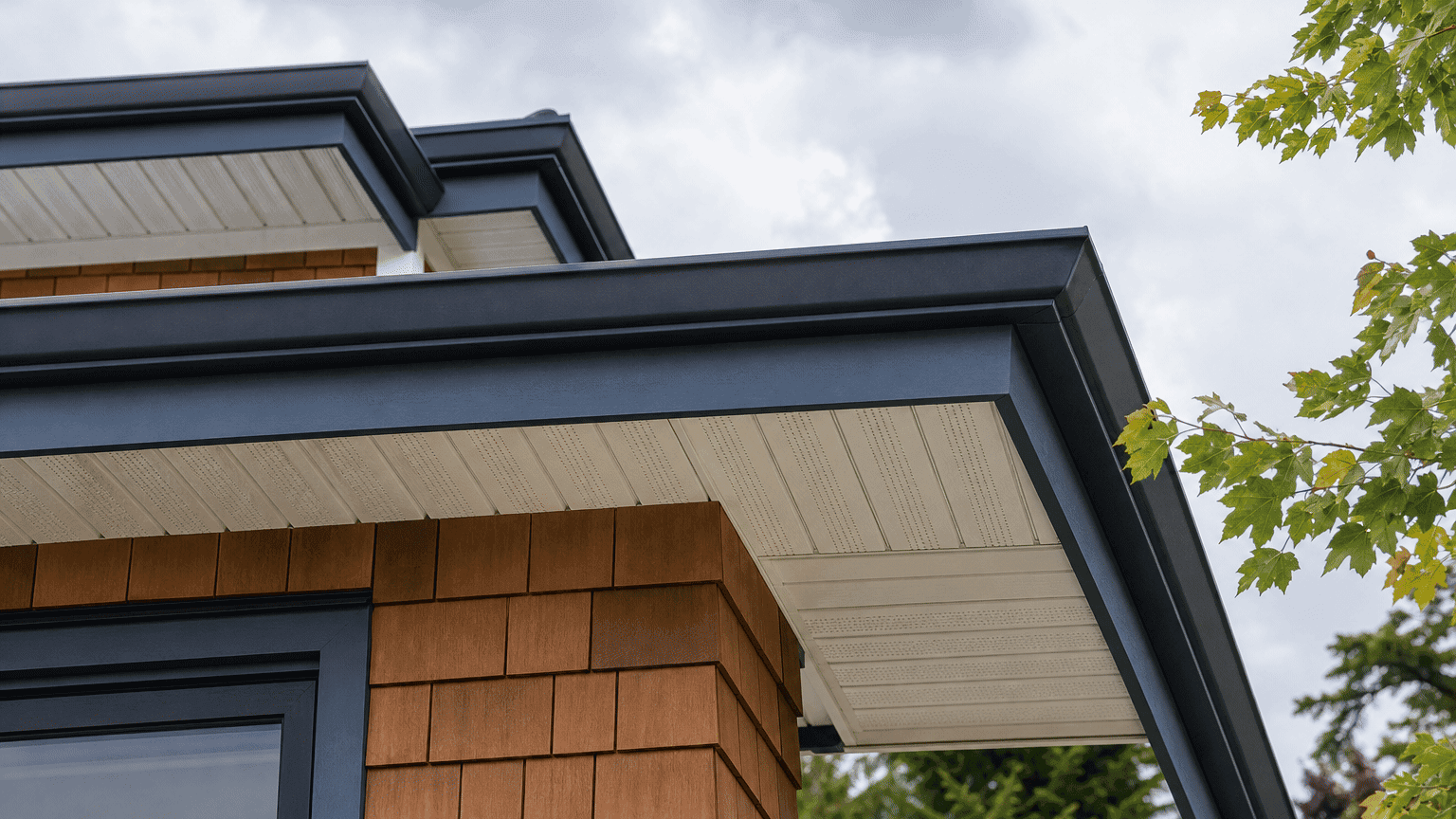
Soffits and fascia are easy to group together because they meet at the roof edge, but they do different jobs. They may also be wood, metal, fibre cement, vinyl, manufactured panels, or a combination. The existing material, previous coating, exposure, and condition determine whether a surface should be painted and which preparation is appropriate.
This guide covers the painting decision. Active roof leaks, failed gutters, rotten components, wildlife entry, electrical conflicts, and ventilation redesign need the appropriate qualified professional before a coating project proceeds.
Know which roofline parts are in the quote
Roof-edge terminology can make two estimates look similar when they include different surfaces. Ask the estimator to point out each component and record what is included.
- Fascia: The vertical board or panel at the roof edge. Gutters are often attached to it.
- Soffit: The underside of the roof overhang between the wall and fascia. It may be solid, perforated, vented in sections, or fitted with separate vents.
- Bargeboard: The trim following the sloped edge of a gable. It may also be called rake trim.
- Gutter and downpipe: The drainage system attached beside or over the fascia. It is not automatically included in a fascia-painting price.
- Frieze or wall trim: The trim where the soffit meets the wall. This can be a separate colour and preparation item.
- Roof-edge flashing: Metal that helps direct water at roof edges. Whether it is paintable depends on its material, finish, condition, and function.
A phrase such as “paint eaves” is not specific enough. Confirm whether the scope includes the soffit field, fascia faces and lower edges, gable trim, frieze boards, gutters, downpipes, brackets, vents, and small returns around porches or dormers.
For a wider repaint, these roofline details can be included in an exterior painting scope. For targeted maintenance, they should still be listed separately so access, repairs, colours, and exclusions are clear.
Inspect before deciding that paint is the fix
Begin from the ground in daylight. Binoculars or zoomed photographs can help identify areas that deserve a safe close inspection, but they cannot confirm hidden conditions. Do not climb onto a roof or use unsuitable ladders to investigate.
Look for:
- Peeling, flaking, blistering, fading, chalking, or uneven sheen
- Exposed bare wood, metal corrosion, split boards, soft edges, or swollen panel joints
- Brown, grey, green, or black staining and whether it returns after cleaning
- Water trails below gutter joints, corners, end caps, roof valleys, or short downpipes
- Sagging, separated, or overflowing gutters
- Open fascia joints, failed trim joints, and gaps around penetrations
- Damaged, loose, missing, or painted-over soffit vents
- Insect, bird, or other wildlife entry points
- Heat damage, condensation patterns, or recurring attic odour reported by the owner
- Electrical service, lighting, cameras, cables, or other equipment near the work
Staining does not identify one cause by itself. It can come from roof drainage, gutter leakage, condensation, metal runoff, mildew, dirt, tannins, or an older repaired problem. Likewise, peeling can reflect weathering, poor adhesion, moisture, an incompatible previous coating, or several factors together. Our guide to bubbling and peeling paint in Vancouver explains why diagnosing the cause matters before repainting.
The estimator should inspect accessible areas closely enough to distinguish a coating-maintenance project from a repair project. If the fascia is soft behind a gutter, the soffit is sagging, or staining suggests an active leak, record the next investigation instead of covering the evidence.
Separate painting from roofline repairs
Paint protects and finishes a stable, paintable surface. It does not rebuild damaged wood, stop a roof leak, correct gutter slope, remove a pest nest, or redesign attic ventilation.
Before the painting start date, decide who is responsible for:
- Roofing defects, failed flashing, or water entering above the roof edge
- Leaking, loose, blocked, undersized, or poorly drained gutters and downpipes
- Rotten fascia, damaged soffit panels, loose trim, and failed fasteners
- Wildlife exclusion or pest treatment
- Electrical fixtures and cables that interfere with access
- Ventilation concerns that need assessment beyond preserving existing openings
- Hazardous-material assessment where the age or condition of existing coatings makes it relevant
If another trade removes gutters or replaces boards, coordinate the order. New material may require drying, conditioning, primer, or a manufacturer-specified coating system. Fastener heads, cut ends, repaired joints, and transitions to the old finish should be included in the final preparation plan.
Do not assume every visible seam should be sealed. Some roofline and cladding assemblies need drainage or movement at particular joints. Our exterior caulking guide explains why the correct joint selection matters more than simply applying more sealant.
Prepare each material for the coating it will receive
Preparation should respond to the actual material and existing finish. A typical sequence for sound, paintable roofline surfaces may include:
- Confirming the substrate, coating condition, and areas excluded from paint
- Protecting roofing, walls, windows, landscaping, vents, paving, and nearby property
- Removing cobwebs, loose dirt, organic growth, chalk, and other contamination with a controlled method
- Allowing joints, lower edges, end grain, and shaded areas to dry adequately
- Scraping or otherwise removing loose and unstable coating
- Feathering sound paint edges or dulling glossy finishes where the specified system requires it
- Completing agreed repairs and preparing new material
- Treating corrosion or stains with a compatible system when required
- Spot priming exposed or repaired areas, or applying broader primer when the specification calls for it
- Applying the selected finish within its temperature, humidity, film-build, and recoat requirements
High pressure is not automatically better preparation. Spraying upward can force water behind soffit panels, into vents, under roof edges, or through vulnerable joints. It can also damage wood fibres and manufactured finishes. The cleaning method should remove contamination without creating a new water problem. See our guide to pressure washing before exterior painting for questions to ask about pressure, direction, protection, and drying.
Primer decisions are also condition-specific. Exposed wood, replacement boards, corrosion-treated metal, difficult stains, glossy factory finishes, and incompatible existing coatings may not use the same product. The written scope should name the preparation and coating products after the materials are identified, with current labels and technical data governing their use.
Keep soffit ventilation paths open
Some soffits are part of an attic ventilation system. Others are solid or contain separate grilles. A painter should identify visible vented areas and protect them, but should not claim that paint alone can confirm whether the whole attic is ventilated correctly.
The work plan should:
- Identify perforated panels, continuous vent strips, grilles, and other intentional openings
- Keep paint, caulk, filler, plastic, tape, and debris out of functional openings
- Avoid bridging perforations with heavy coating
- Remove masking without pulling or damaging the surrounding finish
- Replace only vent components included in the agreed scope
- Refer suspected ventilation deficiencies for appropriate assessment
Previously coated perforations may already be partly restricted. Adding another heavy coat without inspection can make the problem worse. Ask how the application method and film thickness will preserve the existing vent openings.
Spraying may be efficient on some soffit profiles, but it requires careful masking and control around roofing, siding, windows, lights, vents, neighbouring property, and wind. Brush or roller application may suit other conditions. The correct method is the one that meets the product specification and protects the building, not a universal rule for every soffit.
Plan safe access and property protection
Roofline work is often high, narrow, sloped, or interrupted by lower roofs, porches, service lines, landscaping, and neighbouring buildings. The contractor should inspect access before pricing production speed or choosing equipment.
A written safe access plan should consider:
- Building height, roof pitch, gables, dormers, setbacks, and ground slope
- Stable placement for appropriate access equipment
- Lower roofs, skylights, glass canopies, decks, and surfaces that cannot carry equipment
- Overhead electrical service and wall-mounted cables
- Hedges, trees, fences, heat pumps, lighting, and fragile landscaping
- Side-yard width and whether access would cross a property boundary
- Pedestrian routes, entrances, driveways, vehicles, and emergency egress
- Daily setup, material storage, weather interruptions, and secure cleanup
Protection may include roof coverings appropriate to the work, drop cloths, masking, gutter protection, window and siding protection, plant protection, and control of chips or wash water. The plan should keep paint debris out of gutters and drains.
If neighbouring land is genuinely needed for access, the owner should arrange clear permission before work is scheduled. A narrow space does not justify unstable ladder placement, walking on an unsuitable roof, or crossing a boundary without approval.
Account for Vancouver moisture and weather
Soffits are shaded by design, while fascia can receive rain, sun, roof runoff, and repeated wetting at gutter edges. The two surfaces may therefore dry at different rates even when they meet.
In Vancouver and the Lower Mainland, the schedule should account for:
- Recent rain and water retained behind gutters or in open joints
- Morning condensation and shaded north-facing rooflines
- Overflow or leakage that keeps fascia edges wet
- Limited airflow in narrow side yards and beneath deep overhangs
- Direct sun heating dark fascia while the soffit stays cool
- Air and surface temperatures during application and curing
- Wind affecting spray control and carrying debris
- Enough suitable time for primer, finish coats, and recoating
A dry forecast icon does not prove the substrate is ready. Product technical data, measured conditions when needed, actual airflow, and the prepared surface determine when coating can proceed. Our guide to the best time to paint a Vancouver exterior provides broader seasonal context.
Ask what happens if rain interrupts the work. Prepared or exposed areas may need temporary protection, but temporary covering should not trap moisture or block required ventilation. Equipment, materials, entrances, and the property should also be left secure between workable days.
What affects soffit and fascia painting cost?
There is no responsible fixed price without inspecting the roofline and access. A small bungalow with open access and sound paint is different from a tall character home with several gables, peeling wood, gutters tight to the fascia, and narrow side yards.
Cost factors include:
- Total linear length, soffit depth, gables, dormers, porches, and architectural detail
- Number of storeys, ground conditions, setbacks, and required access equipment
- Wood, metal, vinyl, fibre cement, manufactured panels, and mixed-material transitions
- Peeling, chalking, corrosion, stains, failed joints, and exposed substrate
- Gutter removal or protection and coordination with repairs by other trades
- Cleaning, drying, scraping, sanding, containment, caulking, and priming scope
- Vent masking and the detail required around perforated panels, lights, and cables
- Number of colours and the contrast between existing and proposed finishes
- Protection for roofing, siding, windows, landscaping, paving, vehicles, and neighbours
- Weather sequencing and the number of setup areas
For whole-home budgeting context, review the Vancouver exterior painting cost guide. Its ranges are not a substitute for a roofline inspection, but the guide shows why access, preparation, included surfaces, and repairs can matter more than a simple linear-foot comparison.
Common soffit and fascia painting mistakes
Avoid:
- Treating every stain as cosmetic without checking whether the cause is active
- Painting damp, soft, dirty, chalky, corroded, or unstable surfaces
- Covering bare wood without the preparation and primer required by the selected system
- Coating over failed gutters, open roof defects, or damaged components
- Filling intentional drainage gaps or sealing every joint by default
- Spraying or rolling paint into perforations and other vent openings
- Assuming gutters, downpipes, gable trim, and frieze boards are included
- Choosing an access method before inspecting height, slope, utilities, and ground conditions
- Comparing prices without comparing repairs, primer, coat counts, protection, and exclusions
- Scheduling from the forecast alone without confirming surface condition and product limits
Questions to ask before approving an estimate
Ask each contractor:
- Which fascia, soffit, bargeboard, frieze, gutter, downpipe, vent, and flashing surfaces are included?
- What materials and previous coating conditions did you identify?
- Which stains or failures need investigation or repair before painting?
- Who handles roof, gutter, carpentry, pest, electrical, or ventilation work?
- What cleaning, scraping, sanding, caulking, corrosion treatment, and priming are included?
- How will functional vents, roofing, siding, windows, landscaping, gutters, and drains be protected?
- What access equipment and staging plan suit each elevation?
- Which products, colours, application methods, and coat counts are specified?
- How will surface dryness, temperature, humidity, wind, and recoat timing be checked?
- What happens if hidden damage or unsuitable coating conditions are found?
- What cleanup, final inspection, and workmanship warranty are included?
Use our house painting quote comparison checklist to compare these answers alongside insurance, payment terms, change orders, and exclusions.
Soffit and fascia painting FAQs
Can soffits and fascia be painted without painting the siding?
Yes, when the roofline surfaces are sound and a clean visual transition can be made. A targeted repaint can address faded or peeling trim while the siding remains serviceable. The quote should still account for washing, preparation, access, masking, colours, and protection of the existing siding.
Should gutters be removed before fascia painting?
Sometimes removal provides better access, but it is not automatically necessary or appropriate. The answer depends on gutter condition, attachment, fascia exposure, repair needs, drainage setup, and who is qualified and insured to remove and reinstall the system. The estimate should state whether gutters remain, are protected, or are handled under a separate scope.
Can painters cover water stains on a soffit?
Only after the cause has been investigated and any active problem corrected. Once the surface is dry, stable, and suitable for coating, cleaning, stain control, primer, and finish can be specified for the actual material. Paint should not conceal evidence that still needs roofing, drainage, condensation, or pest investigation.
Does painting vented soffit stop airflow?
It can restrict airflow if perforations or grilles are filled with coating, caulk, or debris. A careful scope identifies and protects functional openings and applies the specified film without bridging them. Whether the attic has adequate ventilation overall is a separate assessment.
Is peeling fascia always caused by a leaking gutter?
No. Gutter leakage or overflow is one possibility, but coating age, sun exposure, failed joints, exposed end grain, roof-edge drainage, poor previous preparation, incompatible coatings, and moisture from other sources can also contribute. Inspect the pattern and surrounding conditions before choosing the repair.
Get a soffit and fascia painting estimate in Vancouver
If your soffits, fascia, gable trim, or other roofline details are faded, peeling, stained, or exposing substrate, request a free, no-obligation estimate or call +1 (604) 260-1613 for 24/7 estimate requests. Share clear photos of every elevation, close-ups of coating failure, the gutters and roof edge, and the surrounding access.
We help homeowners in Vancouver and across the Lower Mainland connect with the right painting partner for a clearly defined scope. An on-site review can separate painting from repairs, confirm the included surfaces, and produce an estimate that is easier to compare.