Should You Paint Before Vancouver's Rainy Season?
Posted on June 30, 2026 by The Vancouver Painters Team
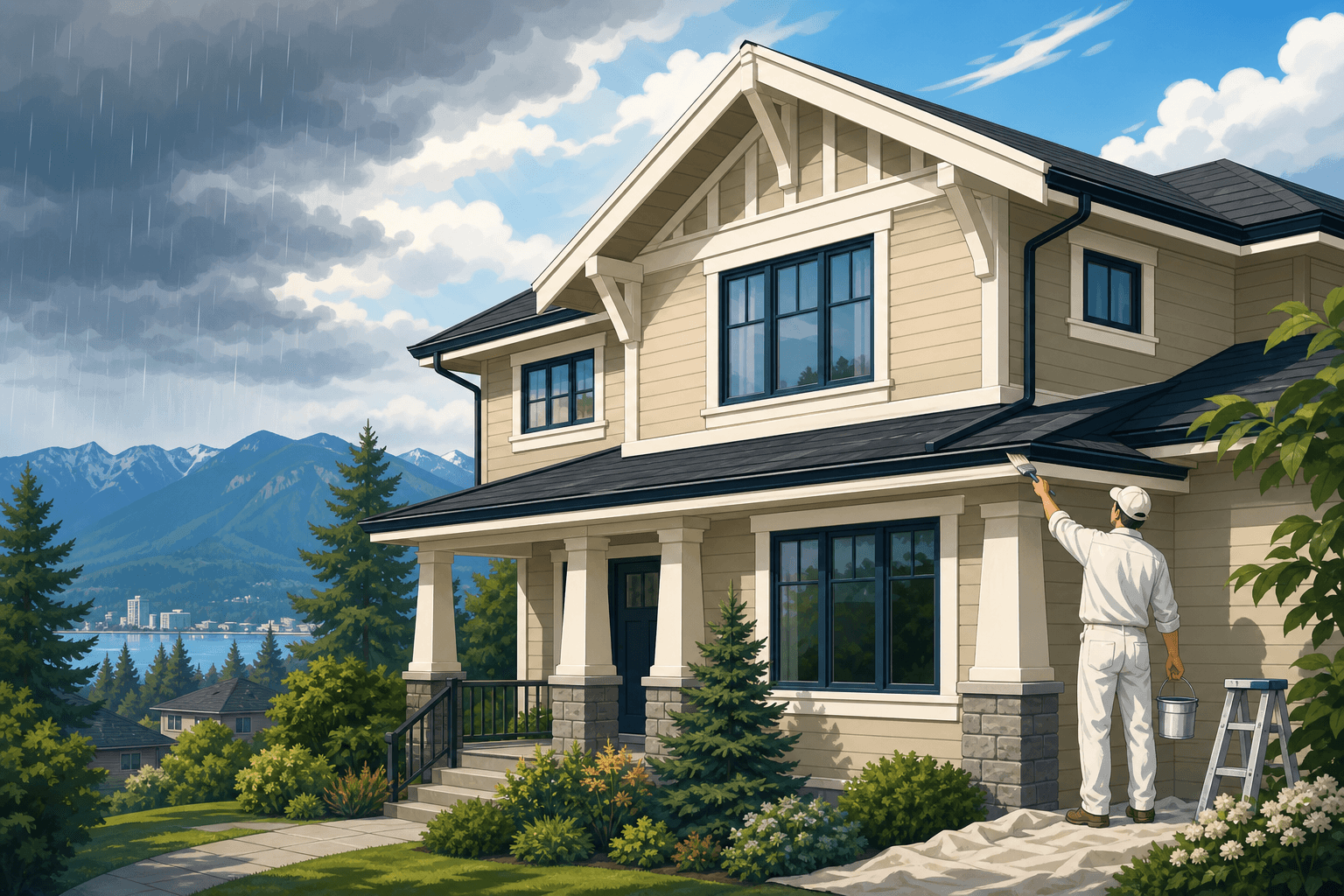
Quick answer: If your exterior paint is faded but still sound, late spring through September is usually the safest time to repaint before Vancouver's rainy season. If paint is already peeling, caulking has failed, or bare wood is exposed, do not wait for months of rain to make the damage worse. Get the exterior inspected, confirm the surface can dry properly, and book work only when the forecast gives enough time for washing, repairs, primer, paint, and curing.
Vancouver rain is not just inconvenient for painters. It affects adhesion, drying, mildew growth, wood movement, and how long a new coating will last. A good exterior repaint before the wet season is less about rushing to beat the first storm and more about sequencing the work so each layer has the conditions it needs.
Use this guide to decide whether to paint before the rainy season, what to check first, and what questions to ask before approving a quote.
Why rainy season timing matters
Exterior paint needs a clean, dry, stable surface. In the Lower Mainland, the problem is not only active rain. Morning dew, marine air, shaded walls, tree cover, and cool overnight temperatures can all slow drying.
That matters because paint can fail when moisture is trapped behind the coating or when the surface is still damp during application. A rushed project may look finished on day one but start bubbling, peeling, or flashing after the next wet stretch.
Before painting, a crew should consider:
- Recent rainfall and how long each wall has had to dry
- Surface temperature, not just air temperature
- Humidity and overnight dew
- Shade from trees, neighbouring homes, or north-facing walls
- Whether washing, repairs, caulking, and primer all have cure time
- Product instructions for minimum temperature and recoat windows
For a broader seasonal overview, see our guide to the best time to paint your home's exterior in Vancouver. For the climate tables, city-by-city rain totals, and how a warming climate is changing the hinges of the year, see The Greater Vancouver Exterior Painting Almanac.
Paint before rain if the coating is near the end of its life
Some homes can wait until next spring. Others should not go through another wet season without attention.
You should consider painting before the rainy season if you see:
- Bare wood on trim, fascia, siding edges, or window frames
- Peeling or flaking paint that exposes the previous layer
- Cracked or missing caulking around windows and doors
- Stains below gutters, decks, or balcony edges
- Paint bubbling after rain
- Mildew on shaded walls that keeps returning
- Chalky paint that rubs off on your hand
- Faded siding where the finish no longer sheds water well
These signs do not always mean a full repaint is urgent, but they do mean the home should be inspected. Sometimes targeted prep, caulking, and spot priming can protect vulnerable areas until a larger repaint. Other times, delaying a full exterior project lets water reach wood, stucco cracks, or siding joints all winter.
If you are not sure whether the coating is cosmetic or failing, compare what you see with our guide to signs your home needs new paint.
Do not paint just because the calendar is closing
Beating the rain is useful only if conditions are still right. Painting too late in a damp forecast can create the exact failure you were trying to avoid.
It may be better to wait if:
- The surface cannot dry after washing
- Rain is forecast too soon after primer or finish coats
- Overnight temperatures are below the product's minimum range
- Wood is soft, swollen, or rotten
- Stucco cracks or siding damage need repair first
- The crew cannot protect the work from wind-driven rain
- The quote skips prep so the job can fit into a short weather gap
A professional painter should be willing to say "not yet" when conditions are wrong. A delayed start is better than a finish that fails because it was applied over moisture or uncured caulking.
Prep work often matters more than the paint date
The best weather window will not rescue poor preparation. Vancouver exteriors collect mildew, pollen, road film, salt air, and chalky residue from old coatings. Those contaminants need to be removed before primer or paint.
Typical pre-rainy-season prep can include:
- Washing or soft washing exterior surfaces
- Treating mildew and algae on shaded walls
- Scraping loose paint
- Sanding rough paint edges
- Replacing failed caulking
- Filling small cracks or gaps
- Spot priming bare wood, stains, and repairs
- Protecting landscaping, decks, walkways, and fixtures
Washing needs its own dry time. If a contractor plans to wash and paint the same damp elevation too quickly, ask how they are confirming the surface is dry enough. Our guide to pressure washing before exterior painting in Vancouver explains why cleaning and drying time are separate steps.
Check caulking before the wet season
Caulking is one of the most important details before rain returns. Failed caulking around windows, doors, corner boards, trim, and penetrations can let water behind surfaces. Painting over cracked sealant may hide the issue for a few weeks, but it does not restore the joint.
Walk the exterior and look for:
- Gaps between caulking and trim
- Cracked or split beads
- Hardened caulking that no longer flexes
- Mildew-stained joints
- Peeling paint along seams
- Open joints where sealant has disappeared
Not every gap should be sealed. Some drainage openings, flashing details, and weep holes need to stay open so moisture can escape. Ask the estimator which joints will be sealed and which should intentionally remain open. For a more detailed checklist, read Exterior Caulking Before Painting in Vancouver.
Stucco and wood siding need different decisions
Rainy-season planning depends on the surface.
Wood trim and siding need protection because exposed fibres absorb water. If paint has peeled down to bare wood, the area should be cleaned, dried, sanded, primed, and coated before long wet periods if conditions allow. Rotten or soft wood should be repaired first, not sealed under paint.
Stucco needs a careful moisture assessment. Hairline cracks, staining, and previous coatings can change the product recommendation. A coating that traps moisture can create problems, while the right breathable system can help protect a sound surface. If your home has stucco, review our stucco painting guide for Vancouver homes before approving a coating system.
Fibre-cement, composite siding, metal railings, and masonry details each have their own prep requirements. The quote should name the surface assumptions instead of treating the whole exterior as one generic paint job.
How much dry weather is enough?
There is no single rule for every home, product, and exposure. A south-facing wall in Burnaby may dry faster than a shaded wall in North Vancouver. A simple trim refresh may need a shorter window than washing, repairing, priming, and painting a full two-storey exterior.
Ask your painter:
- How many dry hours are needed before washing, caulking, primer, and paint?
- How soon can rain hit the surface after each product?
- Will the crew work by elevation if one side dries faster than another?
- How will they handle unexpected showers?
- What happens if the forecast changes after setup begins?
The answer should be specific to your home, not a generic promise that exterior paint is "rain safe" after a few hours.
Book earlier if access or strata rules apply
As fall approaches, exterior schedules get tighter because painters are working around fewer dry days. Access details can make timing even more important.
Plan earlier if your project involves:
- Tall ladders or lift equipment
- Steep grades or narrow side yards
- Heavy landscaping near the house
- Decks, railings, or fences included in the scope
- Strata approval for townhomes or condos
- Shared driveways, parking, or work-hour restrictions
- Multiple colour approvals or heritage details
Strata and townhouse projects may need insurance documents, notices, or property manager approval before work begins. If your building has exterior rules, use our Vancouver strata painting requirements guide to prepare before the weather window arrives.
What a rainy-season-ready quote should include
When you compare exterior painting quotes before the wet season, look beyond the total price. The estimate should explain how the contractor will protect adhesion, drying, and vulnerable joints.
A clear quote should include:
- Washing or soft washing details
- Mildew treatment where needed
- Scraping and sanding scope
- Caulking replacement scope
- Crack or trim repair assumptions
- Primer requirements
- Number of finish coats
- Paint product line
- Weather delay policy
- Access equipment and protection
- Warranty terms and exclusions
If one quote is much cheaper because it skips washing, caulking, primer, or repairs, it may not be the best value before a wet winter. For a line-by-line review process, see How to Compare House Painting Quotes in Vancouver.
When a smaller repair is smarter than a rushed repaint
Sometimes the right pre-rainy-season decision is not a full exterior repaint. If the forecast is closing or the home needs repairs first, a painter may recommend temporary protection for the most exposed areas.
That could mean:
- Spot priming bare trim
- Replacing failed caulking in high-risk joints
- Touching up peeling fascia or window trim
- Repairing a small area of damaged siding
- Scheduling the full repaint for the next reliable dry season
This approach should be documented clearly. It is not a substitute for a failing exterior, but it can reduce winter damage when a full repaint cannot be done properly in the remaining weather window.
Get an exterior painting assessment before the rain
If your Vancouver, Burnaby, Richmond, North Shore, Coquitlam, Surrey, or Lower Mainland home is showing peeling paint, failed caulking, exposed wood, stucco cracks, or mildew before rainy season, request a free exterior painting quote or call +1 (604) 260-1613 for 24/7 estimate requests.
Send photos of each side of the home, close-ups of problem areas, and notes about access or strata rules. We can help you understand whether the project should be painted before the rain, protected with targeted repairs, or scheduled for the next exterior season.