Hardie Board Painting in Vancouver: Prep, Costs & When to Repaint
Posted on July 14, 2026 by The Vancouver Painters Team
Quick answer: Fibre-cement siding, often called Hardie board, is usually a good candidate for repainting when the boards, joints, and existing coating are sound. The important work happens before the finish coats: cleaning, drying, addressing failed caulking or damaged boards, and choosing a compatible exterior coating. In Vancouver's wet climate, painting over trapped moisture or active building-envelope problems can lead to early failure.
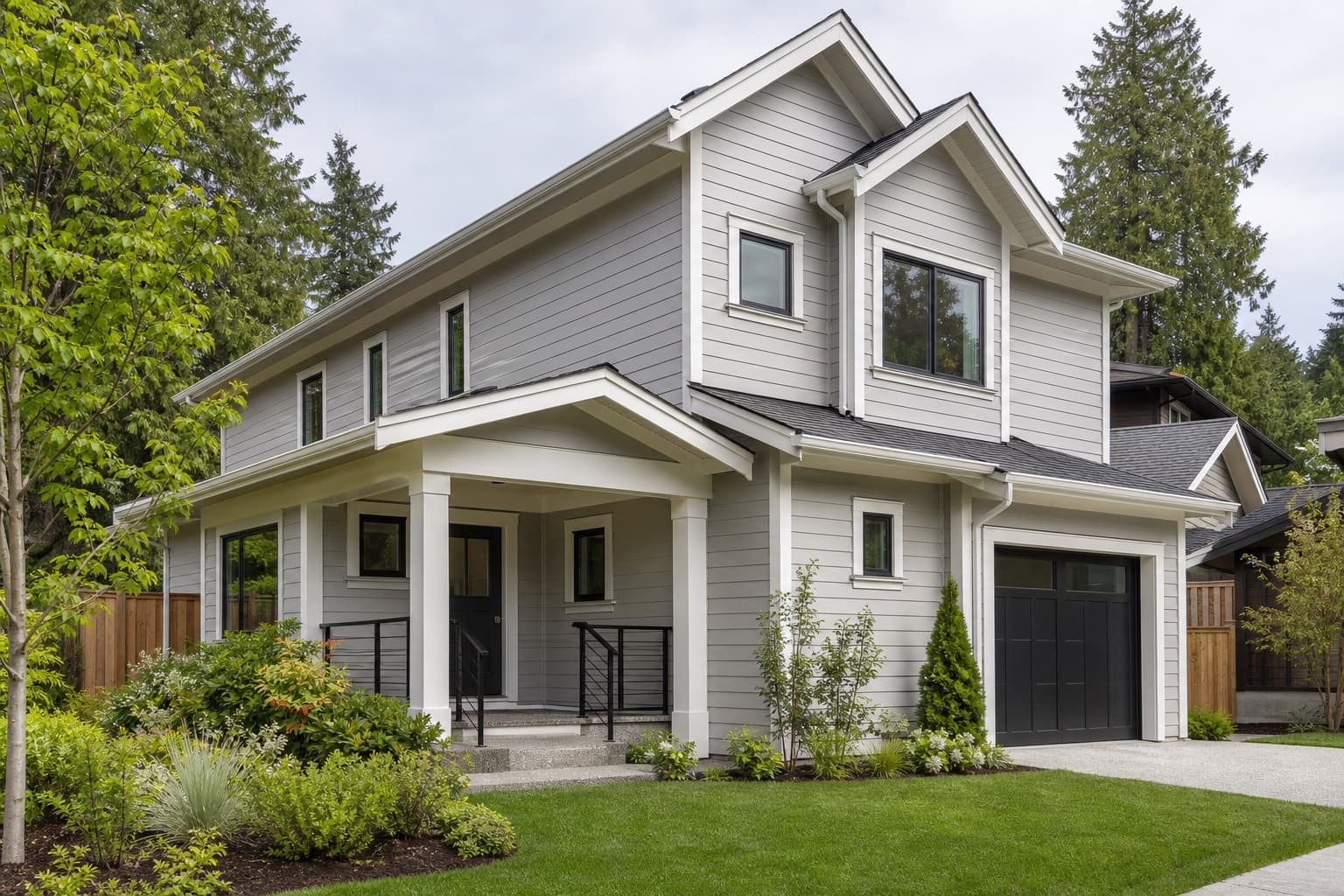
Hardie board is common on newer homes, renovations, laneway houses, and townhomes across Vancouver and the Lower Mainland. It is more stable than wood in many conditions, but it is not maintenance-free. Sun, rain, salt air, landscaping, sprinkler overspray, and a failed coating can all affect when and how it should be repainted.
Is Hardie board a good candidate for repainting?
Fibre-cement siding is designed to accept paint, whether it has a factory finish or has been painted before. A repaint is often straightforward when the surface is clean, the coating is still well bonded, and there are no moisture or substrate issues behind the siding.
Before a project is scheduled, the painter should look for:
- Chalking, fading, or colour inconsistency
- Peeling or flaking around edges, trim, and fasteners
- Cracked, missing, or failed caulking
- Damaged boards, loose trim, or exposed cut edges
- Water staining below gutters, windows, or roof transitions
- Mildew or algae on shaded elevations
- Areas where soil, shrubs, decks, or sprinklers keep siding damp
Paint is a finish, not a repair for a leak or failed flashing. If moisture is repeatedly getting behind the siding, or boards are damaged, those conditions need to be resolved before new paint is applied.
Start with cleaning and a moisture check
Even a house that looks clean from the sidewalk can carry a film of dust, pollen, mildew, or chalked paint. New coatings need a stable, clean surface to bond to.
Preparation often starts with careful washing, followed by enough drying time for the siding and the vulnerable details around it. A north-facing wall in Vancouver may stay damp longer than a sunny elevation, especially near mature landscaping or deep roof overhangs.
For a closer look at cleaning methods and dry time, see our guide to pressure washing before exterior painting in Vancouver. High pressure is not automatically better: the goal is to clean the surface without forcing water into joints, trim, or openings.
When the weather has been wet or a wall has known trouble spots, a moisture check helps the crew decide whether the surface is ready. Paint should not be used to seal in an active water issue.
Prep checklist before painting fibre-cement siding
A written exterior painting quote should explain how the siding will be prepared, not just name a paint colour. The exact scope depends on the home's condition, but a careful project may include:
- Washing dirt, chalk, mildew, and loose debris from the siding
- Allowing washed surfaces to dry fully
- Scraping and sanding loose or failing paint edges
- Checking boards, trim, fasteners, and cut edges for damage
- Replacing damaged material or completing needed repairs before painting
- Spot-priming bare, repaired, or otherwise exposed areas when the coating system calls for it
- Reviewing failed caulking at appropriate trim-to-siding and opening joints
- Protecting windows, roofing, decks, landscaping, and adjacent finishes
- Applying the specified finish coats at the required spread rate
Caulking helps protect the right joints, but it should not block areas that were designed to drain. Our guide to exterior caulking before painting in Vancouver explains why the existing joint design and manufacturer guidance matter.
Primer, paint, and caulking choices
The coating system should match both the condition of the existing finish and the fibre-cement substrate. A previously painted home with sound coverage may need cleaning, preparation at failed areas, spot primer where needed, and compatible finish coats. Bare or repaired sections can require a different preparation sequence.
Changing from a dark colour to a light colour, covering patchy repairs, or dealing with widespread coating failure may affect primer and coat requirements. Ask the contractor to specify the product line, primer plan, colour count, and number of finish coats in the quote.
Avoid treating all gaps the same way. Caulking that has separated around trim or windows may need replacement, while some siding laps and drainage paths should remain open. A professional should assess what the detail is intended to do rather than simply filling every visible line.
When to paint Hardie board in Vancouver
Late spring through early fall usually gives Greater Vancouver homeowners the most reliable exterior-painting windows. The calendar alone is not enough: the siding must be dry, temperatures must suit the coating instructions, and the paint needs enough time to dry and cure before rain or heavy evening dew.
Watch for:
- Rain in the immediate forecast
- Cool, damp mornings and early-evening dew
- Shaded elevations that have not dried as quickly as the rest of the house
- Freshly washed surfaces that need more drying time
- Wind that can carry debris onto wet paint
For a month-by-month planning guide, read the best time to paint an exterior in Vancouver. A flexible schedule gives the crew more room to sequence washing, repairs, and paint around weather rather than rushing a marginal day.
What affects the cost of Hardie board painting?
Hardie board painting is priced by the full scope of preparation, access, and coating work—not by siding material alone. A simple, well-maintained one-storey elevation can be much faster than a smaller home with multiple storeys, detailed trim, tight side yards, or extensive preparation.
The biggest cost factors are usually:
- Total paintable siding and trim area
- Number of storeys, rooflines, balconies, and difficult elevations
- Ladder, scaffold, or lift access
- Surface condition and the amount of scraping, sanding, primer, or repair required
- Failed caulking, damaged boards, or moisture-related issues
- Number of colours and detailed trim work
- Landscaping, patios, windows, or neighbouring property that need protection
For broader 2026 budget ranges and a breakdown of exterior scopes, read our exterior painting cost guide for Vancouver. An estimator needs photos of each elevation and, for complex work, an on-site look before confirming a written price.
Common mistakes to avoid
Some problems that appear to be paint failure begin before the first coat goes on. Avoid:
- Painting over chalk, mildew, or loose coating
- Skipping dry time after washing or rain
- Covering active leaks, failed flashing, or damaged boards with paint
- Using a product that is not suited to the existing coating or substrate
- Caulking drainage paths that should remain open
- Assuming every wall dries at the same rate
- Comparing estimates by total price when the preparation scopes are different
If peeling, bubbling, or staining keeps returning in one location, there may be an underlying moisture issue. Review our guide to paint bubbling and peeling in Vancouver before treating it as a simple touch-up.
Questions to ask before approving a quote
Before you book, ask the painter:
- How will the siding be cleaned, and how long will it dry?
- What preparation is included for peeling, chalking, bare areas, and damaged boards?
- Will the crew check problem areas for moisture when conditions are questionable?
- Which joints will be caulked, and which drainage paths will remain open?
- What primer and finish products are included?
- How many finish coats are included, and what happens if the colour change needs more coverage?
- Is ladder, scaffold, or lift access included?
- How are weather delays handled?
- Which surfaces are included: siding, trim, soffits, fascia, doors, and garage doors?
Clear answers make it easier to compare scopes fairly. Our house painting quote comparison checklist covers other important questions about products, repairs, insurance, and payment schedules.
Get a Hardie board painting estimate in Vancouver
If your fibre-cement siding is faded, peeling, damaged, or ready for a colour update, request a free painting estimate or call +1 (604) 260-1613 for 24/7 estimate requests. Share wide photos of each side of the house, close-ups of damaged or peeling areas, the number of storeys, and any access concerns.
We help homeowners in Vancouver and across the Lower Mainland connect with the right painting partner for a clearly defined exterior scope and written estimate.