Exterior Railing Painting in Vancouver: Rust, Prep & Safety
Posted on July 22, 2026 by The Vancouver Painters Team
Quick answer: A sound exterior railing with a weathered or failing finish can often be recoated. The first decision, however, is whether the work is coating maintenance or repair. Paint can protect a properly prepared, paintable surface; it cannot fix rust-through, unsafe movement, loose anchors, failed welds, active water entry, or compromised structural components. Those conditions need assessment and repair by the appropriate qualified professional before painting.
Railing finishes often fail first at welds, base plates, and undersides. An estimate should identify material, defects, preparation, repairs, and exclusions; it cannot certify safety or code compliance, recommend load tests, or authorize safety-related alterations.
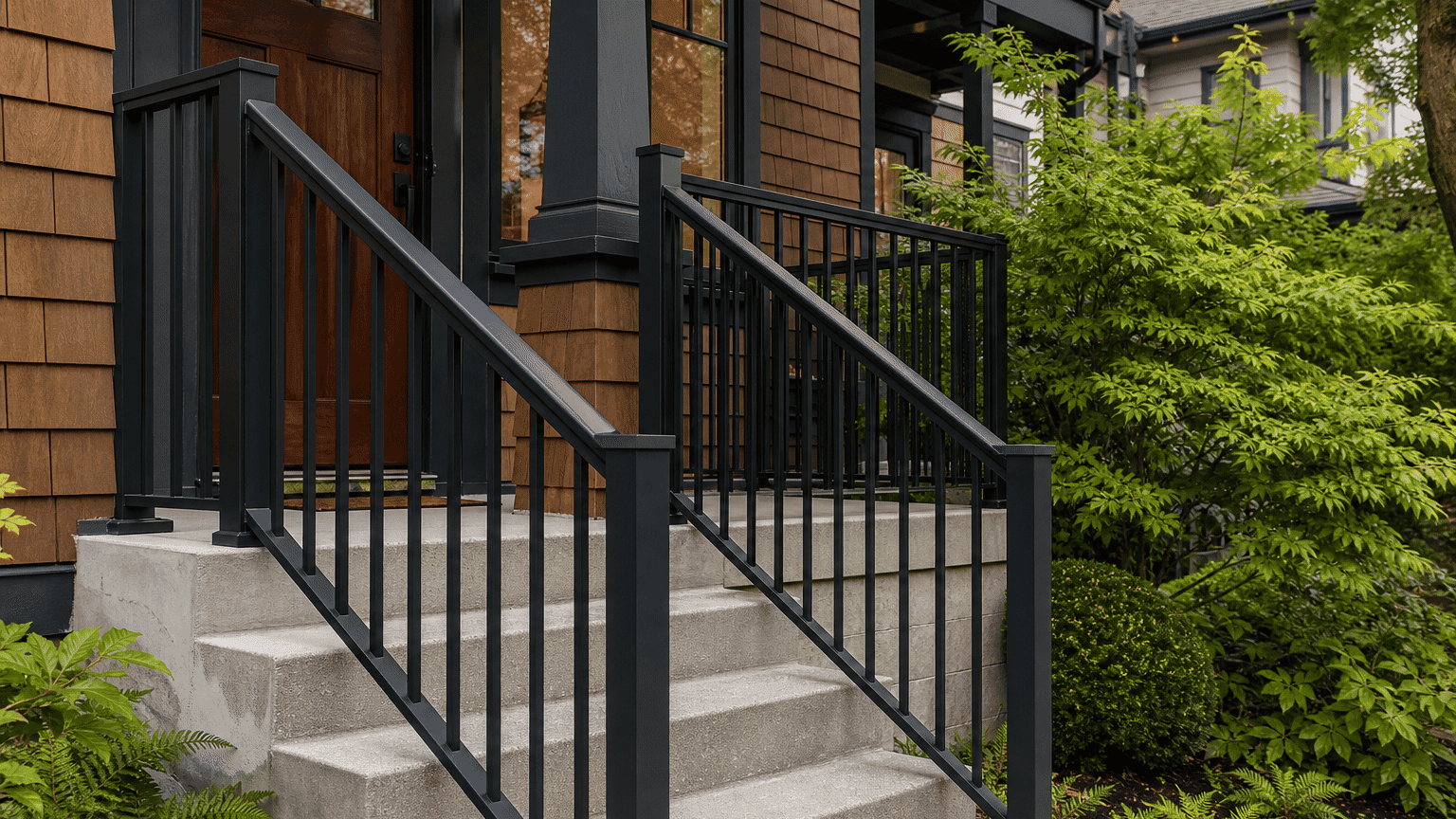
Know the parts of an exterior railing
Clear terminology prevents scope gaps among front-step, balcony, deck, and driveway assemblies.
- Handrail: The graspable rail along stairs, ramps, or a walking route.
- Guard: A barrier at the open edge of a stair, landing, balcony, deck, or other elevated area. Homeowners may call the overall assembly a guardrail.
- Top rail: The upper horizontal member of a guard; it is not automatically the handrail.
- Balusters or pickets: The vertical or occasionally shaped infill members between posts and rails.
- Posts: Main vertical supports connected to the stair, landing, deck, wall, or supporting construction.
- Base plates: Plates through which some metal posts connect to their support.
- Brackets: Components securing a rail to a wall, post, stringer, or other member.
- Welds: Fused connections among metal rails, posts, pickets, tabs, brackets, or gates.
- Fasteners: Screws, bolts, nuts, anchors, and other mechanical connections.
- Gates, hinges, and latches: Moving parts whose alignment, clearance, and operation must be preserved.
List included components, inaccessible surfaces, removal, and hardware work.
Within a broader exterior painting scope, railing refinishing still deserves a line item because its preparation, access, and coating system differ from siding or trim.
Identify the material and existing finish
A black railing is not necessarily painted steel. Similar-looking metals and finishes can require different compatible systems.
- Painted steel often shows red-brown corrosion at coating breaks near welds, edges, joints, and post bottoms.
- Aluminum can oxidize, while its factory or field finish may chalk, fade, blister, or lose adhesion.
- Galvanized steel has a protective zinc layer that may be new, weathered, passivated, or previously painted.
- Wood may crack, soften, expose end grain, or trap water at joints.
- Factory powder coating is a baked finish; fading, delamination, corrosion beneath it, and field touch-ups are different conditions.
Mixed construction is common, such as a wood cap over steel pickets. Confirm representative substrates and finishes; inspected condition, manufacturer instructions, technical data, and warranty limitations guide compatibility.
Inspect before requesting a coating-only quote
Begin in daylight with a ground-level survey of the complete railing run, then use appropriate safe access for close inspection; do not climb the assembly, lean over an open edge, or load-test the guard. Follow profile changes at steps, corners, gates, and deck edges. Zoomed photographs can flag welds and post bases, but they cannot establish concealed metal loss, anchor condition, or capacity.
Look for:
- Peeling, blistering, cracking, chalking, fading, or thick previous touch-ups
- Rust bleed emerging through the finish or from joints and fasteners
- Pitting, layered scale, swollen-looking corrosion, or metal edges that have visibly thinned
- Holes, splits, or rust-through in rails, posts, pickets, plates, or brackets
- Loose, missing, or heavily corroded fasteners
- Cracked, separated, or repeatedly rusting welds
- Movement, leaning, distortion, misalignment, or unexplained changes in gate clearances
- Loose or failed anchors and cracked supporting concrete, masonry, or wood
- Corrosion around base plates, post pockets, sleeves, and intersections
- Details retaining water, dirt, leaves, or de-icing residue
- Failed sealant, blocked drainage, or a post detail that acts as a water trap
- Staining or deterioration in adjacent deck membranes, waterproof coatings, flashings, walls, steps, or landings
Rust bleed does not reveal remaining metal or safety. Movement, cracked welds, failed anchors, section loss, or uncertain connections need a qualified fabricator, structural professional, or building professional as appropriate. Homeowners should not test strength or loading.
Review moisture patterns before preparation removes the evidence. Post-base corrosion may involve trapped water, drainage, failed waterproofing, salts, or incompatible metals. Our guide to bubbling and peeling exterior paint explains why recurring failure should be investigated rather than covered.
Separate painting from repair and professional assessment
The painting scope begins with a stable surface. It should not absorb another trade's work merely because the repair will need coating.
Define responsibility for:
- Metal fabrication: Replacing thinned metal or failed welds, repairing rust-through, and rebuilding gates or connections.
- Carpentry: Replacing deteriorated wood rails, posts, blocking, stairs, or supports.
- Waterproofing: Correcting active water entry, failed membranes, penetrations, or drainage.
- Structural, safety, and code matters: Assessing movement, anchorage, capacity, geometry, damage, or compliance; painters should not certify these matters.
- Hazardous coating work: Assessing older or unknown coatings and specifying disturbance controls.
A fabricator, carpenter, or waterproofing professional may complete repairs before coating. Movement, anchorage, or guard concerns may need a structural or building professional; a painter's opinion does not replace their conclusions.
If an existing finish could be hazardous, disturbance can spread contamination to stairs, soil, neighbours, and occupied areas. Arrange an appropriate assessment and work method first; age or colour alone is not enough to decide.
Preparation for sound, paintable railings
After repairs, preparation should fit the material, finish, exposure, and selected system. There is no universal primer, coating brand, preparation standard, or washing pressure.
A condition-specific sequence may include:
- Document included faces, repair boundaries, protected hardware, and inaccessible areas
- Dry-clean debris and degrease hand oils or other contamination where present
- Wash in a controlled way when appropriate, then let crevices and supports dry
- Remove unstable coating and corrosion to a sound edge using suitable methods
- Feather transitions and prepare bonded finishes as the selected system requires
- Remove dust and residue from faces, joints, ledges, and the work area
- Apply the specified primer and compatible finish within technical-data requirements
Excessive washing pressure or poor direction can drive water into penetrations, damage wood and membranes, or scatter old chips. Review the practical limits in our guide to pressure washing before exterior painting.
Surface rust on sound metal is not the same as deep pitting, scale, a split tube, or corrosion inside a connection. Paint must not bridge holes or conceal fabrication needs. Check current manufacturer instructions and technical data against the prepared substrate and retained finish.
Material-specific preparation decisions include:
- Sound painted steel: Remove loose finish and corrosion to a sound edge, feather retained coating as required, and clear dust from welds and intersections. The observed corrosion, remaining coating, exposure, and product technical data govern compatible primer and finish selection.
- Galvanized steel: Confirm whether exposed zinc is new, weathered, passivated, or previously coated before choosing preparation. Preserve sound galvanizing and use a coating system confirmed compatible by its manufacturer; a blanket acid-etch instruction is not suitable for every galvanized surface.
- Aluminum: Remove contamination and loose oxidation without damaging sound metal or retained factory treatment. Existing finish, any manufacturer guidance, and coating compatibility determine the preparation, primer need, and finish rather than a generic metal-paint rule.
- Factory powder coating: Establish whether the finish is firmly bonded, then use adhesion testing where the proposed coating manufacturer's instructions call for it and specify a manufacturer-approved recoat system. Widespread delamination or corrosion beneath the film may need specialist shop refinishing rather than an on-site overcoat.
- Wood: Separate decay, loose connections, and failed members for carpentry before coating. End grain, checks, joints, retained finish, and actual wood moisture require attention, with drying limits and compatible primer or finish governed by the selected product data.
Include every face without disabling the details
Backs, undersides, intersections, welds, post bottoms, and base-plate perimeters remain vulnerable. A front-face-only quote should say so.
The sequence should reach:
- Undersides and backs of rails
- All sides of pickets, posts, brackets, and decorative elements
- Welds, cut edges, bolt heads, and profile interruptions
- Lower rails, post bases, base plates, and stair or wall transitions
- Areas exposed by qualified removal of included non-structural accessories
Paint bridging hinges, latches, or moving faces can disable operation. Protect gates and contact points; do not disassemble safety-related components or modify a guard to ease painting.
Keep stairs and landings free of debris, oil, wet coating, hoses, and overspray that occupants could step on or track indoors.
Plan safe access and protect the property
Railing work occupies entrances, stairs, balconies, and open edges. Plan for workers and everyone using the route.
Before work begins, consider:
- How routes will be controlled while surfaces are prepared, wet, or curing
- Whether residents, deliveries, mobility needs, and emergency egress require alternate access
- Open-edge and fall hazards created by access, temporary removal, or incomplete repair
- Stable access equipment that does not rely on the railing
- Protection of decks, membranes, concrete, siding, glass, doors, and drains
- Control of chips, dust, wash water, drips, and overspray
- Nearby vehicles, public paths, shared property, neighbouring windows, and property boundaries
- Wind, cleanup, material storage, and security between work periods
Brushes provide control but require access to each face. Rollers suit some broad profiles but miss intersections. Spraying can cover complex shapes while demanding greater masking and drift control. Site constraints, coating instructions, finish expectations, and protection determine the method.
Map protection beyond the railing itself. A side-yard rail may put preparation dust near a neighbour's window or vehicle; a shared stair may carry chips and wet footprints across a property line. Obtain permission before placing access or protection on neighbouring land, define who controls shared routes, and use physical masking or containment suited to the method. Wind direction is a stop-or-adjust condition, not an overspray-control plan.
Vancouver moisture changes the schedule
Rain can leave base-plate edges dry to the eye while moisture remains beneath a plate lip, inside a picket-to-rail intersection, or against a porous step. Condensation also returns first on cool shaded metal, and horizontal rails hold droplets along welds and end details.
In Vancouver and the Lower Mainland, the contractor should check the actual faces being coated, including shaded undersides and post bottoms, rather than judge readiness from the walking surface. A sheltered balcony may dry slowly, while a dark top rail in sun can become much warmer than the reported air temperature.
Salt-bearing coastal air may increase deposits or corrosion risk, but distance from water does not specify a coating. Actual exposure, condition, contaminants, material, and product guidance matter; avoid a “coastal-grade” promise without a site-specific specification.
Application and recoat timing should follow actual surface and air conditions plus the coating manufacturer's technical data. Our guide to the best time to paint a Vancouver exterior adds seasonal context, but no month guarantees that base plates, intersections, and shaded faces are ready.
What affects exterior railing painting cost?
A responsible estimate needs more than linear footage. Equal lengths can require very different labour, containment, access, and repair coordination. Cost factors include:
- Length, height, pickets, posts, rails, brackets, panels, corners, and gates
- Painted steel, aluminum, galvanized steel, wood, mixed materials, and the existing finish
- Fading, peeling, rust bleed, pitting, scale, failed powder coating, or previous touch-ups
- The amount and location of sound coating that can remain
- Detail at welds, undersides, base plates, fasteners, and wall connections
- Cleaning, drying, coating removal, corrosion preparation, dust control, and priming
- Hazardous-material assessment and controlled work where relevant
- Fabrication, carpentry, waterproofing, or separate professional assessment
- Stairs, height, restricted access, occupied routes, and staging
- Protection of decks, concrete, membranes, siding, glass, landscaping, vehicles, and neighbours
- Colours, application constraints, and required coat sequence
- Weather interruptions, phasing, cleanup, and return visits
For broader budgeting context, see our Vancouver exterior painting cost guide. If nearby wood decks, rails, or fences also need maintenance, the deck and fence staining guide explains why wood condition and coating history need their own scope. Neither guide replaces an inspection of the railing.
Common exterior railing painting mistakes
Avoid:
- Assuming every black metal railing is painted steel
- Overlooking backs, undersides, welds, and base details
- Treating rust colour as proof that corrosion is only superficial
- Painting over rust-through, cracked welds, loose anchors, unsafe movement, or damaged supporting material
- Hiding fabrication or carpentry defects with paint or filler
- Disturbing a suspected hazardous coating without suitable assessment and controls
- Applying one primer or finish to every metal and retained factory coating
- Washing aggressively around anchors, membranes, wood, or occupied areas
- Leaving dust, salts, grease, chalk, or loose corrosion beneath the new system
- Coating damp metal or relying only on air temperature and a dry forecast
- Bridging gate hinges, latches, contact points, or operating clearances
- Leaving stairs slippery, blocked, or contaminated during the work
- Allowing chips, wash water, dust, or overspray to reach drains, vehicles, landscaping, or neighbours
- Comparing totals without comparing repairs, preparation, included faces, access, products, and exclusions
Questions to ask when comparing estimates
Ask each contractor:
- Which rails, pickets, posts, plates, fasteners, details, and gates are included?
- What substrate and existing coating were identified in each area?
- Which visible defects are coating failures, and which require repair or professional assessment first?
- Who handles fabrication, carpentry, waterproofing, structural, or hazardous-material work?
- Are inaccessible backs, undersides, or connection faces excluded?
- What cleaning, coating removal, corrosion preparation, dust control, and priming are included?
- How was compatibility with the metal, wood, galvanizing, or factory finish established?
- Which products and coat sequence are proposed, and what current technical data governs their use?
- How will hardware, clearances, routes, drains, and waterproofing be protected?
- What access, route control, containment, and neighbour protection are planned?
- How will actual surface conditions, weather, recoat timing, and interruptions be managed?
- What happens if deep corrosion, failed connections, movement, or hidden deterioration appears during preparation?
- What cleanup, final coating inspection, gate-operation check, exclusions, and workmanship warranty are documented?
Use our house painting quote comparison guide to review scope, insurance, payment terms, change orders, cleanup, and warranty language alongside the railing-specific answers.
Exterior railing painting FAQs
Can a rusted railing be painted?
Sometimes. Localized corrosion on sound metal may be prepared and recoated compatibly. Deep pitting, heavy scale, significant section loss, holes, rust-through, failed welds, movement, or suspect anchors require repair or assessment. Appearance cannot establish capacity.
Can powder-coated, aluminum, or galvanized railings be repainted?
Some can, but not with one generic treatment. Bonded powder coating differs from a peeling factory finish; aluminum oxidation and treatments affect adhesion; and galvanized surfaces vary with weathering, passivation, and previous coatings. Confirm material, condition, manufacturer guidance, and compatibility first.
Does the railing need to be removed for painting?
Not always. Sound railings can often be coated in place when required faces are accessible and protection is practical. Removal may suit fabrication, deteriorated concealed faces, inadequate access, or a specified shop process. Qualified parties should handle safety-related assemblies and the separate temporary protection plan.
How long will a repainted exterior railing last?
There is no universal durability promise. Service life depends on preparation, compatibility, application, exposure, drainage, abrasion, contaminants, and maintenance. Inspect periodically; address chips and rust bleed early, but refer movement or connection concerns.
Can a painter confirm that my railing meets code?
No. A painting estimate can document visible coating and access conditions, but it is not a code or safety certification. Questions about height, openings, load, anchorage, configuration, damage, or required modifications belong with the qualified building or structural professional and local authority appropriate to the situation. Do not modify or load-test a guard based on painting advice.
Get an exterior railing painting estimate in Vancouver
For a railing-specific quote, photograph the full assembly and close views of coating failure, welds, fasteners, post bases, and gate hardware. Note movement or known water problems so the estimator can separate painting from fabrication, carpentry, waterproofing, or professional assessment. Request a free, no-obligation estimate or call +1 (604) 260-1613 for 24/7 estimate requests.
We help homeowners in Vancouver and across the Lower Mainland connect with a painting partner for a defined railing scope. The estimate can identify paintable components, preparation and protection while keeping structural and safety decisions with the appropriate qualified professional.