
Deck and Fence Staining in Vancouver: Paint vs. Stain, Prep, and Timing
Posted on June 18, 2026 by The Vancouver Painters Team
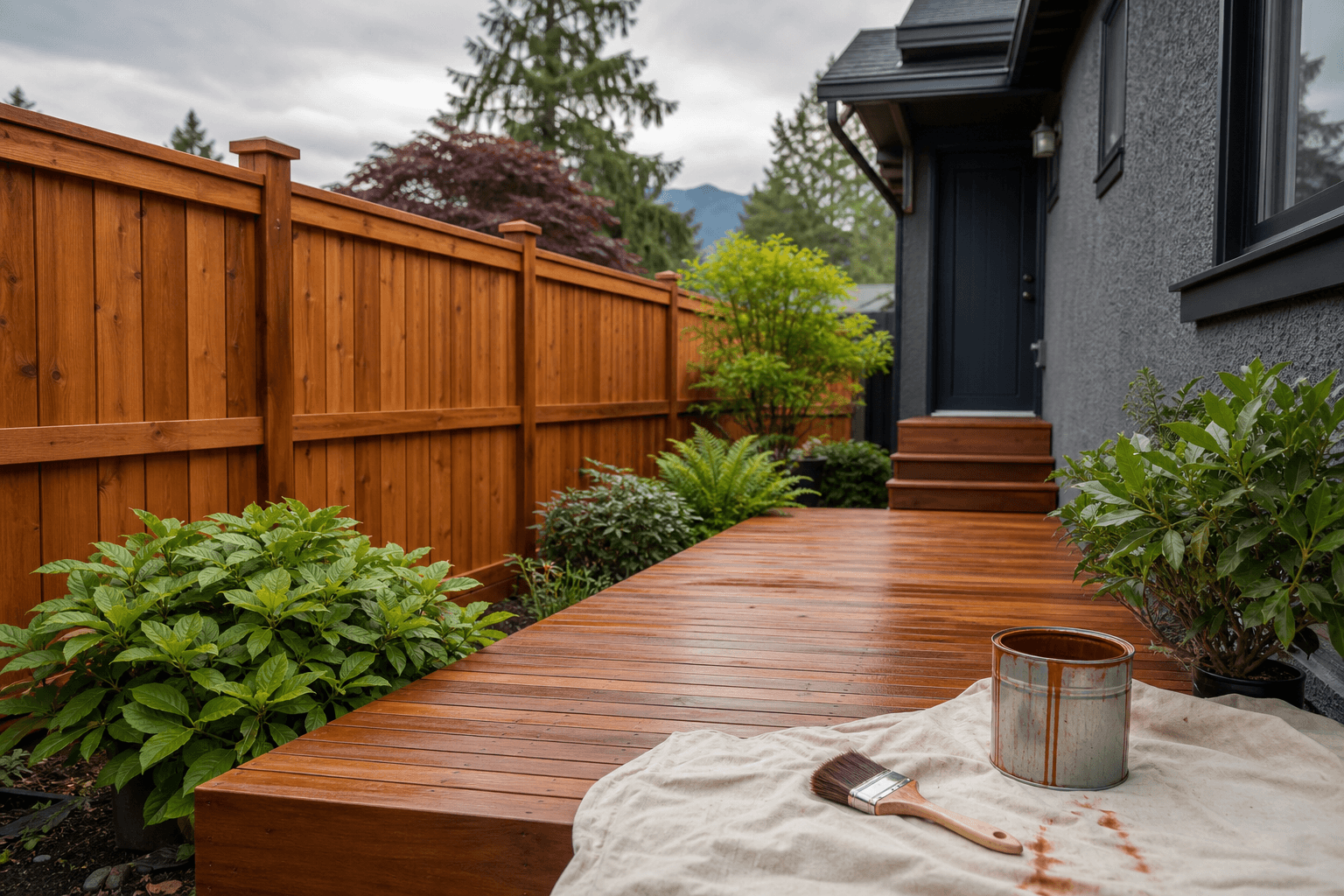
Quick answer: Most Vancouver decks and fences last longer with stain or a breathable exterior wood coating rather than a thick paint film, especially on horizontal deck boards that see rain, foot traffic, and standing moisture. The best result depends on wood condition, previous coatings, sun exposure, drainage, and whether the surface can dry fully before work starts.
Decks and fences take more weather abuse than most painted surfaces around a home. They sit close to wet soil, collect needles and leaves, dry slowly in shaded yards, and face long stretches of rain followed by intense summer sun.
That is why a good deck or fence project is not just about colour. It is about choosing a coating system that fits the wood and giving the surface enough cleaning, sanding, drying, and curing time to hold up in the Lower Mainland.
Paint vs. stain for Vancouver decks
Paint can look clean on railings, trim, and some vertical wood, but it is often risky on walking surfaces. A solid paint film can trap moisture in deck boards. Once water finds a crack or worn edge, peeling can spread quickly and become difficult to repair cleanly.
Stain is often a better fit for deck boards because it soaks into the wood or forms a thinner film, depending on the product. That can make future maintenance easier because worn areas can usually be cleaned, sanded, and recoated without stripping every board back to bare wood.
For deck surfaces, compare:
- Transparent stain: Shows the most wood grain, but usually needs more frequent maintenance.
- Semi-transparent stain: Balances natural grain with better colour and UV protection.
- Semi-solid stain: Adds stronger colour while still showing some wood texture.
- Solid stain: Hides most grain and can refresh older wood, but prep and future maintenance matter more.
- Porch and floor enamel: Can work in specific situations, but it needs a sound, dry, well-prepared surface and may peel if moisture gets trapped.
If the deck has already been painted and is peeling heavily, the right answer may involve stripping, sanding, board replacement, or a different coating approach. A quick coat over loose paint rarely lasts through another Vancouver wet season.
What about fences?
Fences are more forgiving than decks because most surfaces are vertical. They shed water better and do not take foot traffic. That means both stain and paint can work, depending on the look you want and the condition of the wood.
Stain is usually a strong choice for cedar fences because it highlights the wood and can weather more gracefully. Paint can provide a more finished look, especially for front-yard fences, gates, and architectural details, but it needs better prep when boards are rough, weathered, or previously coated.
Before choosing paint or stain for a fence, check:
- Whether the boards are cedar, pressure-treated wood, or mixed replacement boards
- Whether the fence is new, greyed, previously stained, or previously painted
- How much direct sun and shade each side receives
- Whether soil, sprinklers, or plants keep the lower boards damp
- Whether the neighbour-facing side needs the same finish
- Whether gates, caps, and posts need caulking or repairs first
If a fence leans, has soft posts, or has boards pulling away, solve the repair issue before spending money on coatings.
Why prep matters so much
Exterior wood coatings fail early when they are applied over dirt, mildew, loose fibres, old peeling finish, or damp boards. Vancouver yards often add extra prep challenges because shaded fences and decks can stay wet long after the weather looks clear.
A proper prep plan may include:
- Clearing furniture, planters, vines, and storage from the work area
- Washing dirt, algae, pollen, and old cleaner residue from the wood
- Treating mildew where needed
- Letting wood dry fully before sanding or coating
- Sanding raised grain, splinters, and worn areas
- Scraping or removing failing old coating
- Replacing soft, cracked, or unsafe boards
- Protecting siding, concrete, landscaping, and rail hardware
For broader exterior prep context, see our guide to pressure washing before exterior painting in Vancouver. The same principle applies: clean is not enough if the surface is still damp.
How dry does the wood need to be?
Drying time depends on the wood type, coating, shade, temperature, airflow, and recent rain. A deck in a sunny East Vancouver yard can dry much faster than a shaded North Vancouver deck surrounded by trees.
As a planning rule, expect at least a short dry window before and after coating. Many deck and fence products also list surface temperature, humidity, and rain-free requirements. Those instructions matter. If stain is applied too close to rain, it can wash out, dry unevenly, or stay tacky.
Watch these high-risk areas:
- Deck boards near stairs and door thresholds
- Gaps where leaves and needles collect
- Fence bottoms near soil or mulch
- Shaded sides beside hedges
- North-facing railings and lattice
- Wood around planters, hot tubs, and outdoor taps
If the wood feels cool and damp, or if water beads in cracks after cleaning, it may need more drying time before coating.
Best season for deck and fence staining
Late spring through early fall is usually the safest season for deck and fence staining in Greater Vancouver. The ideal window has mild temperatures, low rain risk, dry wood, and enough cure time before furniture, planters, or foot traffic return.
Summer is popular, but very hot direct sun can create its own problems. Stain can flash dry too quickly, lap marks can show, and crews may need to work around the sun as it moves. Shoulder-season projects can work, but only when the product and forecast line up.
If you are planning other exterior work at the same time, compare your timing with our guide to the best time to paint your home's exterior in Vancouver.
New wood is not always ready right away
New decks and fences sometimes need time before staining, especially if the wood is pressure-treated or has high moisture content. Other products are made for newer wood but still require the surface to be clean, dry, and receptive.
Before coating new wood, ask:
- Is the lumber dry enough for this product?
- Does mill glaze or surface sheen need sanding?
- Should knots or resin-heavy areas receive special prep?
- Will the colour look different on new boards and older boards?
- Does the product require one coat or two?
Testing a small area can prevent surprises. Cedar, pressure-treated lumber, and older replacement boards can absorb colour differently even when they are part of the same deck or fence.
When solid stain makes sense
Solid stain can be a practical choice when wood is older, uneven, or patched with replacement boards. It gives a more uniform look than transparent or semi-transparent stain while still being designed for exterior wood.
Consider solid stain when:
- The fence or deck has mixed board colours
- Previous stain is uneven but still mostly sound
- You want stronger UV protection
- Natural grain is less important than a cleaner appearance
- The project needs to coordinate with siding, trim, or railings
Solid stain is not a shortcut around prep. Loose coating still needs removal, glossy areas may need sanding, and failing boards should be repaired before coating.
What to ask before approving a quote
Deck and fence quotes can vary widely because prep can be simple or very involved. A low price may not include washing, sanding, repairs, masking, or multiple coats.
Before booking, ask:
- Is the quote for paint, stain, solid stain, or another coating?
- What cleaning method will be used?
- How will mildew, grey wood, or previous coating be handled?
- How long does the wood need to dry after washing?
- Are sanding, scraping, and board repairs included?
- How many coats are included, and where?
- Who moves furniture, planters, BBQs, and outdoor storage?
- How long before the deck can be walked on again?
- What weather conditions would delay the project?
These details make it easier to compare estimates fairly. For a broader scope checklist, read our guide on how to compare house painting quotes in Vancouver.
Budget factors for Vancouver homeowners
The cost of deck and fence staining depends on size, access, coating type, current condition, repairs, masking, and drying logistics. Railings, stairs, lattice, privacy screens, and tight side yards can add labour because they have many edges and small surfaces.
Budget can also change if:
- Old paint or stain is peeling
- Boards need replacement
- Landscaping blocks access
- The deck needs detailed sanding
- Multiple colours are requested
- The project needs careful protection near glass, stucco, or concrete
- Weather delays require return visits
For whole-home exterior planning, start with our Vancouver house painting cost guide. Decks and fences are often priced separately from siding because the prep, products, and cure windows are different.
Maintenance after staining
Even a well-stained deck or fence needs maintenance. Vancouver's rain, shade, and organic debris can wear coatings faster if wood stays dirty or damp.
After the project:
- Keep leaves, soil, and needles off deck boards
- Move planters occasionally so wood can dry underneath
- Avoid pressure washing aggressively
- Touch up high-wear spots before they expose bare wood
- Watch fence bottoms near sprinklers and garden beds
- Recoat before the finish fails completely
It is usually cheaper to maintain a coating while it is still sound than to wait until peeling, greying, or water damage spreads.
Get a deck or fence coating recommendation
If your deck boards are faded, your cedar fence has turned grey, or an old painted surface is peeling, request a free exterior painting quote. Share photos of the wood, close-ups of worn areas, and your preferred look so we can help match you with the right painting partner for homes in Vancouver, Burnaby, Richmond, North Vancouver, Surrey, and the Lower Mainland.