Laneway House Painting in Vancouver: Access, Scope & Weather
Posted on July 18, 2026 by The Vancouver Painters Team
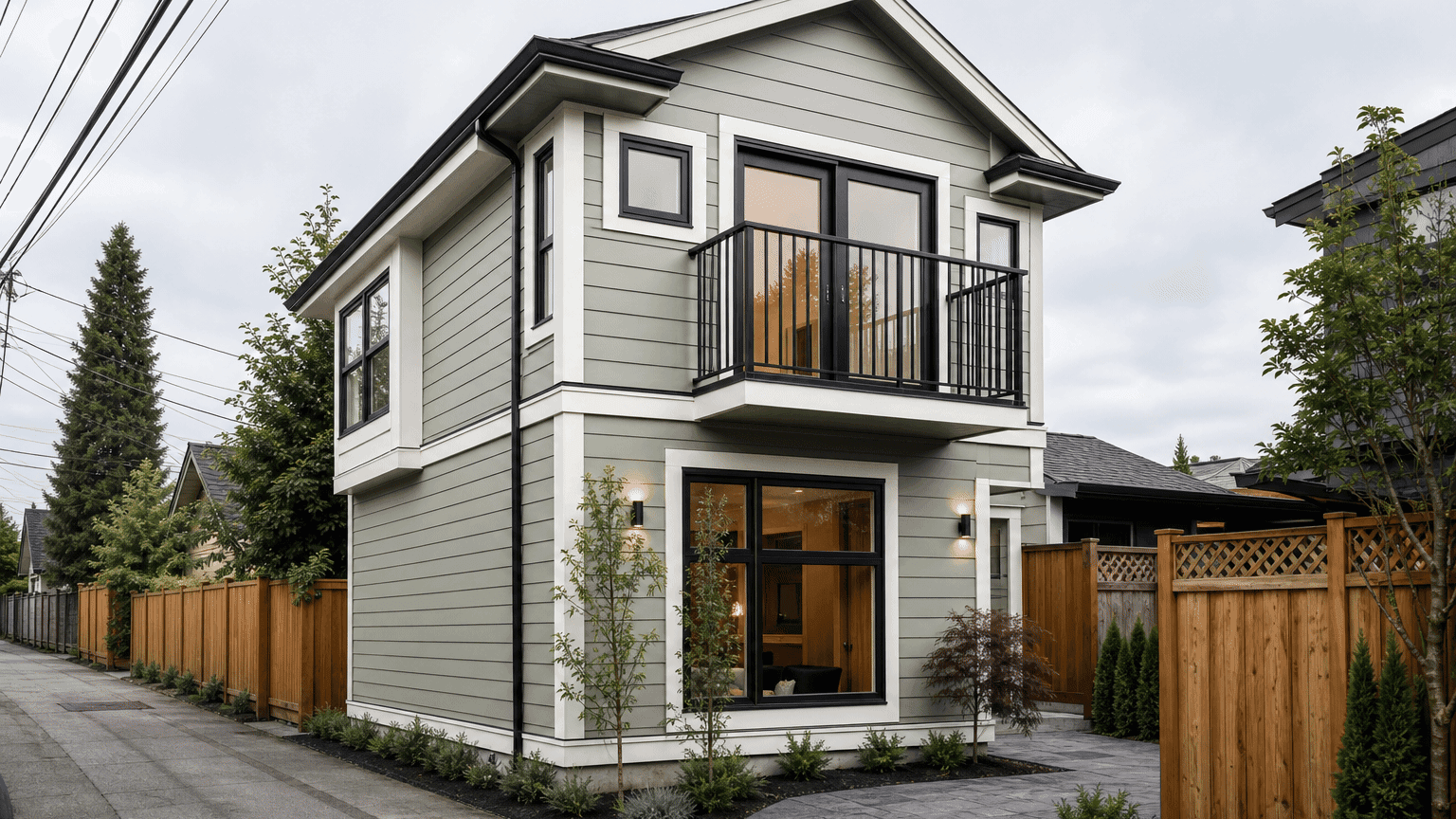
Quick answer: A laneway house can be painted like any other home, but the compact site makes planning more important. Before approving a quote, define whether the job is exterior, interior, or both; inspect the actual surfaces; and agree on an access plan for the lane, side yard, parking, equipment, occupants, and daily cleanup. Exterior work also needs a realistic Vancouver weather window, while work inside an occupied home needs clear sequencing and ventilation. The best estimate describes those details instead of pricing only by floor area.
Laneway houses vary widely. One may have fibre-cement siding and a modern open interior; another may combine wood trim, stucco, metal details, steep stairs, or an older repaint. Some are owner-occupied, some house family, and some are rented. The correct coating system and work plan therefore come from an on-site inspection, current product technical data, and the way the property is actually used.
This guide focuses on the painting scope. Active leaks, structural deterioration, unsafe access, electrical conflicts, and hazardous-material concerns need the appropriate qualified professional before surface preparation begins.
Define the painting scope before comparing estimates
Start with the result the property needs, not a generic request to “paint the laneway house.” A clear scope can be:
- Exterior only: Siding, trim, fascia, soffits, doors, exterior stairs, railings, or other specified surfaces
- Interior only: Walls, ceilings, trim, doors, closets, and selected built-ins
- Combined: Exterior maintenance plus an interior refresh, either together or in separate phases
- Targeted work: One weathered elevation, repaired areas, a tenant turnover, or rooms affected by a specific change
List every included surface and note what is excluded. “Exterior” does not automatically include fences, decks, detached storage, the principal house, or both sides of every door. “Interior” does not automatically include ceilings, closets, window frames, cabinets, or repairs beyond normal preparation.
Combined work can be efficient, but it should not blur two different projects. Exterior painting depends on substrate condition, access, and weather. Interior painting depends more on room use, belongings, ventilation, and the finish schedule. Ask for those parts to be separated in the estimate even if one contractor completes both.
Inspect the laneway house before quoting
An estimate should reflect the real home rather than assumptions based on its square footage or age. Walk around the building in daylight and review each accessible interior room.
On the exterior, inspect:
- Siding type and transitions between fibre cement, wood, stucco, metal, masonry, or manufactured panels
- Peeling, chalking, fading, blistering, cracking, exposed substrate, and previous touch-ups
- Sealant joints around windows, doors, penetrations, and changes in material
- Trim ends, lower edges, horizontal ledges, and areas close to paving or soil
- Staining, algae, recurring dampness, and other signs of moisture
- Railings, stairs, landings, decks, gates, and other components that may need a different system
- Repairs that will leave new material beside an older weathered finish
Fibre-cement products have their own edge, joint, clearance, and coating considerations. If they are present, our Hardie board painting guide explains what to inspect before washing or recoating.
Inside, look for:
- Scuffs, stains, fading, failed patches, nail pops, dents, and cracked joints
- Water staining or recurring condensation around windows, bathrooms, ceilings, and exterior walls
- Glossy, heavily marked, or previously repaired areas that may need extra preparation
- High-touch trim, doors, stair walls, and compact circulation areas
- Existing colour changes that could affect primer or coat requirements
- Furniture, storage, window coverings, and electronics that affect room access
- Occupant schedules, pets, ventilation needs, and any room that must remain available
Do not treat staining as a paint-only problem until its source is understood. A coating may cover a dry historic mark, but it will not stop an active roof, plumbing, envelope, or ventilation issue.
Build a practical access and staging plan
The lane is both an approach to the project and a route other people may need. A contractor should inspect it before promising equipment, crew size, or production speed.
The written access plan should address:
- Lane approach: Width, turning room, posted restrictions, overhead lines, tree branches, and reliable loading space
- Parking: Where the contractor, homeowner, tenant, and neighbours can park without blocking garages or waste collection
- Side-yard route: Gate width, steps, slopes, soft ground, drains, air-conditioning equipment, and fragile landscaping
- Staging: A secure place for coverings, ladders, approved access equipment, paint, and waste
- Daily access: Which doors and paths occupants will use and when equipment must be moved
- Emergency egress: Routes that must remain open at all times
- Utilities: Exterior outlets, water access, lighting, and any overhead or wall-mounted equipment that changes safe access
- Security: Gate control, keys, alarms, pets, and who closes the property at the end of the day
A narrow space does not justify balancing ladders on unstable surfaces, moving through a neighbour's lot without permission, or placing equipment where it blocks an exit. If a surface cannot be reached safely with the planned equipment, revise the method or scope before work begins.
Protect the principal home and neighbouring property
A laneway project sits close to other finished surfaces. Cleaning water, dust, paint chips, overspray, and foot traffic can affect more than the small building itself.
The protection plan may need to cover:
- The principal home's doors, windows, siding, paving, and outdoor living areas
- Fences, gates, plants, lighting, heat pumps, cameras, and utility equipment
- Parked vehicles and expected vehicle movements
- Neighbouring walls, fences, roofs, gardens, and windows
- Shared paths, garbage and recycling areas, drains, and lane surfaces
- Interior floors, stairs, counters, furniture, and electronics
Protection should fit the application method. Brush and roller work still creates chips, drips, and wash water. Spraying can be appropriate for some surfaces, but only when masking, wind, access, and nearby property can be controlled. “We will be careful” is not a substitute for describing the containment and cleanup plan.
Confirm property boundaries before relying on adjacent space. If access from neighbouring property is genuinely necessary, the owner should arrange clear permission and timing before the contractor mobilizes.
Prepare each exterior surface for the coating it will receive
Preparation is not one fixed checklist. It depends on the substrate, previous finish, contamination, exposure, and selected system. A project-specific exterior scope may include:
- Identifying each paintable material and the condition of its existing coating
- Protecting adjacent surfaces, openings, paving, landscaping, and property
- Cleaning dirt, chalk, algae, salt, grease, and loose residue with a suitable method
- Allowing shaded faces, joints, and absorbent materials to dry adequately
- Removing loose paint and unstable material without damaging sound substrate
- Feathering sound edges or dulling glossy areas where the specified system requires it
- Correcting paintable minor defects and separating larger repairs from the coating scope
- Renewing failed sealant only at joints designed to be sealed
- Spot priming or priming broader areas where the substrate and coating specification call for it
- Applying the specified finish within its temperature, humidity, film-build, and recoat limits
High pressure is not automatically better cleaning. On a compact building, a poor angle can force water into joints, vents, doors, or nearby property. Aggressive sanding can also damage manufactured siding, expose protected layers, or create a containment issue. The contractor should select the least damaging method that produces a clean, dry, stable surface.
Active rot, corrosion, soft sheathing, failed cladding, open joints that require construction repair, and recurring water entry are not solved by adding paint. Record who will correct them and how repaired areas will be prepared before the finish coats.
Plan exterior work around Vancouver weather
Vancouver and the Lower Mainland provide many workable painting days, but a dry icon in a weather app is only one input. Laneway homes can have shaded walls, tight spaces with limited airflow, cool north-facing surfaces, and roof or fence runoff close to the work.
The schedule should consider:
- Rain before cleaning, during preparation, between coats, and after application
- Morning dew and condensation on cool siding or metal
- Damp lower walls beside gardens, paving, or shaded side yards
- Water held in trim joints, ledges, stairs, and horizontal details
- Direct sun that heats one elevation while another remains cool
- Air and surface temperatures throughout the coating and drying period
- Wind that carries dust or makes spray control unreliable
- Enough suitable time for the full coat and recoat sequence
Do not rely on one universal drying time. Product technical data, measured conditions, airflow, film thickness, and the prepared surface determine when coating or recoating can proceed. Our guide to the best time to paint an exterior in Vancouver explains the seasonal trade-offs in more detail.
If weather interrupts the project, the estimate should explain how prepared surfaces, stored materials, access equipment, and the property will be left safe until work resumes.
Sequence interior work in an occupied home
Compact interiors can be comfortable to live in and challenging to paint at the same time. Furniture has fewer places to move, the main stair may be the only route between floors, and odour or noise can spread quickly.
Before starting, agree on:
- Which room or level comes first
- Who moves furniture, wall art, electronics, and fragile belongings
- How floors, stairs, counters, appliances, and fixed items will be protected
- Whether the occupant will stay in the home during the work
- Which entrance, bathroom, kitchen area, and sleeping room must remain usable
- Daily start, stop, ventilation, cleanup, and lock-up routines
- How pets will be separated from wet coatings, open doors, and equipment
- When repaired, primed, or painted rooms can return to normal use
Low-odour or lower-VOC products may be useful when appropriate, but product selection does not eliminate the need for ventilation and safe occupancy planning. Follow current labels and technical data for application, ventilation, drying, and re-entry conditions.
For a rental changeover, document the vacant period, key handoff, damage approvals, and final inspection. Our rental suite painting guide covers turnover planning and the difference between routine wear and repair work.
What affects the cost of painting a laneway house?
Laneway-house painting cannot be priced responsibly from floor area alone. Two buildings with similar interiors may have very different exterior access, detail, coating failure, and protection needs.
Exterior cost factors include:
- Building height, rooflines, dormers, balconies, stairs, and architectural detail
- Lane and side-yard access, slope, ground conditions, and required equipment
- Siding, trim, metal, masonry, doors, railings, and other materials
- Peeling, chalking, algae, failed sealant, exposed substrate, and repair needs
- Cleaning, drying, scraping, sanding, containment, priming, and caulking scope
- Number of colours and the contrast between existing and proposed finishes
- Protection for the principal house, landscaping, vehicles, paving, and neighbours
- Weather interruptions and the sequence needed to keep access safe
Interior cost factors include:
- Wall and ceiling area, ceiling height, stairs, closets, doors, and trim
- Furniture, occupancy, room-by-room phasing, and daily setup
- Patching, sanding, stains, glossy surfaces, and previous repair quality
- Colour changes, feature walls, coating type, and coat requirements
- Whether ceilings, trim, doors, cabinets, and storage areas are included
For wider budgeting context, read the Vancouver exterior painting cost guide and interior painting cost guide. Their ranges and examples are not substitutes for an inspected laneway-house scope, but they show why preparation, access, and included surfaces matter.
Common laneway-house painting mistakes
Avoid:
- Accepting a square-foot price before the contractor inspects access and coating condition
- Treating exterior and interior work as one vague line item
- Blocking the lane, a garage, waste collection, or an emergency route
- Assuming a narrow side yard can accommodate any ladder or access method
- Washing or coating over unresolved dampness, failed joints, or active leaks
- Failing to protect the principal home, vehicles, plants, drains, and neighbours
- Choosing one preparation or primer routine for every material
- Painting an occupied interior without a room sequence, ventilation plan, or daily cleanup agreement
- Comparing totals without comparing repairs, protection, coats, exclusions, and responsibilities
Questions to ask before approving a quote
Ask each contractor:
- Which exterior and interior surfaces are included, and which are excluded?
- What siding, trim, railing, door, wall, ceiling, and previous-coating conditions did you identify?
- What cleaning, scraping, sanding, caulking, patching, and priming are included?
- Which defects require another trade or a separate authorization?
- How will the lane, parking, side yard, equipment, staging, and emergency access be managed?
- How will the principal house, neighbouring finishes, vehicles, landscaping, paving, and drains be protected?
- What coating systems, application methods, colours, and coat counts are specified?
- How will rain, condensation, surface temperature, ventilation, and drying conditions be checked?
- How will occupants, pets, keys, alarms, room access, and daily cleanup be handled?
- What happens if hidden damage or unsuitable coating conditions are found?
- What workmanship warranty applies, and what conditions or repairs are excluded?
Use our house painting quote comparison checklist to compare scope, insurance, payment terms, products, cleanup, and exclusions alongside price.
Laneway house painting FAQs
Can the exterior and interior be painted at the same time?
They can overlap when access, occupants, ventilation, crew movement, and weather allow it. Separate scopes and sequencing still matter. In a compact property, finishing one interior area before opening another may be less disruptive than working everywhere at once.
Does a small laneway house cost less to paint than a larger house?
Often the total surface area is lower, but size is only one factor. Tight access, multiple storeys, detailed trim, coating failure, extensive masking, occupied-room phasing, and repairs can add labour that a floor-area comparison misses.
Can painters work from the neighbouring lot?
Only with clear permission and a safe plan. Do not assume a fence can be crossed or adjacent land used because it offers easier access. Confirm boundaries, owner approval, timing, protection, and restoration before the work is scheduled.
Should moisture stains simply be primed and painted?
Not until the source is understood and corrected. Once the area is dry and stable, the appropriate preparation and stain-control system can be selected for the actual substrate and condition.
Get a laneway house painting estimate in Vancouver
If your laneway home's exterior is weathered, its interior needs a refresh, or you want both scopes coordinated, request a free, no-obligation estimate or call +1 (604) 260-1613 for 24/7 estimate requests. Share photos of all elevations, the lane and side-yard access, coating failure or repairs, and the interior rooms you want included.
We help owners in Vancouver and across the Lower Mainland connect with the right painting partner for a clearly defined scope. An on-site review can separate paint preparation from repairs, confirm safe access, and turn exterior and interior needs into an estimate that is easier to compare.