Kitchen Cabinet Painting in Vancouver: Cost and Prep Guide
Posted on June 27, 2026 by The Vancouver Painters Team
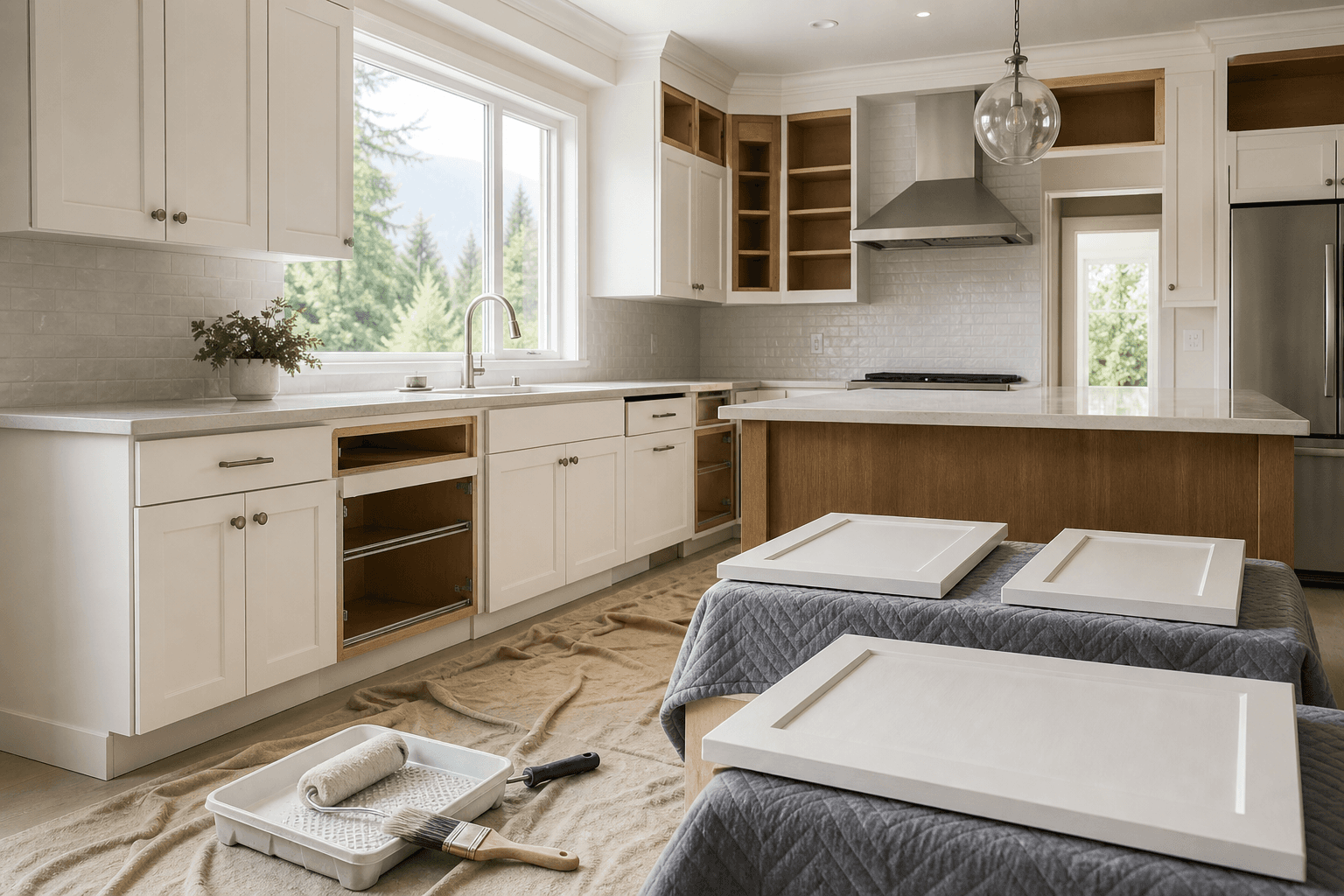
Quick answer: Kitchen cabinet painting in Vancouver can be a smart alternative to replacing cabinets when the boxes and doors are structurally sound. The best results come from careful degreasing, labelling and removing doors, sanding glossy surfaces, using the right bonding primer, applying durable cabinet enamel, and allowing enough cure time before heavy kitchen use resumes.
Cabinets take more abuse than most interior painted surfaces. They collect cooking oils, fingerprints, steam, cleaner residue, and repeated contact around handles. A cabinet repaint can look excellent, but it is not the same as rolling a wall. The process needs more prep, a harder coating system, and a plan for keeping the kitchen usable while doors and drawers dry.
For Vancouver homes, condos, townhouses, and rental suites, cabinet painting is often considered when a kitchen layout still works but the colour feels dated. It can be especially useful before listing a property, refreshing a rental, or tying older cabinets into new counters, flooring, or wall colour.
When cabinet painting makes sense
Painting cabinets is usually worth considering when the cabinet layout, hinges, and boxes are still in good condition. If the doors close properly and the surfaces are not swollen, delaminating, or badly damaged, paint can create a cleaner and more current look without replacing the entire kitchen.
Good candidates include:
- Solid wood doors with an outdated stain or yellowed clear coat
- Previously painted cabinets that need a more durable finish
- MDF or laminate-style doors that can accept the right primer
- Rental-suite kitchens that need a clean refresh between tenants
- Condo kitchens where replacement would trigger more building logistics
- Older kitchens being updated for resale photos and showings
Cabinet painting is less suitable when doors are warped, particleboard is swollen from leaks, hinges are failing, or the cabinet layout no longer works. In those cases, painting may only make a worn-out kitchen look temporarily better.
If the repaint is part of a broader interior refresh, coordinate it with interior painting so wall colours, trim, doors, and cabinet finishes work together.
Start with a realistic finish expectation
Factory-finished cabinets are coated in controlled shop conditions. On-site cabinet painting can still produce a smooth, professional finish, but the result depends on the door profile, existing coating, application method, dust control, and available drying space.
Flat slab doors are usually easier to finish evenly than detailed shaker, raised-panel, or routed doors. Dark-to-light colour changes may need more primer and finish coats. Glossy or previously stained surfaces need stronger bonding prep than raw wood or already painted cabinets.
Ask the estimator what finish level they are planning for:
- Brushed and rolled finish for a practical refresh
- Sprayed doors and drawer fronts with brushed or rolled cabinet boxes
- Full spray setup with masking, ventilation, and a temporary booth area
- Off-site spraying of removable doors and drawer fronts
The right method depends on budget, access, timeline, and how much disruption the household can handle.
Cleaning matters more than most homeowners expect
Kitchen cabinets can look clean while still holding residue that prevents paint from bonding. Areas near the stove, dishwasher, sink, garbage pullout, and handles usually need the most attention.
A cabinet prep sequence may include:
- Removing doors, drawers, handles, bumpers, and loose hardware
- Labelling each door and drawer so everything goes back in the right place
- Degreasing surfaces with a suitable cleaner
- Rinsing residue so cleaner does not interfere with primer
- Sanding or scuff-sanding glossy surfaces
- Filling small dents, chips, and old hardware holes if handles are changing
- Vacuuming and tack-clothing dust before primer
Skipping cleaning or sanding is one of the fastest ways to get peeling paint around handles and high-touch edges. If a quote does not mention degreasing and sanding, ask for the prep plan in writing.
Primer should match the cabinet surface
Cabinets often need a bonding primer rather than a standard wall primer. The right product depends on whether the surface is wood, MDF, laminate, melamine, previously painted, or stained.
Primer may need to solve several problems:
- Bonding to glossy factory finishes
- Blocking tannin bleed from wood
- Sealing MDF edges that absorb paint differently
- Creating an even base for a light colour over dark stain
- Reducing the risk of chipping around handles and corners
In older Vancouver homes, cabinets may have multiple unknown coatings from past updates. A test patch can help confirm whether the chosen primer and enamel system will bond properly before the full kitchen is painted.
Spraying versus brushing and rolling
Spraying can create the smoothest cabinet-door finish, but it requires more setup. Floors, counters, appliances, backsplashes, ceilings, and adjacent rooms need protection. Ventilation, overspray control, dust management, and drying racks all matter.
Brushing and rolling can be practical for cabinet boxes, built-in panels, or budget-conscious refreshes. A skilled painter can reduce brush marks with the right enamel, tools, sanding between coats, and careful technique, but it will not always look like a factory spray finish.
For many Vancouver kitchens, a hybrid approach works well: remove and spray doors and drawer fronts, then carefully brush or roll fixed cabinet frames on site. The quote should explain which surfaces are being sprayed, which are being brushed or rolled, and where drying will happen.
Plan for cure time, not just dry time
Cabinet paint can feel dry before it has cured enough for normal kitchen use. Early damage often happens when doors are reinstalled too soon, drawers are slammed, cleaners are used aggressively, or cabinet bumpers are missing.
During the first days after painting:
- Use handles rather than touching painted door faces
- Avoid hanging damp towels over freshly painted doors
- Keep small appliances from rubbing against painted panels
- Wipe spills gently instead of scrubbing
- Wait before using strong cleaners or degreasers
- Leave doors slightly open if the painter recommends extra ventilation
The painter should explain when the kitchen can be used lightly, when doors and drawers can be reinstalled, and when the finish reaches a more durable cure.
Condo and strata considerations
Cabinet painting inside a condo suite is usually simpler than exterior or common-area painting, but building logistics can still affect the plan. Downtown Vancouver, Burnaby, Richmond, and North Vancouver buildings may have rules for contractor access, elevator bookings, parking, work hours, waste disposal, and odour control.
Before scheduling, confirm:
- Whether the strata requires insurance documents
- Approved contractor work hours
- Where doors or drawers can be staged for drying
- Whether hallway or elevator protection is needed
- Ventilation rules for low-odour products
- How sanding dust and waste materials will be contained
If the cabinet repaint is part of a larger suite refresh, review our guide to strata painting requirements in Vancouver before booking.
What affects the cost of cabinet painting?
Cabinet painting is priced more by labour, prep, and finish expectations than by simple square footage. A small kitchen with detailed doors can take more work than a larger kitchen with flat fronts.
Main quote factors include:
- Number of doors, drawers, panels, and exposed cabinet sides
- Door profile complexity and current surface condition
- Grease buildup, failed paint, dents, chips, or water damage
- Whether hardware is removed, replaced, or relocated
- Primer requirements for stain blocking or bonding
- Number of colours and whether interiors are included
- Spraying setup, drying racks, masking, and ventilation
- Occupancy, pets, strata access, parking, and scheduling constraints
If you are comparing bids, make sure each quote describes the same surfaces, prep steps, primer, finish coats, application method, and cure expectations. Our guide on how to compare house painting quotes in Vancouver covers the details worth checking before choosing a contractor.
For broader budgeting, the Vancouver house painting cost guide can help you compare cabinet work with full-room, trim, or whole-home painting.
Colour choices for Vancouver kitchens
Warm whites, soft greiges, muted greens, deep navy, and charcoal can all work in Vancouver kitchens, but cabinet colour should be tested beside counters, backsplash, flooring, lighting, and wall colour. A shade that looks clean on a sample card can turn yellow under warm LEDs or feel stark on a north-facing kitchen.
Before approving the final colour:
- View samples in morning, afternoon, and evening light
- Compare the sample against counters and backsplash
- Decide whether walls or trim also need repainting
- Check how the colour looks beside appliances and hardware
- Consider resale if the update is tied to listing photos
If the project includes baseboards, doors, or window trim, see our guide to painting trim and doors in Vancouver so the sheen and colour choices do not clash.
Low-odour products and ventilation
Many homeowners ask for low-VOC cabinet products, especially in condos, basement suites, homes with children, or kitchens that need to return to use quickly. Product choice matters, but ventilation and cure time still matter too.
Low-VOC does not mean zero smell, and durable cabinet coatings can behave differently from wall paint. Ask how the work area will be ventilated, where doors will dry, and when the kitchen can safely return to normal use. Our low-VOC paint guide for Vancouver homes explains what product labels do and do not tell you.
Get a cabinet painting estimate
If your Vancouver kitchen cabinets are structurally sound but ready for a cleaner colour, request a free interior painting quote or call +1 (604) 260-1613 for 24/7 estimate requests. Share photos of the full kitchen, close-ups around handles and worn edges, the number of doors and drawers, and any strata access rules so we can match you with the right painting partner for the scope.