Stair & Banister Painting in Vancouver
Posted on July 23, 2026 by The Vancouver Painters Team
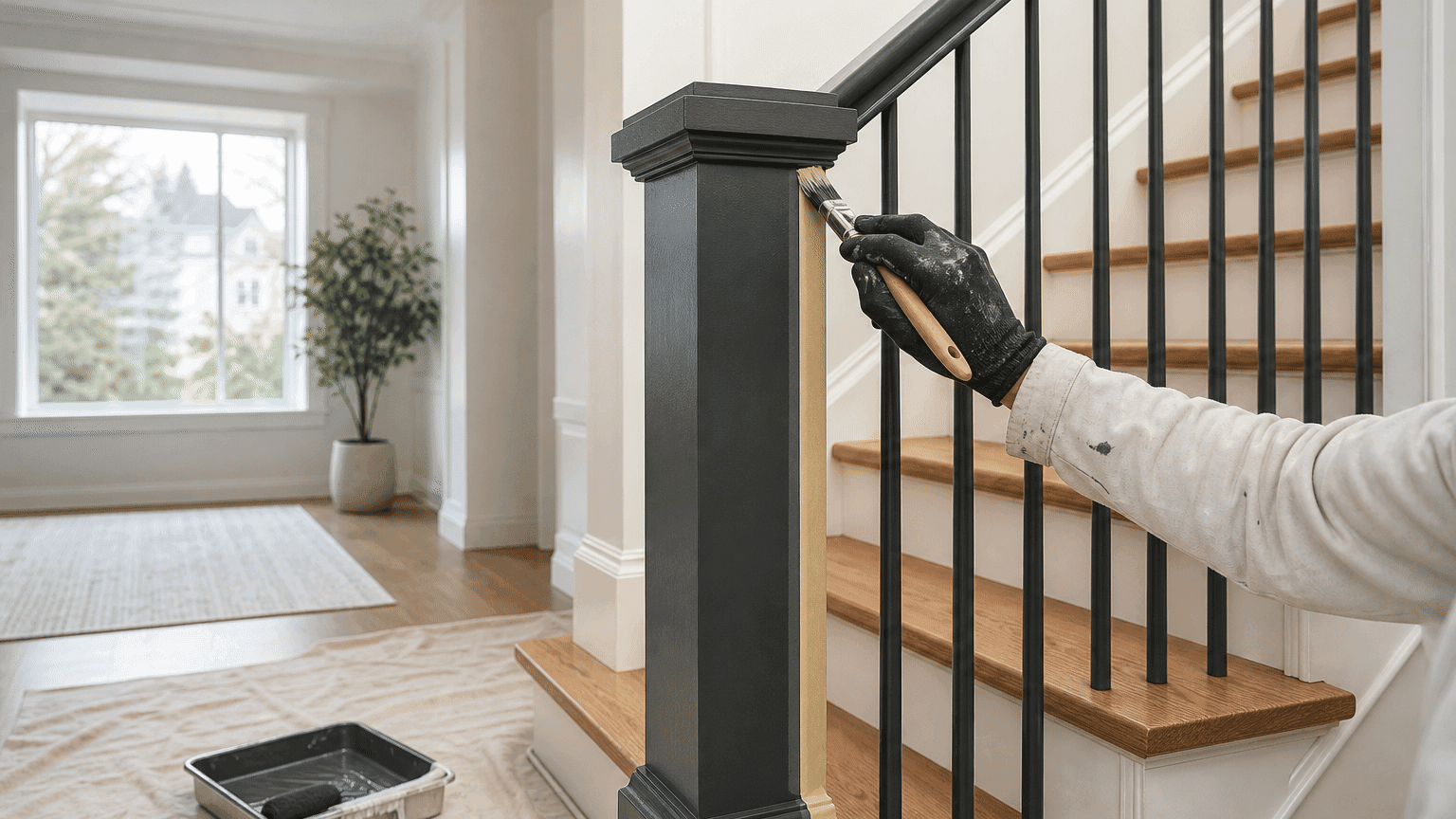
Quick answer: Interior stairs and banisters can usually be repainted when the wood, metal, fasteners, and existing finish are sound. Handrails, newel posts, and balusters need careful cleaning, dulling, and compatible primer because they receive constant hand contact. Treads are walking surfaces and require a separate flooring decision; ordinary trim paint should not be assumed suitable for them. Repair movement, loose components, and damaged wood, and arrange appropriate assessment of unknown older coatings before painting begins.
A stair assembly combines high-touch millwork, detailed profiles, awkward access, and a route the household may still need. A useful estimate should identify every included component, the existing finish, preparation, products, protection, access plan, and cure schedule rather than simply say “paint the stairs.”
Name each stair component before pricing
Homeowners often use “banister” for the entire assembly. A component list makes quotes easier to compare:
- Handrail: The graspable rail along the stair or landing
- Newel post: The larger post that anchors or terminates a rail
- Balusters or spindles: The smaller vertical members supporting the rail or filling the guard
- Guard: The protective barrier at an open side or landing
- Tread: The horizontal walking surface of a step
- Riser: The vertical face between treads
- Stringer or skirtboard: The structural or finish member running beside the stair
- Nosing: The projecting front edge of a tread
- Wall cap, brackets, and trim: Adjacent details that may need coating or protection
Specify whether the scope includes the handrail underside, all faces of the balusters, newel caps, wall-mounted rails, risers, skirtboards, stairwell walls, baseboards, and landings. A full interior painting project may include some of these surfaces, but stair details should still be listed separately.
Decide what should stay stained and what should be painted
Many Vancouver homes combine stained treads and handrails with painted risers, balusters, and stringers. Others have every component stained, previously painted, or factory finished.
Common design scopes include:
- Refresh the existing painted finish: Keep the current colour family and repair worn areas before recoating.
- Paint balusters and newel posts only: Preserve a stained handrail and treads while changing the surrounding millwork.
- Convert stained wood to paint: Prepare a clear-coated handrail, posts, or balusters for a compatible opaque system.
- Repaint risers and stringers: Renew scuffed vertical faces while keeping the walking surface as wood or another flooring material.
- Coordinate stairs with walls and trim: Plan stairwell walls, baseboards, door casings, and rail components as one visual scheme.
Converting finished wood to paint is usually more involved than recoating sound paint. The existing clear finish must be cleaned, dulled, tested, and primed for adhesion. Knots, tannins, filler, silicone polish, wax, and previous touch-up products can also affect the result.
If the goal is to restore or change the colour of visible wood grain, that is a refinishing scope rather than ordinary painting. Sanding through an existing stain unevenly can leave blotchy colour, while veneered or engineered components may have limited material available for sanding.
Inspect the assembly before surface preparation
Paint should not conceal a repair need. Check the complete route in good light before cleaning or sanding removes clues.
Look for:
- A handrail or newel post that moves under normal use
- Loose, split, cracked, or missing balusters
- Open joints, failed fasteners, or damaged brackets
- Deep dents, pet damage, gouges, or softened wood
- Peeling, cracking, bubbling, or thick brush ridges
- Worn coating where hands repeatedly grasp the rail
- Grease, hand oils, furniture polish, wax, or cleaning residue
- Gaps between stringers, trim, walls, and risers
- Stains or swelling that may indicate an unresolved moisture source
- Squeaks, damaged treads, loose nosings, or flooring defects
- An older or unknown coating that may need hazardous-material assessment before disturbance
A painter can document visible coating and millwork conditions but should not certify the guard, handrail, stair geometry, structure, or code compliance. Loose or damaged safety-related components need assessment and repair by the appropriate qualified carpenter, building professional, or other specialist before coating.
Do not casually remove a handrail or guard to simplify painting. Removal can affect safe use, egress, alignment, and reinstallation. If qualified removal is part of the scope, the estimate should also define temporary protection and who is responsible for secure reinstallation.
Preparation determines whether the finish will last
Handrails and newel posts collect skin oils and cleaning products. Balusters collect dust at their intersections. Risers receive shoe marks, while skirtboards can carry residue from floor cleaning. Painting over that contamination can cause poor adhesion or a rough finish.
A condition-specific preparation sequence may include:
- Protect floors, treads, walls, furniture, vents, and nearby rooms
- Vacuum dust from profiles, corners, brackets, and baluster intersections
- Clean hand-contact areas and other contamination with a suitable method
- Test the existing finish and proposed system where compatibility is uncertain
- Remove loose coating and feather sound edges
- Dull glossy retained finishes without damaging profiles or adjacent surfaces
- Fill appropriate nail holes, dents, and open finish joints
- Sand repairs and remove dust from every face
- Spot-prime bare areas or apply a compatible bonding or stain-blocking primer as specified
- Apply the finish coats within the product’s application and recoat requirements
Preparation should preserve crisp profiles. Aggressive sanding can round over baluster edges, erase moulded detail, or cut through a veneer. Caulk can close suitable finish gaps, but it should not hide movement, a failed joint, or a carpentry defect.
Our guide to painting trim and doors in Vancouver explains the same cleaning, sanding, caulking, and primer principles for adjacent millwork.
Plan stained-to-painted conversions carefully
A clear-coated oak or maple handrail may look clean while still carrying polish, wax, or hand oils that interfere with paint. The finish may also be lacquer, varnish, polyurethane, or another factory or field-applied coating.
Before a full conversion:
- Identify the wood or manufactured component where practical
- Clean representative high-touch and low-touch areas
- Confirm the retained finish is firmly bonded
- Follow the primer and finish manufacturers’ current preparation instructions
- Use an adhesion test when the selected system calls for one
- Agree on how much grain, open pore, joint movement, and previous damage may remain visible
- Prepare a sample area when colour, smoothness, or compatibility is uncertain
Paint does not automatically create a furniture-smooth finish. Open-grain wood can retain texture, and old dents or coating ridges may remain unless the quote includes the additional filling and surfacing work needed to reduce them.
Choose colour and sheen for touch, light, and detail
Stair components sit close to windows, overhead lights, and sightlines from multiple floors. Higher sheen can improve washability but also emphasize dents, joints, sanding scratches, and brush marks.
Typical decisions include:
- Satin or pearl: Often balances cleanability with a softer reflection on rails, posts, and balusters
- Semi-gloss: Provides a traditional trim look and highlights profiles, but can reveal surface defects
- Lower-sheen trim finishes: May suit older millwork when the selected product is approved for the wear and cleaning expected
- Contrasting handrail or newel colour: Can add definition, though sharp light-to-dark changes may need extra preparation and coats
- Risers and stringers matched to trim: Creates continuity with baseboards and door casings
Use a product intended for the substrate and service, not wall paint selected only because the colour matches. Dry-to-touch time is not the same as full cure or resistance to repeated gripping and cleaning.
The paint sheen guide for Vancouver homes compares appearance, washability, and defect visibility in more detail.
Treat treads as walking surfaces, not ordinary trim
Treads and landings receive abrasion, footwear, grit, moisture, and concentrated traffic. A standard trim coating may be durable on a riser yet unsuitable or slippery on a walking surface.
Before including treads, establish:
- Whether they are solid wood, veneer, laminate, vinyl, carpeted, or previously coated
- Whether the work is cleaning, painting, staining, clear refinishing, or flooring repair
- Which complete system is specified for horizontal foot traffic
- What slip-resistance, ventilation, application, and cure requirements apply
- How the stair will remain closed until the walking surface can safely return to service
- Whether stair nosings, transition strips, anti-slip details, or flooring warranties limit the work
Do not alternate access across wet steps unless the specified system, work method, and site controls expressly support it. A closed staircase can affect bedrooms, exits, children, pets, and occupants with mobility needs, so access must be resolved before application starts.
Keep the occupied route safe during the work
Interior stair projects can block the main connection between floors. The plan should protect both the coating and the people using the home.
Discuss:
- Whether the staircase can close completely and for how long
- Alternate sleeping, bathroom, entry, and emergency-access arrangements
- Children, pets, tenants, deliveries, and mobility requirements
- Dust control and ventilation in an occupied interior
- Secure floor protection that will not become a trip or slip hazard
- Tool, cord, hose, and material storage away from the route
- How wet handrails, newel posts, and risers will be marked and protected
- When normal gripping, cleaning, and heavy traffic can resume
Masking must protect adjacent surfaces without leaving unsafe loose edges. Drop cloths should not slide on smooth floors or bunch at the first tread. Work platforms and ladders need stable support; a handrail or guard is not an equipment anchor.
Low-odour or low-VOC does not mean odour-free, hazard-free, or ready for immediate occupancy. Follow the current product label and safety data, provide suitable ventilation, and keep occupants away from the work area as required.
Vancouver humidity can extend the practical schedule
Interior conditions are more controlled than exterior weather, but Vancouver and Lower Mainland homes can still be humid during wet seasons. Open windows may add moisture rather than speed drying, while cool stairwells and basement entries can dry differently from heated rooms.
Application, recoat, and cure planning should consider:
- Actual room and surface conditions
- Air movement without blowing dust onto the finish
- The product’s current temperature and humidity limits
- Overnight heat changes in stairwells and entries
- Moisture from nearby bathrooms, laundry rooms, or open exterior doors
- The difference between recoat time and return-to-service time
Do not judge readiness only by whether the surface feels dry. Premature handling can leave fingerprints, blocking, scuffs, or a softened finish on high-contact components.
What affects interior stair and banister painting cost?
Stair pricing depends more on component count, detail, condition, access, and finish expectations than on floor area.
Cost factors include:
- Number and shape of handrails, newel posts, balusters, risers, treads, stringers, and landings
- Painted, stained, clear-coated, metal, or mixed-material surfaces
- Straight runs, turns, winders, open sides, tall stairwells, and difficult undersides
- Hand oils, polish, wax, peeling, chips, dents, open joints, and previous brush texture
- Stained-to-painted conversion, adhesion testing, primer, and sample preparation
- Fine-profile sanding and the number of faces on each baluster
- Colour changes, sheen, expected smoothness, and coat sequence
- Floor, wall, furniture, and room protection
- Occupied-home phasing, ventilation, access closures, and return visits
- Carpentry, flooring, hazardous-material, or other specialist work outside the painting scope
For whole-home budgeting context, see our Vancouver interior painting cost guide. The stair portion still needs its own written scope because a simple wall-area allowance does not capture detailed rail work.
Questions to ask when comparing estimates
Ask each contractor:
- Which handrails, newel posts, balusters, risers, stringers, treads, trim, walls, and landings are included?
- Which faces, undersides, intersections, and inaccessible areas are excluded?
- What substrate and existing finish were identified?
- Which defects need carpentry, flooring, hazardous-material, or other specialist work first?
- How will hand oils, polish, wax, dust, loose paint, and gloss be addressed?
- Is an adhesion test, bonding primer, or stain-blocking primer part of the system?
- How much grain, joint movement, old damage, and brush texture may remain visible?
- Which products, colours, sheens, and coat sequence are proposed?
- If treads are included, what specified walking-surface system and closure period apply?
- How will floors, walls, furniture, ventilation, occupants, and alternate access be managed?
- What current technical data governs application, recoat, cure, and return to service?
- How will cleanup, touch-ups, final inspection, and workmanship warranty be documented?
Use our house painting quote comparison guide to check insurance, payment terms, change orders, cleanup, exclusions, and warranty language alongside these stair-specific questions.
Interior stair and banister painting FAQs
Can you paint over a stained wood banister?
Often, if the wood and retained clear finish are sound. Cleaning, dulling, compatibility checks, and the specified primer are essential. A sample can confirm adhesion and appearance before the entire assembly is converted.
Should the handrail be satin or semi-gloss?
Both can be suitable when the chosen product is intended for high-contact trim. Satin or pearl usually reflects less light, while semi-gloss looks more traditional and may be easier to wipe. Surface condition and the product system matter more than a universal sheen rule.
Can stair treads be painted with the same paint as the risers?
Not by default. Risers are vertical trim-like faces; treads are walking surfaces. Treads need a system specifically selected for the material, foot traffic, slip considerations, and return-to-service requirements.
How long before a painted banister can be used?
Follow the current product data and site conditions. Recoat time, dry-to-touch time, light handling, and full cure are different milestones. The contractor should give written instructions for gripping the rail, using the stairs, cleaning, and replacing any accessories.
Does the whole staircase need to close?
It depends on the components and application method. Rail and baluster work may allow controlled access at some stages, while coated treads or landings can require a complete closure. Safe alternate access and household needs must be planned before work begins.
Get an interior stair painting estimate in Vancouver
Photograph the staircase from the top, bottom, and side, plus close views of worn handrails, newel posts, balusters, risers, joints, and damaged areas. Note which wood should remain visible, whether the home will be occupied, and whether the staircase is the only route between floors.
Start a free, no-obligation interior painting estimate or call +1 (604) 260-1613 for 24/7 estimate requests. We help homeowners in Vancouver and across the Lower Mainland connect with a painting partner for a clearly defined stair and banister scope.