Garage Door Painting in Vancouver: Prep, Colour & Cost Factors
Posted on July 17, 2026 by The Vancouver Painters Team
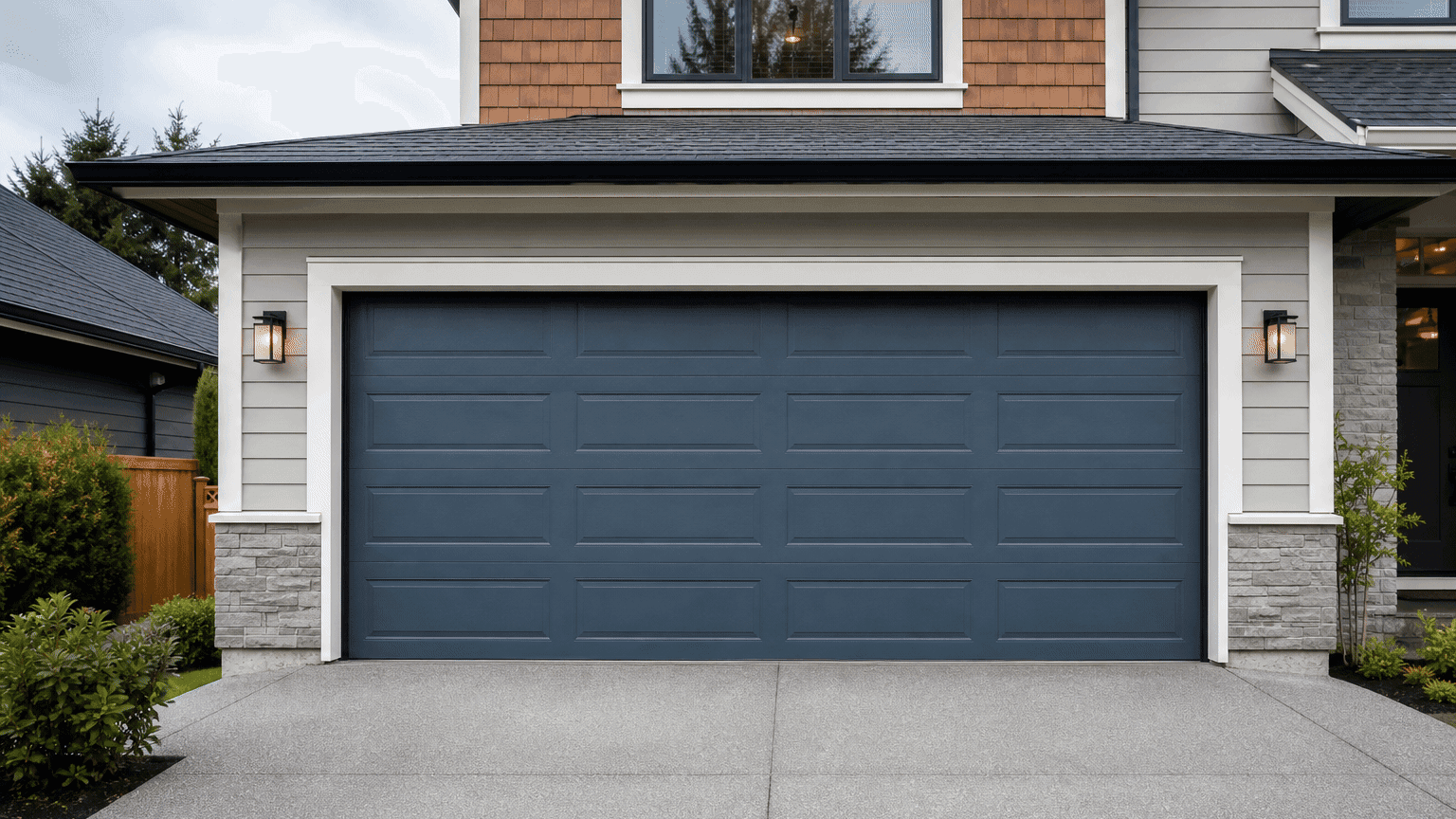
Quick answer: Many sound wood and factory-finished metal garage doors can be repainted, but the right process depends on the door. First identify its material and any overlay, inspect the panels and existing coating, and check the model's current manufacturer instructions and warranty. Preparation may involve cleaning, controlled abrasion, an adhesion test, and selective priming, but no single primer or sanding routine suits every door. Repair operational or structural problems before painting, and have a qualified garage-door technician—not a painter or homeowner—handle springs, cables, tracks, or opener issues.
A garage door can occupy a large part of the front elevation. Repainting a faded but serviceable door may make the house look more consistent without replacing a functioning assembly. It can also expose questions that a colour-only quote misses: Is the coating still bonded? Is the door steel, wood, vinyl, fibreglass, or a mixed-material design? Does the proposed dark colour comply with the door maker's limits?
The useful decision is not simply whether paint will stick. It is whether the door is a sound repaint candidate, which system is permitted for its surfaces, and where cosmetic work ends and garage-door repair begins.
When is a garage door a good repaint candidate?
Repainting is usually worth considering when the door operates safely and its panels, joints, and attached decorative components are in serviceable condition, but the finish is faded, chalky, stained, lightly scratched, or no longer suits the exterior.
Promising candidates often have:
- Straight, intact sections without major impact damage
- A factory finish or previous coating that remains mostly well bonded
- Localized surface rust rather than widespread perforation
- Sound wood without extensive softness, splitting, or delamination
- Secure overlays, glazing, and trim
- A cosmetic problem that cleaning alone will not correct
Painting cannot straighten a bent section, restore failed insulation, stop a door from binding, or correct a balance problem. It also should not conceal rot, active corrosion, loose cladding, failed adhesive, water entry, or damage around hinges and panel connections. Those conditions deserve assessment before coating work is priced.
If the door jerks, drops, rubs, sits unevenly, makes unusual noises, reverses unexpectedly, or will not stay in position, stop and arrange an inspection by a qualified garage-door technician. Painting is not garage-door mechanical repair.
Identify the door material and its components
The door may contain several materials even when it looks uniform from the driveway. Product labels, purchase records, a model number, and the manufacturer's literature are more reliable than appearance alone.
Common constructions include:
- Steel: Often sectional, insulated or non-insulated, with a baked-on factory finish. Scratches and cut edges can expose metal to corrosion.
- Aluminum: Lighter metal that may be factory coated, anodized, or previously painted. Its preparation needs differ from steel.
- Wood: Solid, engineered, or panel-and-frame construction. Moisture movement, old coatings, joints, and end grain affect the scope.
- Fibreglass: A moulded or skinned surface that may imitate wood grain. Compatibility and preparation depend on the specific finish.
- Vinyl: Sometimes used as an exterior skin or component. Product and colour restrictions can be especially important because heat response varies.
- Composite: A broad category covering different resins, fibres, and manufactured skins. The exact product matters more than the generic name.
- Overlay doors: Decorative boards or mouldings may be wood, composite, vinyl, or another material attached over an insulated section. The face, edges, joints, adhesive, and base panel may each have different limits.
Also note windows, inserts, perimeter weather seals, the bottom seal, handles, hinges, rollers, tracks, cables, springs, opener hardware, and section joints. Some are paintable decorative parts; others must remain clean and unobstructed for safe movement.
Do not touch, loosen, remove, mask into, or paint springs, cables, tracks, rollers, or their attachment points. Never alter spring tension or disconnect door hardware to make painting easier. A garage-door technician should resolve any question involving those components.
Inspect the door and existing coating
Inspect the door closed and in good daylight without placing hands near moving or tensioned parts. View the full face from the driveway, then look closely at accessible areas. Do not operate the door while someone is inspecting or preparing it.
Look for:
- Fading, chalking, loss of gloss, or uneven colour
- Dirt, road film, mildew, algae, salt, grease, or silicone-like residue
- Peeling, blistering, cracking, or poorly bonded previous paint
- Rust at scratches, fasteners, panel edges, and lower sections
- Pitting, holes, bent panels, or open seams
- Soft, swollen, split, or rotten wood
- Cracked, lifted, or delaminating overlays
- Moisture staining near joints, glazing, trim, and the bottom edge
- Brittle, torn, painted-over, or displaced weather seals
- Paint bridging between moving sections
- Rubbing, uneven gaps, loose hardware, or other operational warning signs
A sound factory finish may only need the preparation specified for recoating. A broadly failing repaint is a different substrate: adding another layer over weak paint does not create a stable base. Likewise, surface rust may be treatable within a coating scope, while perforation, section damage, and recurring moisture require repair decisions first.
If the old coating type or bond is uncertain, a small representative evaluation area can help establish whether the proposed preparation and finish are compatible. The test location should reflect the actual exposure and coating condition rather than a hidden spot that has never weathered.
Preparation should fit the specific door
Good preparation creates a clean, dry, stable surface without damaging the factory skin, galvanizing, texture, overlay, seals, or moving assembly. It should be written around the inspected door rather than copied from a generic exterior checklist.
A project-specific scope may include:
- Confirming the door material, coating history, manufacturer requirements, and areas excluded from painting.
- Protecting siding, trim, masonry, driveway, windows, lights, landscaping, and adjacent property.
- Cleaning with a method suited to the dirt, chalk, mildew, grease, or other contamination present.
- Rinsing away cleaner and loosened residue without forcing unnecessary water into section joints, overlays, glazing, or the garage.
- Allowing faces, seams, sheltered edges, and absorbent components to dry as required.
- Removing loose coating and unstable rust while preserving sound factory finish and intact metal protection.
- Dulling glossy areas or feathering sound edges only to the degree approved for the substrate and selected system.
- Addressing paintable localized defects and arranging non-paint repairs before finishing.
- Performing an adhesion test or compatibility test where the old finish or proposed system is uncertain.
- Applying primer only where the specified system and actual substrate require it.
- Masking glazing, seals, section gaps, hardware, and non-paintable components so the door can move as designed.
Pressure washing is not automatically the right method for a garage door. Excess pressure or a poor angle can drive water through joints, damage seals, lift marginal overlays, or force contamination into the garage. The aim is a clean surface, not maximum pressure. Our guide to pressure washing before exterior painting in Vancouver explains the same cleaning-and-drying principles in a broader exterior context.
Sanding also is not universal. Aggressive abrasion can remove protective factory layers, distort fine profiles, damage thin skins, or create unnecessary exposure at metal edges. Controlled scraping, hand abrasion, or another preparation method may be appropriate in specific areas, but current manufacturer instructions and coating technical data should govern the method. If an older coating may contain hazardous material, have it assessed and follow applicable containment and disposal requirements before disturbing it.
Check manufacturer instructions, technical data, and warranty terms
Before choosing a coating or colour, look for a model label on an accessible, non-moving part of the door or consult the original invoice and owner's manual. Do not reach around springs, cables, tracks, or moving hardware to find a label. If identification is uncertain, ask the door company or installer for help.
Current documents may address:
- Whether field painting is permitted
- Approved coating types or product characteristics
- Cleaning, abrasion, and primer requirements
- Restrictions for factory finishes, galvanizing, vinyl skins, or overlays
- Areas that must not be coated
- Application conditions and recoat guidance
- Colour or solar-reflectance limitations
- Effects on the door, finish, overlay, or section warranty
The coating maker's current technical data must also support the substrate, existing finish, primer where needed, application method, film build, temperature, humidity, drying, and recoating conditions. The door manufacturer and coating manufacturer answer different parts of the specification; neither should be replaced by a generic “exterior paint” recommendation.
Ask for any warranty commitments in writing. A coating contractor's workmanship warranty does not override exclusions in the door manufacturer's warranty, and an old brochure may not reflect the current technical guidance for the identified model.
Colour choice and heat risk
Colour changes more than appearance. Darker finishes generally absorb more solar energy than lighter finishes, but the practical risk depends on the door's construction, original colour, orientation, exposure, insulation, overlays, glazing, and written manufacturer limits.
On some insulated, vinyl-skinned, composite, or overlay doors, added heat may contribute to excessive surface temperature, distortion, thermal bowing, adhesive stress, or movement between materials. A west-facing door with limited shade can experience different conditions from the same model on a north-facing garage.
There is no responsible universal light-reflectance-value cutoff for every garage door. Before approving a dark colour:
- Identify the door and each face or overlay material.
- Check current colour restrictions from the door manufacturer.
- Confirm that the proposed coating and colour are approved for the substrate.
- Consider orientation, direct afternoon sun, glazing, and reflected heat.
- Compare a real sample beside the siding, trim, roof, and masonry in Vancouver's sun and overcast light.
- Record any acknowledged colour or warranty limitations in the quote.
A coordinated scheme does not require the front door and garage door to match exactly. The garage door may work better as a quieter siding-related colour while the entry remains the accent. For a broader curb-appeal comparison, see our front door painting guide.
Plan around Vancouver weather
Vancouver and the Lower Mainland can provide workable painting days, but a rain-free forecast alone is not enough. Garage doors face shaded drying, morning condensation, wind-driven moisture, cool metal, direct sun, and changing surface temperatures.
Planning should account for:
- Rain before cleaning, between preparation stages, and after application
- Water held at section joints, glazing, overlays, seals, and the bottom edge
- Morning dew or condensation on cool metal surfaces
- A shaded door that remains damp after nearby siding looks dry
- Direct sun that warms a dark or west-facing door quickly
- Air and surface temperatures staying within the coating's limits
- Wind carrying dust or affecting spray control and neighbouring property
- Enough suitable conditions for the specified coat and recoat sequence
- Normal household access and security while the finish is vulnerable
Do not rely on one fixed drying interval for every door or coating. The current technical data, measured site conditions, film thickness, airflow, and weather exposure determine when another coat or normal operation is appropriate. Our guide to the best time to paint an exterior in Vancouver provides broader seasonal planning context.
What affects the cost of garage door painting?
Garage door painting is priced from the actual labour, protection, access, preparation, and finish scope. A single smooth door in sound condition is different from a wide, deeply profiled overlay door with failed paint and multiple materials.
Common cost factors include:
- Door size, number of sections, profiles, windows, and decorative details
- Steel, aluminum, wood, fibreglass, vinyl, composite, and mixed-material construction
- Chalking, grease, mildew, rust, peeling, failed clear finish, or exposed substrate
- Cleaning, controlled abrasion, coating removal, adhesion testing, and localized priming
- Wood deterioration, corrosion, overlay failure, seal damage, or panel work that needs a separate trade
- The number of colours and a major colour change
- Brush, roller, or controlled spray application and the protection each method requires
- Masking around glazing, seals, section joints, hardware, siding, masonry, and paving
- Access on a slope, in a narrow driveway, or near neighbouring property
- Manufacturer research, sample approval, and compatibility testing
- Whether surrounding trim, entry doors, fascia, or other exterior surfaces are included
A written exterior painting estimate should define preparation, primer locations, coating system, coats, included faces and trim, protection, repair exclusions, and weather handling. For wider budgeting context, read our Vancouver exterior painting cost guide, which explains why fixed prices without an inspected scope can be misleading.
Repaint, repair, or replace?
Repaint when the assembly is safe and serviceable, the materials can accept an approved system, and the main problem is a worn or unwanted finish. Localized coating defects may fit the preparation scope if sound material remains underneath.
Repair first when a qualified garage-door technician identifies an operational issue, damaged seal, loose component, or repairable panel problem. Wood or overlay repairs may require the appropriate carpenter or door specialist. The repaired surfaces can then be assessed for finishing.
Consider replacement when sections are extensively bent, perforated, rotten, delaminated, or otherwise beyond a reliable repair; the door no longer operates safely; suitable replacement components are unavailable; or the desired appearance cannot be achieved within the model's coating and colour limits.
The right answer may combine trades—for example, a garage-door company replaces a damaged section or seal, then a painter prepares and coats approved surfaces. Keep the responsibilities separate in writing. Painters should not adjust springs, cables, tracks, rollers, opener settings, or door balance.
Common mistakes to avoid
Avoid:
- Starting without identifying the door materials, existing finish, and approved coating system
- Painting over contamination, unstable rust or coating, or damp joints
- Using excessive wash pressure or abrasion that damages the door
- Choosing a colour without checking construction-specific heat limits
- Bridging section gaps or coating seals, labels, and moving components
- Treating a cosmetic repaint as a solution for damaged panels, rot, delamination, or unsafe operation
- Comparing quote totals without comparing preparation, products, coats, exclusions, and repair responsibilities
Questions to ask before approving a quote
Ask each contractor:
- What door and overlay materials have you identified?
- Is the existing finish factory-applied or a previous repaint, and how will its bond be assessed?
- What cleaning, drying, coating removal, and controlled abrasion are included?
- Will a representative adhesion or compatibility test be completed?
- Where is primer required, and what technical guidance supports it?
- What coating system, application method, and coat count are specified?
- Does the door manufacturer permit repainting and the proposed colour?
- Could the colour affect heat exposure, thermal bowing, overlays, or warranty coverage?
- Which faces, edges, trim, windows, seals, and decorative parts are included?
- How will section joints, labels, weather seals, hardware, paving, and adjacent finishes be protected?
- Which repairs are excluded and should be referred to a garage-door technician or another trade?
- How will rain, condensation, surface temperature, drying conditions, and access be handled?
- What written workmanship warranty applies, and what exclusions remain?
Use our house painting quote comparison checklist to compare preparation, products, insurance, payment terms, cleanup, and exclusions alongside the total.
Garage door painting FAQs
Can a factory-finished metal garage door be painted?
Often, yes, when the sections and finish are sound and field painting is permitted. Steel and aluminum have different requirements, so confirm the door model and coating compatibility first.
Does every garage door need primer or full sanding?
No. The substrate, existing finish, exposed areas, and selected system determine whether primer or abrasion is needed and where. Follow the current written technical data for the actual door.
Can I paint my garage door black or charcoal?
Possibly, but darker finishes can increase heat risk on some insulated, vinyl, composite, or overlay doors. Check the identified model's current colour guidance instead of applying a universal LRV limit.
Get a garage door painting estimate in Vancouver
If your garage door is faded, peeling, or ready for a carefully assessed colour change, request a free, no-obligation estimate or call +1 (604) 260-1613 for 24/7 estimate requests. Share a full-door photo, close-ups of coating failure or damage, the inside product label if safely accessible, known repair history, sun exposure, and the colour you are considering.
We help homeowners in Vancouver and across the Lower Mainland connect with the right painting partner for a clearly defined exterior scope. Mechanical, panel, structural, and safety repairs remain with the appropriate garage-door professional.