Commercial Painting in Vancouver: Planning Around Business Hours
Posted on June 21, 2026 by The Vancouver Painters Team
Quick answer: A smooth commercial painting project in Vancouver starts with a clear scope, protected work areas, low-odour product choices, and a schedule that fits your operating hours. Offices, retail stores, strata common areas, clinics, restaurants, and light industrial spaces all need different planning so paint can cure properly without disrupting customers, staff, or tenants.
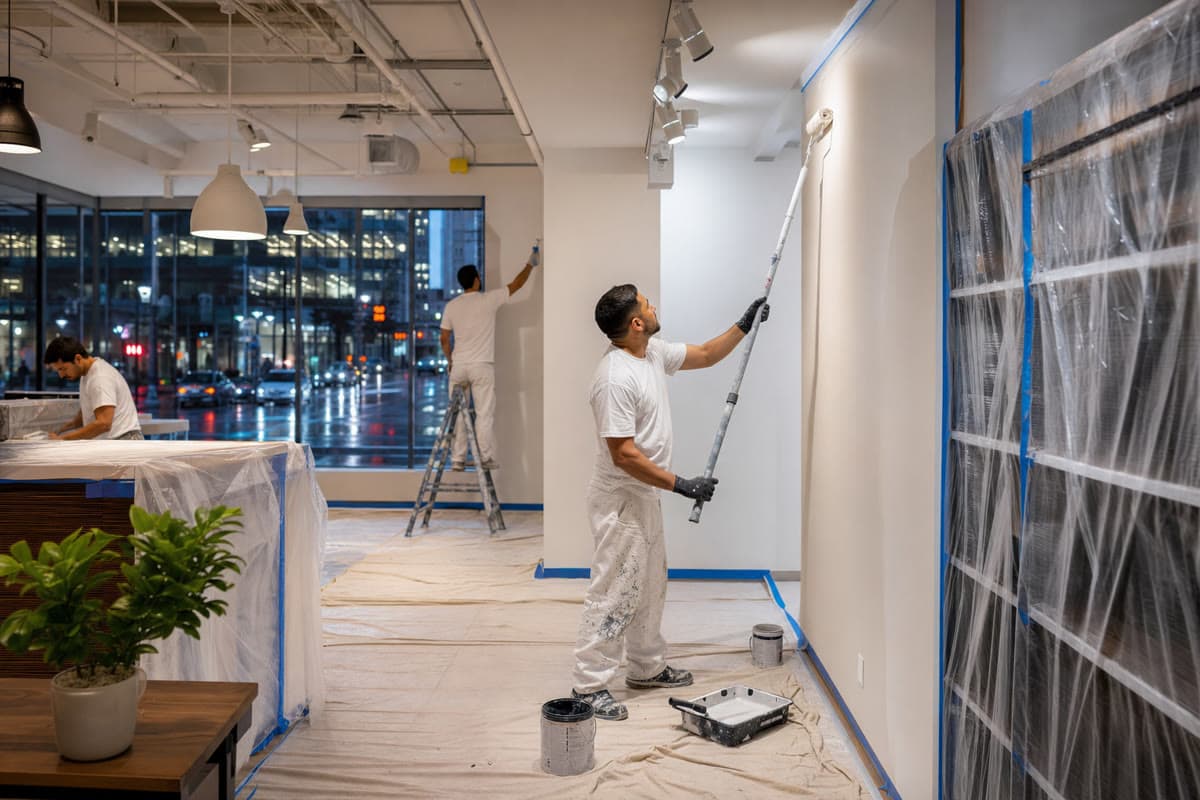
Commercial painting is different from repainting a home because the space often has to keep functioning. A rushed plan can lead to blocked entrances, paint odour complaints, missed touch-ups, or work that conflicts with deliveries and tenant access. A good estimate should explain how the crew will phase the project, protect surfaces, communicate with site contacts, and leave the space usable between shifts.
Start with the business impact
Before choosing colours or products, decide what the painting project must avoid interrupting. That answer shapes the schedule and crew plan.
Common business constraints include:
- Customer-facing hours for retail and restaurants
- Staff workstations, meeting rooms, and private offices
- Elevator bookings and loading dock rules
- Strata or property manager approval requirements
- Noise limits for sanding, patching, and moving equipment
- Security access for evening or weekend work
- Ventilation needs in occupied rooms
For many Vancouver businesses, the best option is phased painting. Instead of closing the whole space, the crew completes one zone at a time and returns furniture, signage, or fixtures before the next business day. This can take more coordination, but it usually reduces operational downtime.
If you are planning a larger refresh, review the scope with a commercial painting contractor before announcing dates to staff or tenants. Access rules and drying time may change the ideal sequence.
After-hours painting is useful, but not automatic
Evening and weekend painting can work well for offices, retail stores, strata hallways, and clinics. It is especially useful when walls are in public areas or when crews need to move through reception, corridors, or checkout spaces.
After-hours work still needs practical planning:
- Who opens and locks the building?
- Is an alarm code, fob, or security escort required?
- Where can crews park and load materials?
- Can HVAC or ventilation stay on during and after painting?
- Which washrooms, storage rooms, or exits must remain accessible?
- Are there quiet-hour rules for sanding or equipment?
Some tasks may be better done during regular hours if a site contact needs to approve colour placement, patch repairs, or fixture removal. The point is not simply to paint at night. The point is to build a schedule that keeps the project safe, efficient, and low disruption.
Low-odour paint matters in occupied spaces
For commercial interiors, product choice affects both finish quality and comfort. Low-VOC and low-odour paints are often a smart choice for offices, medical spaces, childcare-adjacent areas, restaurants, and strata common areas where people return soon after painting.
Low-odour products do not remove the need for ventilation or curing time. Fresh paint can still have a smell, especially in enclosed rooms, stairwells, washrooms, or spaces with limited airflow. Ask the estimator how the crew will ventilate, when areas can be reoccupied, and whether any specialty primer is required for stains, patched drywall, or previous coatings.
For more detail on product labels and indoor comfort, see our guide to low-VOC paint in Vancouver.
Prep determines how professional the finish looks
Commercial walls often show different wear than residential walls. Chairs, carts, customers, signage, displays, and office moves leave scuffs, dents, tape residue, and patched areas. If those issues are not addressed before paint, the new colour can make them more visible.
A proper commercial prep plan may include:
- Moving or protecting desks, shelving, displays, and equipment
- Covering floors, counters, fixtures, doors, and signage
- Removing loose tape, adhesive residue, and failed caulking
- Patching dents, anchor holes, and damaged drywall corners
- Sanding repairs smooth and spot priming as needed
- Masking trim, glazing, baseboards, hardware, and life-safety equipment
- Applying finish coats in a sequence that keeps exits and work zones clear
If the space has heavy traffic, ask about durable finishes for corridors, reception walls, washrooms, break rooms, and areas behind chairs or counters. The best paint system is not always the same across every wall.
Colour changes should support the brand and the building
Commercial colour choices should work in real lighting, not just on a screen. A warm white can look yellow under some LEDs. A deep accent wall may need extra coats. Bright brand colours can look stronger across a full wall than they do on a small sample.
Before approving colours, test samples in the actual space and view them under daytime and evening lighting. In multi-tenant or strata buildings, confirm whether common-area colours, door frames, elevator lobbies, or exterior-facing storefront details need property manager approval.
If you are refreshing a space before opening, rebranding, or listing a lease, coordinate painting before final signage, wall graphics, furniture install, or professional photos. Paint is easier and cleaner before the room is fully reset.
What should a commercial painting quote include?
Commercial painting quotes are easier to compare when each contractor describes the same details. A vague quote can look cheaper because it leaves out access, protection, product quality, repairs, or after-hours labour.
Ask each contractor to confirm:
- Which rooms, walls, ceilings, trim, doors, or exterior areas are included
- Whether patching, sanding, caulking, and spot priming are included
- Product line, sheen, colour count, and number of finish coats
- Whether low-VOC or specialty coatings are required
- Work hours, phasing, and expected access needs
- Floor, furniture, fixture, signage, and equipment protection
- Insurance, safety requirements, and site contact responsibilities
- Cleanup expectations between shifts
- Touch-up process and final walkthrough timing
If you are also comparing residential-style bids for a mixed-use building or strata property, our guide on how to compare painting quotes in Vancouver has a useful checklist.
Local notes for Vancouver commercial spaces
Commercial painting needs vary across the Lower Mainland. Downtown Vancouver offices often need elevator bookings and evening access. Burnaby and Richmond retail spaces may need coordination with mall or strata rules. North Vancouver and West Vancouver businesses may have tighter parking or loading constraints near busy streets and waterfront areas.
For strata common areas, get council or property manager approval before work starts. Hallways, lobbies, stairwells, parkade doors, and amenity rooms may need notices, phased access, and products that handle scuffs while staying easy to clean. Our strata painting requirements guide covers related approval questions.
Get a commercial painting estimate
If your office, retail space, strata common area, clinic, restaurant, or light commercial building needs repainting, request a free commercial painting quote or call +1 (604) 260-1613 for 24/7 estimate requests. Share photos, floor plans if available, preferred work hours, access rules, and any deadline tied to opening, tenant turnover, or business operations so we can match you with the right painting partner.